

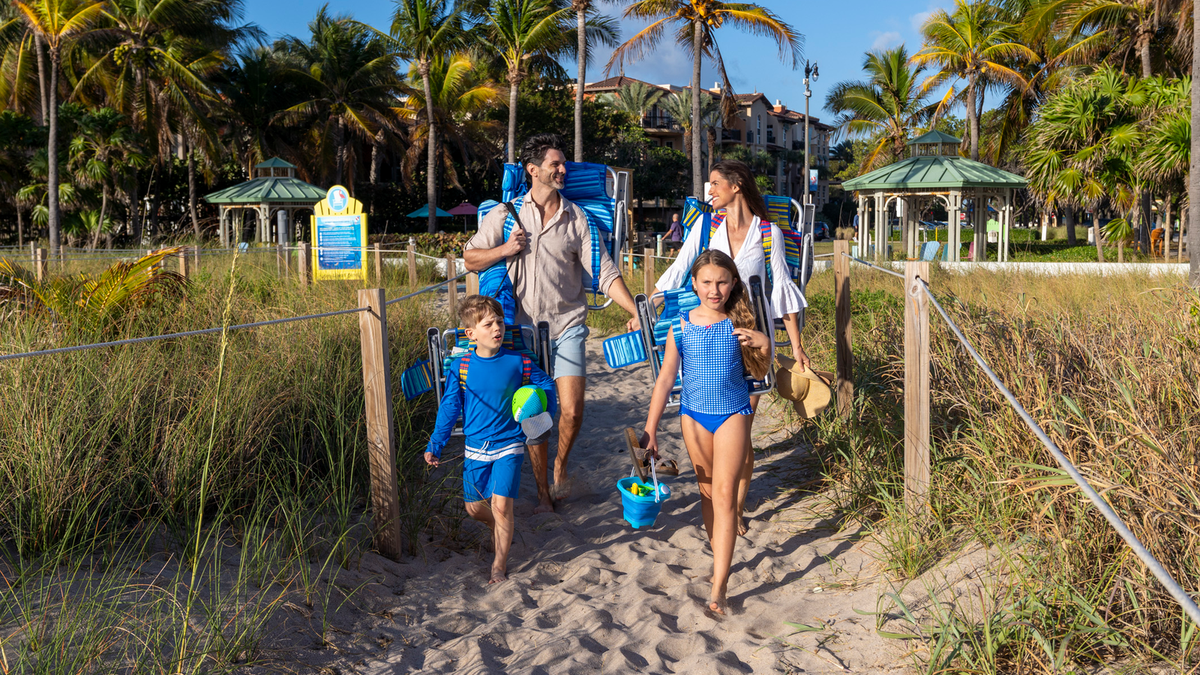
The chair collapses on the third day. Not dramatically, just a slow, grinding surrender as one of the aluminum tubes buckles at the joint and the whole thing lists sideways into the sand. The umbrella pole, meanwhile, has already been retrieved from thirty feet down the beach, where the wind sent it after the sand anchor gave up sometime around noon. Two kids are sunburned. One parent is furious. And the gear that looked perfectly reasonable on a product page six weeks ago is now a $90 lesson in what "budget-friendly" actually costs over time.
This scenario plays out on American beaches every single summer, and it almost always traces back to the same root cause: buyers chose gear based on price and appearance rather than material composition and construction integrity. The frustrating part is that the information needed to make a better decision is available, it just requires knowing what to look for, which words on a spec sheet matter, and which ones are marketing noise.
This breakdown is designed to close that knowledge gap. From frame alloys to fabric treatments, from anchor systems to seam construction, what follows is a practical, material-level examination of what separates premium outdoor beach gear from products built to survive only a single season.
Why Material Science Determines the Life of Your Beach Gear
The single most reliable predictor of how long beach gear will last is the material it is made from, not the brand name on the tag, not the color options, and not the price point. Understanding basic material science gives buyers a framework to evaluate any product honestly, regardless of how it is marketed.
The beach environment is one of the harshest surface environments on Earth for manufactured goods. Salt air accelerates oxidation in metals. UV radiation degrades polymers and dyes. Sand acts as an abrasive that works into every joint, hinge, and seam. High humidity promotes mold and mildew in fabrics that lack appropriate treatment. Wind loads stress frame connections that were never engineered to handle them. A product that performs flawlessly in a garage will fail on a beach if its materials were not selected with these specific stressors in mind.
The Aluminum Alloy Problem (and Why Not All Aluminum Is the Same)
Most consumers assume that "aluminum frame" means a product is lightweight and rust-resistant. Both assumptions are partially correct, but they obscure a critical distinction: aluminum comes in dozens of alloys, and their performance characteristics vary enormously.
The most common aluminum used in budget beach furniture is a lower-grade alloy selected for its low cost and ease of extrusion. It is technically rust-resistant, but it dents and deforms easily under load, the wall thickness of the tubing tends to be minimal, and the joints, which are typically pressed or crimped rather than welded, are the first points of failure. When a chair leg buckles or a frame tube collapses at a joint, this is almost always the culprit.
Higher-grade aluminum alloys (commonly from the 6000 series) offer substantially better strength-to-weight ratios. They maintain structural integrity under repeated lateral stress, which matters enormously in beach chairs where users shift, lean, and get in and out throughout a long day. The tubing wall thickness in premium products is also typically greater, which resists the kind of progressive deformation that eventually leads to joint failure.
For frame connections specifically, look for products that use riveted or welded joints rather than simple press-fit connections. Press-fit joints have no mechanical fastening holding them together beyond friction, and sand acts as a lubricant that gradually loosens them over time. A riveted or welded joint distributes stress across the connection rather than concentrating it at a single point of contact.
Stainless Steel Components: Where and Why They Matter
Even in predominantly aluminum frames, certain hardware components should be stainless steel. Screws, bolts, rivets, and adjustment mechanisms that are made from lower-grade steel will corrode rapidly in salt air, often within a single season. Once corrosion begins at a fastener, it spreads into the surrounding material, weakening the joint structurally and making disassembly for maintenance nearly impossible.
Marine-grade stainless steel (316 series) is the gold standard for hardware in coastal environments. It costs more than standard steel fasteners, and its presence in a product's specification is a reliable signal that the manufacturer thought about long-term durability rather than short-term assembly cost.
Fabric Technology: What "Durable" Actually Means in Textile Terms
Chair fabric and shade fabric are not interchangeable categories, and the performance requirements for each are distinct. Both, however, share a common enemy: UV radiation. Understanding how fabrics are rated and treated for sun exposure is foundational to evaluating any high quality beach chairs or shade products.
UPF Ratings and What They Reflect About Fabric Construction
The Ultraviolet Protection Factor (UPF) rating system, administered in the United States through standards developed by ASTM International, measures how much UV radiation passes through a fabric. A UPF 50+ rating means the fabric blocks more than 98% of UV radiation from passing through it, which matters both for protecting people sitting under a shade canopy and for the longevity of the fabric itself.
UV radiation degrades the polymer chains in synthetic fabrics over time, causing fading, brittleness, and eventual fiber breakdown. Fabrics engineered for high UPF performance typically use a combination of tight weave construction, UV-stabilizing chemical treatments, and sometimes solution-dyed fibers (where the color is added to the polymer before the fiber is extruded, rather than dyed afterward). Solution-dyed fabrics retain color dramatically longer than surface-dyed alternatives because the color cannot be stripped away by UV exposure or washing.
For chair fabric specifically, the relevant metrics beyond UPF include tensile strength (resistance to tearing under load), abrasion resistance (how well the fabric holds up against sand and rough surfaces), and breathability (which affects comfort in high heat). Premium chair fabrics often use a polyester or polyester-blend with an open weave that allows air circulation while maintaining structural integrity under body weight.
Mold and Mildew Resistance in Wet Environments
A fabric can have excellent UV resistance and still fail within a season if it lacks mold and mildew resistance. Beach gear gets wet, from ocean spray, rain, humid storage, and sweaty use, and if it is packed away damp (as it almost always is), the interior of a folded fabric creates exactly the warm, dark, moist conditions that mold thrives in.
Fabrics treated with antimicrobial finishes or woven from inherently antimicrobial fibers (certain polyesters have this property) resist the growth of mold and mildew far more effectively than untreated alternatives. The difference becomes apparent within a few months of regular use: budget fabrics develop musty odors and visible mold spots that are nearly impossible to fully remove, while treated fabrics can be rinsed, dried, and stored without developing these problems.
Weight-Bearing Capacity and Seam Construction
The seam between a chair's seat fabric and its frame attachment points is the highest-stress location in the entire product. Budget chairs typically use a single-stitch seam at these attachment points, which concentrates all stress on a single line of thread. Under repeated loading and unloading, single-stitch seams fail progressively, individual stitches break, the remaining stitches bear more load, and the failure accelerates until the seam gives way entirely.
Premium chairs use double-stitched or bar-tacked seams at high-stress attachment points. Bar tacking, in particular, uses a dense matrix of stitches over a small area to distribute load across multiple thread lines simultaneously. The difference in load capacity between a bar-tacked attachment point and a single-stitch one is substantial, and it directly translates to how long the chair remains safe and comfortable under regular adult use.
Anchor Systems for Shade Products: Engineering Stability in Sand
Of all the failure modes in beach gear, unstable umbrellas and shade structures are the most dangerous. A windborne umbrella is not just an inconvenience, it is a genuine safety hazard to the people around it. The engineering of how a shade product anchors to sand is therefore one of the most consequential design decisions a manufacturer makes, and it is where the gap between budget and premium products is most dramatic.
How Sand Anchoring Works (and Why Most Approaches Fail)
Standard budget umbrellas use a simple spike-style base that is pushed or screwed into the sand to a depth of perhaps six to eight inches. This approach works reasonably well in calm conditions, but it has a fundamental weakness: it relies on the passive resistance of sand grains pushing against the spike shaft. Sand is not a cohesive material, it shifts, compresses, and flows around the spike when any lateral force (like wind) is applied, which is why standard spikes loosen progressively over the course of a breezy day and eventually allow the umbrella to tip or blow free entirely.
The physics here are straightforward. Increasing the anchor's depth increases the volume of sand resisting lateral movement, which increases holding power. But depth alone is not sufficient if the anchor's geometry does not maximize contact with the surrounding sand. Anchors designed with wider, helical, or flanged profiles create resistance against a much larger volume of sand for the same depth, dramatically improving stability.
Copa's Anchor Max® System: What the Engineering Achieves
Copa's Anchor Max® system represents a purpose-engineered approach to exactly this problem. Rather than a simple spike, the Anchor Max® is designed to drive deeper into the sand and create a larger contact surface area than conventional beach umbrella anchors, giving Copa's shade products significantly greater resistance to wind-induced tipping and movement.
The practical significance of this design becomes clear in real beach conditions. On a day with moderate coastal wind, the kind of afternoon sea breeze that is completely normal on any American ocean beach, a standard spike anchor will begin to lean and require repositioning within an hour or two. An anchor system engineered for greater depth and contact area maintains its position through conditions that would dislodge a conventional anchor entirely. For families with small children playing nearby, this stability difference is not a minor convenience, it is a meaningful safety margin.
For families who spend full days at the beach regularly, investing in shade products built around a genuinely engineered anchor system is one of the highest-return decisions in the entire gear selection process. The alternative, chasing a windborne umbrella across a crowded beach while managing children and belongings, is an experience that makes the value proposition of premium engineering immediately clear.
What "Sustainable and Durable Outdoor Gear" Actually Requires
Sustainability has become one of the most overused and least defined terms in the outdoor gear category. Every brand claims some version of it. Understanding what genuine sustainability requires at a material and construction level allows buyers to distinguish meaningful commitments from marketing language.
Durability as the Foundation of Sustainability
The most environmentally impactful decision in beach gear purchasing is how often gear needs to be replaced. A premium chair built from quality materials that lasts eight to ten seasons produces a fraction of the waste and resource consumption of three or four budget chairs replaced over the same period. This is the core argument for durability as sustainability, and it is mathematically compelling regardless of what other environmental attributes a product claims.
The materials that enable genuine durability, high-grade aluminum alloys, solution-dyed UV-resistant fabrics, marine-grade hardware, reinforced seam construction, also tend to be more resource-intensive to produce. This is why truly sustainable and durable outdoor gear almost never occupies the budget price tier. The cost of materials that last is higher, and any product claiming both rock-bottom prices and multi-season durability deserves skepticism.
Recyclability and End-of-Life Considerations
Beyond durability, genuine sustainability in beach gear involves the material choices that govern what happens to a product at the end of its useful life. Aluminum is one of the most recyclable materials in common use, recycling aluminum requires only a fraction of the energy needed to produce virgin aluminum, and the material can be recycled repeatedly without significant degradation of its properties. Products built primarily from aluminum frames with minimal mixed-material components are therefore substantially more recyclable than products that combine multiple materials (plastic, fabric, foam, metal) in ways that make separation difficult or impossible.
Fabric recyclability is more complex. Most synthetic beach fabrics are not currently recyclable through standard municipal programs, though some manufacturers partner with textile recycling programs. The most meaningful sustainability contribution in the fabric category remains longevity: a fabric that lasts eight seasons rather than two has already reduced its environmental impact by a factor of four, regardless of its end-of-life fate.
Packaging and Logistics Efficiency
Bundle purchasing, the kind that Copa's Deluxe Bundle and Essentials Bundle make straightforward, has a genuine sustainability benefit that is rarely discussed. When a family purchases all their beach gear as a coordinated system in a single order, the packaging and shipping footprint per item is substantially lower than multiple separate purchases. Free shipping on bundles removes the financial friction that might otherwise push buyers toward piecemeal purchasing from multiple sources, and the environmental arithmetic of consolidated shipping is meaningfully better than fragmented logistics.
Frame Geometry and Ergonomics: Why Structure Affects More Than Comfort
Frame geometry in beach chairs is not purely an ergonomic consideration, it also has direct implications for structural durability. A chair designed with appropriate geometry distributes the weight of its user across the frame in a way that minimizes stress concentrations. A poorly designed frame, regardless of its material quality, concentrates stress at specific joints and creates predictable failure points.
Load Distribution in Reclining Beach Chair Frames
Reclining beach chairs present a specific engineering challenge. When a user reclines, the load shifts toward the rear legs and the backrest attachment points. In a chair with a single-position fixed recline, this is manageable. In a multi-position reclining chair, the geometry changes with each position, and the frame must be designed to handle the load distribution at every position without concentrating stress at a single point.
Budget reclining chairs frequently use thin-walled tubing and simple lap-joint connections at the recline adjustment mechanism. Under the shifted loading of a reclined position, these joints are the first to fail, the tubing deforms at the joint, the mechanism becomes imprecise, and eventually the recline function fails entirely even though the rest of the chair may still be structurally sound. Premium chairs address this with thicker-walled tubing at stress concentration points, reinforced joint construction, and recline mechanisms designed with adequate mechanical advantage to handle the load without requiring excessive force from the user.
The Role of Low-Profile Design in Family Beach Use
Low-profile beach chairs, which position the user closer to the sand rather than at standard seating height, offer ergonomic and practical advantages for family beach days that are worth understanding. A lower seating position is easier to get in and out of for children and older adults. It reduces the effective wind profile of the seated user, which matters for personal comfort on breezy days. And it keeps adults at a visual level closer to small children playing nearby, which many parents find functionally useful for supervision.
The structural implications of low-profile design include a shorter frame with different load-path geometry than a standard-height chair. Done well, this results in a compact, stable structure with a low center of gravity. Done poorly, it creates a chair that sits so low the user cannot rise without significant effort, or one whose rear legs are so short they provide inadequate stability in soft sand. The difference lies in the care taken in the frame geometry design, not simply in the height specification.
Evaluating Beach Gear as a System Rather Than Individual Pieces
One of the most common and costly mistakes in beach gear purchasing is evaluating each item in isolation. A family that buys a chair from one source, an umbrella from another, and a shade canopy from a third ends up with pieces that may not work together physically, aesthetically, or functionally. This is the core argument for system-based purchasing, and it is where bundled offerings from a single brand deliver value that goes beyond simple convenience.
Physical Compatibility in Coordinated Gear Systems
When a shade umbrella and beach chairs are designed as a system, their dimensions are engineered to work together. The umbrella's tilt range and canopy diameter are sized to provide coverage for the chairs that accompany it. The chairs' dimensions allow them to be positioned at the optimal distance from the umbrella pole for coverage without interference. These details seem minor until a family discovers that their umbrella, positioned for shade, puts the pole directly in the path of the chair's armrest, or that the canopy is too small to cover more than one of their chairs at midday.
Copa's bundle approach solves this problem by design. The Deluxe Bundle and Essentials Bundle pair shade and seating products that have been developed together, meaning the coverage geometry, the color coordination, and the physical compatibility have already been worked out. For families who spend significant time at the beach, this kind of system-level thinking translates directly into fewer frustrations and a more functional setup once everything is in the sand.
Weight and Portability as System Metrics
Total carry weight is a system-level metric that individual item specifications obscure. A chair that weighs 6 pounds seems manageable in isolation. Add a second chair (another 6 pounds), an umbrella (8 pounds), a canopy, a cooler, beach toys, and a bag of supplies, and the total carry load for a family of four becomes genuinely burdensome, especially when walking across soft sand.
Premium gear addresses this through weight optimization at the material selection level. High-grade aluminum alloys allow tube wall thickness to be reduced without sacrificing structural integrity, bringing chair weights down without compromising durability. Fabric selection balances UV protection and breathability with weight. When a brand designs its full product line with total carry weight as a system constraint, the result is gear that is meaningfully lighter than the sum of its individually optimized parts would suggest.
For families navigating from parking lots to beach access points, sometimes over dunes or through crowded boardwalks, this matters. Copa's guide to the complete beach setup for families addresses exactly this kind of logistical planning, including how to configure gear for the most efficient carry and setup once you arrive.
The Real Cost of Budget Gear: A Multi-Season Analysis
The price comparison between budget and premium beach gear looks dramatically different depending on the time horizon over which it is conducted. Most buyers evaluate price at the point of purchase, which systematically favors budget options. Evaluating price over three to five seasons produces a very different picture.
| Gear Category | Budget Option (Per Item) | Typical Lifespan | 5-Season Total Cost | Premium Option (Per Item) | Typical Lifespan | 5-Season Total Cost |
|---|---|---|---|---|---|---|
| Beach Chair (per chair) | $25–$45 | 1–2 seasons | $75–$135 | $80–$150 | 5–8+ seasons | $80–$150 |
| Beach Umbrella | $20–$40 | 1 season | $100–$200 | $60–$120 | 4–6+ seasons | $60–$120 |
| Shade Canopy / Cabana | $30–$60 | 1–2 seasons | $90–$180 | $100–$200 | 5–8+ seasons | $100–$200 |
| Full Family Setup (4 chairs + shade) | $140–$220 | 1–2 seasons | $420–$660 | $420–$720 | 5–8+ seasons | $420–$720 |
The table above illustrates a pattern that holds across virtually every product category in the outdoor gear market: at the five-season mark, a premium setup and a budget setup that has been replaced multiple times cost approximately the same. Beyond that point, the premium setup continues to deliver value while the budget buyer is purchasing again. The practical upshot is that families who plan to spend more than two or three seasons at the beach are not paying a premium for quality, they are paying the same amount and getting dramatically more value per dollar spent.
This analysis does not account for the non-financial costs of budget gear failure: the safety risks of a windborne umbrella, the discomfort of a collapsing chair, the frustration of equipment problems during a family outing. When those factors are included, the case for premium gear at equivalent long-run cost becomes even more compelling.
How to Read a Spec Sheet Like a Materials Engineer
Most beach gear product pages include some specification information, but the way that information is presented varies enormously, and some of the most important details are often absent. Knowing which specifications matter and which ones are marketing noise allows buyers to make genuinely informed comparisons.
Specifications That Actually Predict Durability
The following table maps specific spec sheet claims to what they actually indicate about product durability, helping buyers cut through the noise and focus on what matters.
| Spec Sheet Claim | What It Actually Indicates | Quality Signal? |
|---|---|---|
| "Aluminum frame" | Almost no information, all aluminum is not equal; alloy grade matters | ⚠️ Neutral without alloy spec |
| "600D polyester fabric" | Indicates fabric weight/density; heavier denier generally more durable but also heavier | ✅ Useful if context is provided |
| UPF 50+ rating | Indicates UV blocking performance; also suggests fabric density and treatment quality | ✅ Strong positive signal |
| Weight capacity (lbs) | Indicates frame and fabric engineering margin; higher capacity usually signals better construction | ✅ Strong positive signal |
| "Rust-resistant" | Vague; applies to any aluminum; does not address corrosion of hardware components | ⚠️ Neutral without hardware spec |
| Patented anchor system | Indicates proprietary engineering investment in a specific performance problem | ✅ Strong positive signal |
| "Lightweight design" | Can mean reduced material use (bad) or premium alloy selection (good); ambiguous without weight spec | ⚠️ Check actual weight vs. capacity ratio |
| Mold/mildew resistant fabric | Indicates antimicrobial treatment or inherent fiber property; meaningful for longevity in wet use | ✅ Strong positive signal |
| "Folds compactly" | No engineering information; purely a convenience claim | ❌ No durability relevance |
The Weight-to-Capacity Ratio: An Underused Proxy for Quality
One of the most reliable proxy metrics for frame construction quality is the ratio of a chair's weight to its rated weight capacity. A chair that weighs 5 pounds and is rated for 250 pounds represents a very different engineering achievement than a chair that weighs 5 pounds and is rated for 175 pounds. The former requires higher-grade materials and more careful structural design to achieve the same capacity at lower weight.
This ratio is particularly useful for comparing products within a similar price range, where other signals may be ambiguous. A high weight-to-capacity ratio (low chair weight, high rated capacity) almost always indicates better material selection and construction quality than a comparable product with a lower ratio.
What Families Specifically Need That Budget Gear Rarely Delivers
Family beach days have specific functional requirements that single-user or couple-oriented gear simply does not address. The best beach gear for families solves a set of problems that most generic beach chair and shade products were not designed around.
Adjustability Across Multiple Users and Ages
A family beach setup typically needs to accommodate users ranging from toddlers to grandparents, with wildly different comfort, mobility, and support requirements. Chairs with multiple recline positions serve this need better than fixed-position chairs. Shade structures with adjustable tilt mechanisms can follow the sun's movement through the day, maintaining coverage without requiring the entire setup to be relocated.
For parents of young children specifically, the ability to recline a chair and position it for nap time, while maintaining shade coverage from an umbrella or canopy positioned nearby, is a practical luxury that dramatically improves the quality of a full beach day. Gear designed with these use cases in mind includes details like cup holders at appropriate heights, side pockets for sunscreen and snacks, and recline positions that allow comfortable near-horizontal rest without requiring the user to get onto the sand.
Setup and Breakdown Speed in Chaotic Conditions
Anyone who has tried to set up a beach umbrella while simultaneously preventing a toddler from running toward the water understands that setup complexity is a genuine quality-of-life issue, not a minor convenience consideration. Premium gear earns its price partly through design details that reduce setup time and cognitive load: intuitive folding mechanisms, anchor systems that operate in a single consistent motion, and carry bags that actually fit the products they are designed to carry.
Budget gear frequently sacrifices these details in the interest of manufacturing cost. The result is products with finicky folding mechanisms that require two hands and a particular sequence of movements to operate, carry bags with dimensions that require the product to be forced in at an angle, and anchor systems that feel uncertain even after a seemingly correct setup. None of these problems are catastrophic individually, but combined on a beach with children and time pressure, they accumulate into a genuinely frustrating experience.
For a comprehensive look at how to think about family beach day logistics from the ground up, Copa's ultimate family beach packing list offers a systematic approach to making sure nothing important is forgotten and everything is easy to find when you need it.
Copa Beach Chairs: Engineering Meets Family Functionality
Copa beach chairs are designed with exactly this family-first use case in mind. The brand's low-profile seating positions users closer to the sand, which improves stability, reduces wind resistance, and makes it easier for parents to interact with children at play. The frame construction uses materials selected for both coastal durability and genuine portability, the chairs are light enough to carry without difficulty but built from alloys and with seam construction that holds up to the kind of repeated, heavy daily use that a family beach season involves.
The integration between Copa's chair line and its shade products, umbrellas and cabanas built around the Anchor Max® system, means that the full setup functions as a coordinated system rather than a collection of independently optimized pieces. For families who want to spend their time at the beach enjoying the experience rather than managing equipment, this system-level design is where the genuine value of a premium brand is most apparent.
A Decision Framework for Choosing Premium vs. Budget Beach Gear
Not every buyer needs the same level of gear performance, and the decision between premium and budget options should be made with clear criteria in mind. The following framework helps buyers assess their own situation and make the choice that delivers the best value for their specific use case.
The Beach Frequency Threshold
The single most important variable in this decision is how often the gear will be used. A family that visits the beach two or three times per summer and uses gear casually will extract less total value from premium gear than a family that spends weekends at the shore from Memorial Day through Labor Day. The break-even point, where premium gear's total cost over its lifespan equals the repeated cost of replacing budget gear, is typically around three to four seasons of regular use.
For buyers who will use gear infrequently, the calculus shifts. Occasional use means less mechanical stress on joints and fabrics, which means even modest-quality gear may last longer than its construction would suggest under heavy use. That said, the safety argument for premium anchor systems remains relevant regardless of use frequency, a windborne umbrella is dangerous on a once-a-year beach trip just as much as on a weekly one.
The Safety Considerations That Override Cost
Certain quality considerations are not subject to cost-benefit analysis in the same way. For families with young children, shade structure stability is a safety issue. For adults with back or joint issues, structural integrity and adequate weight capacity in seating is a health issue. For anyone on a crowded public beach, the behavior of their gear under wind affects other people's safety, not just their own.
These factors argue for establishing a minimum quality threshold below which buyers should not go, regardless of budget. A $20 umbrella with a spike anchor that will tip over in a 15-mph sea breeze is not an acceptable option on a busy beach, full stop. Within the range of products that meet this minimum threshold, the cost-benefit analysis of premium versus mid-range quality applies.
Families planning a major beach outing, particularly around busy holidays when beaches are crowded and wind conditions are unpredictable, should consult resources like Copa's guide to the best beaches for Fourth of July weekend to understand what conditions they are likely to encounter and plan their gear selection accordingly.
Frequently Asked Questions
What materials should I look for in a truly durable beach chair?
Look for high-grade aluminum alloy frames (ideally from the 6000 series), marine-grade stainless steel hardware at all fastener points, UV-resistant polyester fabrics with UPF 50+ ratings, and double-stitched or bar-tacked seams at attachment points. The combination of these material and construction choices determines how the chair holds up over multiple seasons of coastal use.
Why do budget beach chairs fail so quickly?
Budget beach chairs typically use lower-grade aluminum alloys with thin tube walls and press-fit joints rather than riveted or welded connections. The fabrics are often surface-dyed rather than solution-dyed, making them vulnerable to UV fading and degradation. Seams at high-stress attachment points are typically single-stitched, which fails progressively under repeated loading. Collectively, these material choices result in failure within one to two seasons of regular use.
What is the Anchor Max® system and why does it matter?
Copa's Anchor Max® is a proprietary anchor system engineered specifically for securing shade products in sand. Unlike conventional spike anchors that rely on shallow passive resistance, the Anchor Max® is designed to achieve greater depth and contact area with surrounding sand, providing significantly higher resistance to wind-induced tipping. This makes Copa's shade products meaningfully safer on windy beach days, particularly in crowded settings where a windborne umbrella poses a hazard to nearby people.
Is premium beach gear worth it for occasional beach visitors?
For truly occasional visitors (one to two trips per season), the financial break-even argument for premium gear is less compelling. However, safety considerations, particularly for shade anchor systems, remain relevant regardless of use frequency. A mid-range product that meets minimum quality thresholds for stability and construction is likely the appropriate choice for occasional users, while families who visit regularly will recoup the premium cost within three to four seasons.
What does UPF 50+ actually mean for beach umbrella fabric?
UPF 50+ means the fabric blocks more than 98% of UV radiation from passing through it. For shade fabrics, this rating reflects both the tightness of the weave and any UV-stabilizing treatments applied to the fiber. A UPF 50+ shade fabric also tends to have better UV resistance in terms of its own longevity, the same properties that block UV from passing through also slow UV degradation of the fabric itself.
How do I know if a beach chair's weight capacity is reliable?
Weight capacity ratings are only meaningful if the underlying frame and fabric construction can actually support them. The most useful cross-check is the weight-to-capacity ratio: divide the chair's rated capacity by its own weight. Higher ratios (e.g., a 5-pound chair rated for 250 pounds versus one rated for 175 pounds) indicate better material selection and structural engineering. Ratings from budget manufacturers are frequently overstated and should be treated with skepticism.
Why should I buy beach gear as a bundle rather than individual pieces?
Bundled gear from a single brand is designed to work together as a system. The shade canopy's coverage geometry matches the chairs' dimensions. The aesthetics are coordinated. The anchor system is calibrated for the umbrella or cabana it supports. Mixing gear from different sources introduces compatibility uncertainties that can affect function (inadequate shade coverage, mismatched dimensions) and aesthetics. Copa's bundled offerings remove these uncertainties by ensuring all components were developed to work together.
What is solution-dyeing in beach fabric and why does it matter?
Solution dyeing is a manufacturing process where color pigment is added to the polymer before it is extruded into fiber, rather than applied to the surface of finished fabric. Because the color is integral to the fiber rather than surface-applied, it cannot be stripped away by UV exposure, washing, or abrasion. Solution-dyed fabrics retain their color dramatically longer than surface-dyed alternatives, which is particularly meaningful in beach environments where UV exposure is intense and repeated.
How does sand affect beach chair joints over time?
Sand is a fine abrasive that works into every joint, hinge, and adjustment mechanism in beach gear. In press-fit joints (where components are held together by friction alone), sand acts as a lubricant that reduces friction and allows gradual loosening. In adjustment mechanisms with moving parts, sand causes accelerated wear on contact surfaces. Premium gear addresses this through tighter manufacturing tolerances, riveted or welded joints that do not rely on friction, and mechanisms designed to shed sand rather than accumulate it.
Are there environmentally better choices in beach gear materials?
The most environmentally impactful choice is gear that lasts. A premium chair used for eight seasons produces a fraction of the material waste of four budget chairs over the same period. Beyond durability, aluminum frames are highly recyclable at end of life. For fabric, look for products that are solution-dyed (which uses less water and fewer chemicals than surface dyeing) and treated with non-toxic antimicrobial finishes rather than formaldehyde-based treatments.
What should I look for in a beach shade structure for a family with young children?
For families with young children, the most critical features are anchor stability (a windborne umbrella near children is genuinely dangerous), adequate coverage area for the full family group, UPF 50+ fabric rating, and ease of setup and breakdown while managing active children. Copa's shade products with the Anchor Max® system address the stability requirement directly, while the brand's bundle offerings ensure that shade coverage is sized appropriately for the accompanying seating.
How do I maintain premium beach gear to maximize its lifespan?
The most impactful maintenance steps are: rinse with fresh water after every use to remove salt and sand from joints and fabric; dry completely before storage to prevent mold and mildew in fabric and corrosion in any steel components; store indoors or in a dry location rather than leaving gear outside between uses; and inspect joints and seams annually before the beach season begins, addressing any loose rivets or beginning seam failures before they progress.
Key Takeaways for Informed Beach Gear Buyers
- Material grade is the primary predictor of durability. "Aluminum frame" is not a meaningful specification without alloy grade. "Polyester fabric" is not meaningful without UPF rating, denier, and treatment information. Ask for specifics.
- Joints are where budget gear fails first. Press-fit connections, thin-walled tubing, and single-stitch seams at attachment points are the most common failure modes in budget beach chairs. Riveted or welded joints and bar-tacked seams are the premium alternatives.
- Anchor engineering is a safety issue, not just a convenience one. The Copa Anchor Max® system addresses the genuine hazard of windborne shade structures with purpose-engineered design. For families on crowded beaches, this is a minimum-threshold consideration.
- Premium gear pays for itself within three to four seasons of regular use. The five-season total cost of a premium family setup is typically comparable to the cost of repeatedly replacing budget gear over the same period, and the premium setup delivers better performance throughout.
- System purchasing beats piecemeal buying for family setups. Coordinated bundles ensure physical compatibility, coverage geometry, and aesthetic coherence. Copa's Deluxe Bundle and Essentials Bundle are designed as systems, not collections of independent products.
- Weight-to-capacity ratio is a useful proxy for frame quality. When comparing chairs in a similar price range, the ratio of rated capacity to chair weight reliably indicates relative material and construction quality.
- Solution-dyed fabrics last dramatically longer than surface-dyed alternatives in UV-intensive beach environments. It is one of the most meaningful fabric specifications for long-term color retention and material integrity.
- Maintenance extends premium gear's lifespan significantly. Fresh water rinse after each use, complete drying before storage, and annual inspection of joints and seams are the three most impactful maintenance habits for maximizing gear longevity.
The family that started this story, sunburned, carrying a bent chair and a retrieved umbrella, made the same decision that millions of buyers make every season: they optimized for the lowest upfront cost and paid for it in ways that never showed up on the original price tag. The gear that earns the label premium outdoor beach gear is not premium because of its branding. It is premium because every material choice, every construction detail, and every engineering decision was made with the specific demands of the beach environment in mind, and with the expectation that the product would still be performing well when the fifth or sixth summer rolls around. That is what makes it worth it.
Shop Now
Learn more →
Share:
How to Pack a Beach Bag for a Full Family Day Out: A Room-by-Room Organization System
9 Beach Safety Rules Every Parent of Young Children Should Know Before Hitting the Shore