

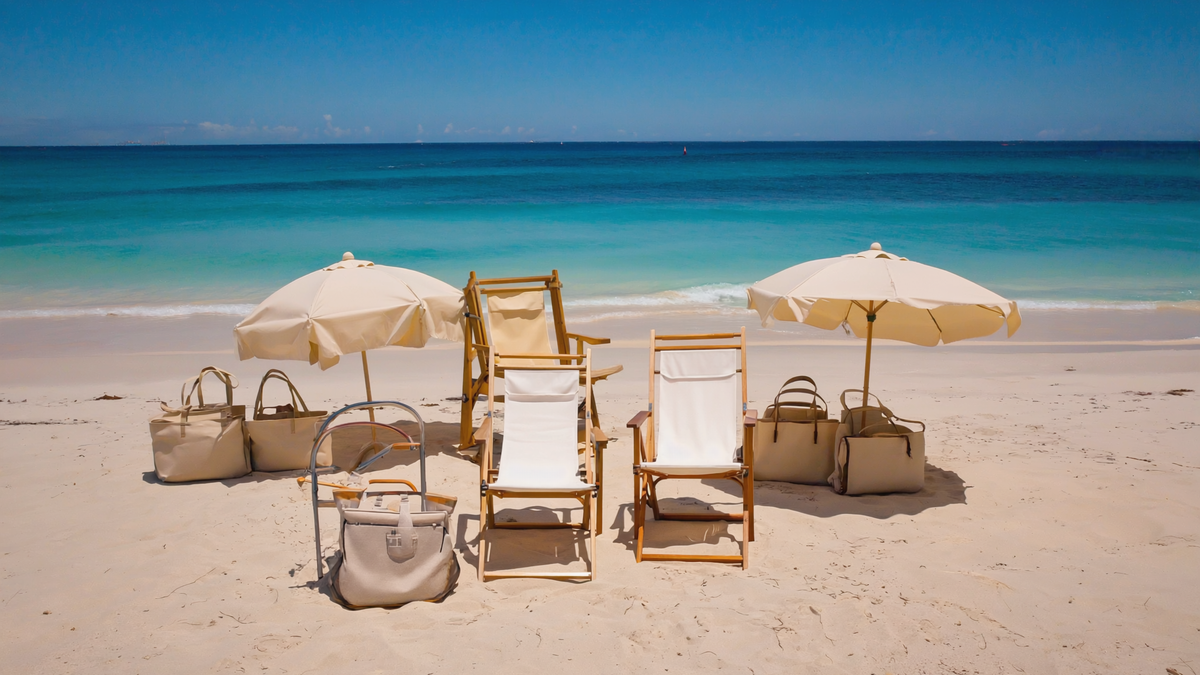
The umbrella snapped at the base on the second gust. The chair fabric split on the third beach trip of the summer. The carry bag lost its zipper pull before Memorial Day was over. Any family who has spent real time at the beach knows the particular frustration of gear that looks great in the store and falls apart in the field. Salt air, sand, UV radiation, and the general chaos of a family outing are a relentless stress test for outdoor equipment, and most products simply are not built to survive it.
Families who go to the beach regularly, whether it is every weekend from June through September or a handful of dedicated vacation trips per year, eventually arrive at a reckoning: cheap gear costs more in the long run. The math is straightforward. A chair that lasts two seasons before the frame buckles is not a bargain. A shade structure that collapses in moderate wind is not just inconvenient, it is a safety hazard. Durable beach furniture is not a luxury category. It is the only category that makes financial and practical sense for families who actually use their gear.
This guide is built around eight things that experienced beach families consistently wish they had known before making purchasing decisions. These are not abstract principles. They are grounded in how materials age under real coastal conditions, how construction quality reveals itself over time, and how care habits can significantly extend the usable life of even excellent equipment. Whether you are outfitting your family for the first time or replacing a collection of gear that finally gave out, these insights will change how you evaluate every product you consider.
1. The Frame Material Is the Single Most Important Purchase Decision
When it comes to durable beach furniture, the frame is where longevity lives or dies. Fabric fades, mesh stretches, and webbing wears, but all of those components can sometimes be replaced or tolerated. A frame that corrodes, bends, or cracks ends the useful life of a chair or shade structure completely. Understanding frame materials is therefore the most important skill a beach family can develop before spending money on gear.
The coastal environment is extraordinarily corrosive. Salt in the air, salt in the water, and salt deposited by sea spray penetrate metal joints, welds, and surface coatings faster than almost any other environment on earth. Standard steel, even powder-coated steel, will begin to rust at joints and cut edges within one to two seasons of regular beach use. The rust does not just look bad. It weakens the structural integrity of the frame at precisely the points that bear the most stress during use and transport.
Aluminum is the gold standard for beach chair and shade structure frames for several interconnected reasons. It does not rust. Instead, it forms a thin protective oxide layer that makes it far more resistant than plain steel to corrosion in marine environments, although salt can still cause pitting over time if it is left on the frame. Aluminum is also much lighter than steel, which matters enormously when you are hauling gear across soft sand with children in tow. Quality aluminum alloys, particularly marine-grade alloys, offer an excellent strength-to-weight ratio at the weights that make beach furniture portable.
The distinction that separates premium aluminum frames from budget aluminum frames is wall thickness, alloy grade, and joint construction. Thin-wall aluminum tubes save weight and cost but sacrifice structural rigidity. They flex under load in ways that fatigue the metal over time, eventually leading to cracking at stress points. Premium frames use heavier wall sections at critical load-bearing points and lighter sections elsewhere, which is an engineering tradeoff that requires intentional design rather than cost minimization.
Joint construction is equally revealing. Frames assembled with riveted connections are generally more durable than those using plastic inserts or compression-fit joints alone. Look at how the legs connect to the seat frame and how the backrest attaches. These are the failure points that will determine whether your chair survives five seasons or one. A premium beach chair with a well-engineered aluminum frame and solid joint construction is not comparable to a budget chair made from the same general material description. The details are everything.
How to Evaluate Frame Quality Before You Buy
Press on the frame laterally at the seat corners and where the legs splay. Premium frames will feel rigid with minimal flex. Check whether the finish is consistent at the joints, which is where cheaper production often shows gaps in coating. Ask specifically about the aluminum alloy grade if purchasing from a brand that publishes specifications. And after any beach outing, rinse the frame with fresh water before storing it. Even excellent aluminum benefits from having salt deposits removed before they concentrate at joints during storage.
2. Fabric Denier and Coating Are What Separate Beach-Grade from Backyard-Grade
The fabric on a beach chair or shade canopy is exposed to UV radiation, salt spray, and abrasion from sand simultaneously, and the difference between fabrics engineered for that environment and those that are not becomes visible within a single season. Understanding how to read fabric specifications will save families from repeated replacement cycles.
Denier is a unit of linear mass density for the yarn or fiber used in a fabric: the weight in grams of 9,000 meters of that yarn. A higher denier number means thicker, heavier yarns and generally a more durable fabric, although weave density and coatings also play a role. For beach chairs, seat fabrics in the 600 to 1000 denier range offer meaningful resistance to tearing and abrasion. For shade canopies and cabana tops, fabrics need to balance UV blocking with weight, and purpose-built outdoor fabrics with UV stabilizer treatments are categorically different from general-purpose outdoor fabrics.
UV stabilizers are chemical additives integrated into the fabric fiber or applied as a coating. Without them, UV radiation breaks down the polymer chains in synthetic fabrics, causing them to become brittle and fade rapidly. A fabric that starts as a rich, deep color and turns chalky and faded within a season almost certainly lacks adequate UV stabilization. This is not just an aesthetic problem. Faded fabric is structurally weakened fabric. The bleaching of color is a visible indicator of molecular degradation.
Solution-dyed acrylic fabrics, such as those used in premium marine and outdoor applications, are colored through a process that integrates pigment into the fiber during production rather than applying it as a surface dye. This makes the color genuinely fade-resistant because the pigment is throughout the fiber, not just on its surface. For families who want their gear to look as good in its fifth season as it did in its first, solution-dyed fabrics are worth seeking out specifically.
Mold and mildew resistance is a separate but related consideration. Fabrics stored while damp, which is an almost inevitable reality of beach use, will develop mold and mildew if they are not treated to resist it. Some premium outdoor fabrics incorporate antimicrobial treatments that prevent mold colonization. Others are constructed with open weaves that dry quickly enough to limit the window in which mold can establish. When evaluating shade canopies specifically, look for fabrics that specify both UV resistance and mold resistance, because a canopy that blocks sun but traps moisture will develop problems quickly in warm, humid coastal climates.
Sand Abrasion Is an Underrated Fabric Killer
Sand is essentially fine-grained rock, and it acts as an abrasive on fabric surfaces and seams. Fabrics with tighter weaves resist sand infiltration better than open weaves, and seams that are reinforced with binding tape or double-stitched with UV-resistant thread will outlast single-stitch construction significantly. Run your hand along the seams of any beach chair or canopy you are evaluating. Loose threads or inconsistent stitch spacing are early indicators of seam quality that will reveal itself more dramatically under field conditions.
3. Weight Is Not the Enemy of Durability, Bad Engineering Is
One of the most persistent myths in beach gear purchasing is that a heavier product is automatically more durable. The reality is that lightweight beach chairs built from advanced materials and engineered intelligently can outlast heavy products by a wide margin. For families navigating long beach walks with children, coolers, and bags, weight is a genuine quality-of-life factor, and you should not have to sacrifice durability to get it.
The engineering principle at work here is specific strength, which is the ratio of a material's strength to its weight. Advanced aluminum alloys and reinforced composite materials can achieve very high specific strength, meaning a lighter component made from them can withstand more stress than a heavier component made from lower-grade materials. Budget manufacturers often use heavier, lower-grade materials because they are cheaper, not because they are stronger. The resulting product weighs more and fails sooner.
For beach families, the practical implication is significant. A chair that weighs 12 to 14 pounds may seem like a serious piece of gear, but if its aluminum alloy is substandard and its joints are poorly constructed, it will fail faster than a well-engineered chair at 8 to 10 pounds. Weight alone is not a proxy for quality. Construction quality, material grade, and engineering design are the actual determinants of longevity.
Copa's approach to this challenge is particularly relevant here. The brand's chairs are built to be genuinely portable without compromising the structural integrity that beach conditions demand. Families who have made the mistake of buying ultra-lightweight budget chairs, only to have the legs splay under an adult's weight or the back support fail mid-afternoon, understand viscerally why the engineering behind lightweight durability matters. It is not enough to reduce weight. The reduction has to come from material and design innovation, not from removing material or using lower-grade inputs.
When evaluating lightweight beach chairs, apply a simple test. Sit in the chair and shift your weight deliberately to one side, then forward. A well-engineered lightweight chair will feel stable and rigid. A poorly engineered lightweight chair will flex, creak, or feel uncertain under dynamic weight distribution. That flex is the frame telling you something important about how it will perform over hundreds of uses.
The Carry System Matters as Much as the Chair Itself
A chair that is easy to carry dramatically changes the beach day experience for families. Padded shoulder straps, reinforced carry bags with durable zipper pulls, and attachment points for additional gear are not convenience features, they are part of the product's durability story. A chair carried in a flimsy bag will be dropped, dragged, and abraded on every transit. The carry system that protects the chair during transport is part of how the chair survives repeated use over multiple seasons.
4. Shade Structure Anchoring Is a Safety Issue, Not Just a Stability Preference
An unsecured or poorly anchored beach umbrella or cabana is one of the most common and underappreciated hazards at the beach. A structure that lifts in wind becomes a projectile. This is not a hypothetical concern. Beach umbrellas that become airborne in gusts cause injuries and property damage every season at crowded beaches. For families with children, this risk is unacceptable, and it makes the anchoring system of any shade structure a non-negotiable evaluation criterion.
Traditional beach umbrellas rely on a single pole pushed into the sand, with stability determined entirely by how deep the pole is set and how dense the sand is. Wet, compacted sand near the water holds poles more securely than dry, loose sand higher on the beach. But conditions change throughout the day as tides shift and wind picks up in the afternoon, which is the most common pattern on coastal beaches. A setup that felt secure at 10 a.m. may be dangerously unstable by 2 p.m.
Copa's patented Anchor Max® system addresses this problem at the design level rather than relying on user technique or favorable sand conditions. The Anchor Max® technology provides a secure, stable base for Copa shade products that goes significantly beyond what a simple pole insertion achieves. This matters for families because it removes the guesswork and the anxiety from the shade setup process. Parents with young children cannot afford to spend mental energy monitoring whether their umbrella is about to tip. A system that handles that concern engineered-in rather than requiring constant vigilance is a genuine quality-of-life difference.
Beyond the anchoring mechanism itself, the connection between the pole and the canopy frame deserves evaluation. Tilt joints, articulation points, and the collar that holds the canopy to the pole are all potential failure points under wind load. A canopy that catches wind like a sail and transmits that force to a weak joint will fail at that joint first. Look for shade structures where the canopy can be adjusted to minimize wind catch angle and where the connection hardware is metal rather than plastic.
For families who frequent beaches with consistent afternoon wind, a cabana-style shade structure often provides better stability than a single-pole umbrella because it distributes wind load across multiple anchor points. Copa's shade solutions include options at this end of the spectrum, and families in consistently windy coastal areas should weight this factor heavily when choosing between umbrella and cabana formats. To compare umbrella and cabana options side by side, browse Copa's full range of chairs, umbrellas and cabanas.
5. The Real Cost Calculation: Durability vs. Replacement Cycles
The true cost of beach gear is not the purchase price. It is the purchase price divided by the number of seasons it performs reliably, plus the hidden costs of replacement shopping, disposal, and the beach days disrupted by gear failure. Running this calculation honestly almost always makes the case for investing in premium outdoor beach gear over budget alternatives.
Consider a practical scenario. A budget beach chair purchased at a mass-market retailer for $35 to $45 may last one to two seasons before the fabric tears, the frame bends, or the joints fail. A premium beach chair priced at $150 to $200, built from quality materials with solid construction, can realistically last five to eight seasons with proper care. On a pure cost-per-season basis, the premium chair can match or beat the budget alternative over the same time horizon, before you even count the hidden costs of replacement.
The hidden costs are even more compelling. Failed gear at the beach means a compromised day. A chair that collapses mid-afternoon means someone in your family sits on a towel in the sand for the rest of the outing. An umbrella that loses its canopy in a gust means exposure for children who need shade. These are not trivial inconveniences for families who have planned and traveled for beach days. The cost of a failed beach day in terms of disappointment, disrupted schedules, and wasted travel time is real even if it does not appear on a receipt.
Replacement shopping has its own cost. Finding the right product, reading reviews, comparing specifications, and waiting for delivery takes time. Families who buy quality gear once and maintain it properly avoid this cycle entirely. Sustainable and durable outdoor gear is not just an environmental choice. It is an economic one, and the families who understand this spend less on beach gear over five years than those who replace budget gear annually.
Copa's bundled offerings, including the Deluxe Bundle and Essentials Bundle, amplify this value proposition by ensuring that all components of your beach setup are engineered to work together and last together. A coordinated system where chairs, shade, and accessories share design language and quality standards is more likely to age uniformly than a collection of mismatched gear from different brands at different quality tiers.
The Environmental Argument Reinforces the Economic One
Cheap beach gear that is replaced annually generates significant waste. Plastic components, low-grade fabrics, and corroded metal frames are generally not recyclable through standard municipal programs. They end up in landfills. A family that buys one high-quality set of beach gear and maintains it for a decade has a dramatically smaller material footprint than one that replaces budget gear every one to two seasons. For families who care about the environmental dimension of their purchasing decisions, durability is the most impactful lever they can pull.
6. How You Transport and Store Gear Determines How Long It Lasts
The best-constructed beach gear in the world will fail prematurely if it is transported carelessly and stored improperly. For frequent beach families, the transit and storage phases of gear life represent a significant fraction of total stress on the equipment, and developing consistent habits around both will meaningfully extend the life of even premium products.
Transport damage is often the most dramatic and least expected category of gear failure. Chairs and shade structures loaded into a car trunk or truck bed without protection will rattle against hard surfaces, abrade against metal edges, and be compressed under other gear weight for every trip. Over dozens or hundreds of beach days, this cumulative mechanical stress causes frame fatigue, coating damage, and fabric abrasion that is indistinguishable from use-related wear. Carry bags that are purpose-built for specific products, with padding at key points and durable fabric that resists abrasion, are not accessories. They are protection systems.
Sand removal before transport and storage is a habit that many families skip and later regret. Sand that remains in fabric folds, joint crevices, and frame interiors acts as an abrasive during transport and as a moisture-trapping agent during storage. Fine sand holds salt, and salt in contact with metal joints during storage is a reliable path to corrosion. A brief shake-out and a pass with a soft brush before packing chairs and shade gear into carry bags takes two minutes and can add seasons to the life of the equipment.
Rinsing with fresh water after beach use is the single most impactful care habit for gear longevity. Salt deposits left on aluminum frames, fabric seams, and joint hardware will concentrate and become increasingly corrosive during storage. A rinse with a garden hose removes the vast majority of salt before it can cause damage. This is particularly important for joint hardware, where salt can penetrate into threads and pivot points and cause binding or corrosion that compromises function over time.
Storage environment matters as much as the pre-storage care. Gear stored in damp environments, such as garages with poor ventilation or outdoor sheds in humid climates, is exposed to conditions that accelerate mold growth on fabric and corrosion on metal. Gear should be fully dry before long-term storage, and the storage environment should be reasonably dry and ventilated. For families in year-round coastal climates who use gear frequently, this may simply mean ensuring chairs are dry before stacking and that the storage area has some air circulation.
A Simple End-of-Season Care Protocol
- Rinse all metal frames and hardware thoroughly with fresh water and allow to dry completely.
- Brush sand from all fabric surfaces, seams, and folds.
- Inspect joints and pivot points for any early corrosion or mechanical wear. Address minor issues before storage to prevent them from becoming structural problems.
- Store gear in dry carry bags in a ventilated space away from direct moisture exposure.
- For shade structures with fabric canopies, ensure the canopy is completely dry before folding and bagging to prevent mold during storage.
7. Ergonomics and Adjustability Affect Durability in Ways That Are Not Obvious
A beach chair that does not fit the people using it will be stressed in ways its designers did not anticipate, and that misalignment between user and product accelerates wear at specific points in ways that are entirely preventable. Ergonomics are usually discussed as a comfort issue, but for families with diverse members, from toddlers to grandparents, they are also a durability issue.
Weight capacity is the most obvious ergonomic specification with direct durability implications. A chair rated for 225 pounds used consistently at or above that rating will experience accelerated fatigue at frame joints and seat attachment points. Premium beach chairs from quality brands are rated conservatively, meaning there is engineering margin built above the stated limit. Budget chairs are often rated optimistically, meaning real-world use at the stated limit may already be beyond the chair's actual structural capacity. Knowing the weight ratings of your gear and selecting products with appropriate margins for your family's actual needs is a simple step that has real longevity implications.
Back angle adjustability matters for a related reason. A chair locked at a single recline angle forces every user to sit in the same position, which concentrates stress at the same points on the seat and back support. Adjustable backrest chairs allow different users to find positions that distribute their weight differently, reducing the concentration of stress at any single point and spreading the wear more evenly across the structure. Over hundreds of uses, this distribution effect is meaningful.
Armrest construction is a frequently overlooked durability indicator. Armrests are leverage points. Users push off from them when standing, rest their full weight on them when adjusting position, and sometimes use them as handles when moving the chair. Armrests that are bolted or riveted to the main frame with adequate hardware will absorb this stress without loosening over time. Armrests attached with small plastic screws or thin metal tabs will begin to work loose quickly and often become the first functional failure point on otherwise intact chairs.
For families with members who need chairs at different height positions, including older adults with limited mobility or children who need lower seat heights, adjustable leg positions can be valuable. But adjustability mechanisms are also potential failure points. The quality of the locking hardware, the precision of the fit between adjustable components, and the material used for the adjustment mechanism all determine whether adjustability is a durable feature or a source of premature failure.
The Multigenerational Family Gear Challenge
Families that include grandparents and young children in the same beach outing have the most demanding ergonomic requirements. Grandparents typically need higher seat heights for easier entry and exit, firmer back support, and stable armrests. Young children need lower positions and smaller seat depths. Rather than compromising with a single chair type that serves no one well, investing in a coordinated set that includes genuinely different products for different family members, all from the same brand and quality tier, is the approach that serves multigenerational groups best. Copa's range is designed with this diversity of need in mind, and the bundle approach ensures that all pieces of the system work together aesthetically and practically.
8. What Brand Transparency Tells You About Product Longevity
A brand that is willing to be specific about its materials, construction methods, and design philosophy is a brand that is confident its products will perform as described. Vague marketing language, generic product descriptions, and an absence of technical detail are reliable signals that a manufacturer does not want close scrutiny of what is actually in the product. For families making long-term gear investments, brand transparency is a meaningful quality signal.
Look at how a brand talks about its materials. Does it specify the type of aluminum alloy used in its frames? Does it describe the fabric denier and treatment type? Does it explain what makes its anchoring system different from a standard approach? Brands that provide this level of specificity are making claims that can be evaluated and verified. Brands that use phrases like "premium materials" and "high quality construction" without elaboration are providing no verifiable information at all.
Warranty terms are one expression of a manufacturer's confidence in its products. Read warranty terms carefully, specifically looking at how long coverage lasts, what is covered and what is excluded, and how easy the brand makes it to file a claim. Warranties that exclude "normal wear" so broadly that they effectively cover nothing are marketing rather than genuine commitments.
Copa's brand identity is built around a specific founding story rooted in Brazilian beach culture and a genuine passion for improving the family beach experience. This is not generic lifestyle marketing. It reflects a brand built around a real use case by people who understand what beach families actually need. The Anchor Max® system, for example, is a patented technology that represents a specific engineering response to a real problem that beach families face. Patents require specificity. You cannot patent a vague claim. The existence of a patented anchoring system tells you something concrete about the investment Copa has made in solving real problems with real engineering.
The brand's content investment is also revealing. Copa's Beach Tips blog is a genuine resource for beach families, with practical guides such as its beach chair buying guide and its deep dive into beach chair ergonomics. Brands that invest in educating their customers rather than just selling to them are generally more aligned with customer success over the long term. That alignment tends to reflect in product decisions as well.
The Community Signal
How a brand's existing customers talk about their products after multiple seasons of use is the most reliable quality signal available. Look for reviews that specifically mention long-term performance, not just first-impression satisfaction. A product that earns five-star reviews from customers who have used it for three or four seasons is demonstrably durable. First-impression reviews are useful for evaluating aesthetics and initial quality, but they tell you nothing about how the product will perform under real accumulated stress. Seek out the voices of families who have been using their gear for multiple years and weight their assessments most heavily.
Decision Framework: Evaluating Any Beach Gear Purchase
Applying the eight principles above to any specific product evaluation can feel overwhelming without a structured approach. The framework below translates these principles into a practical scoring tool that families can use when comparing products or evaluating whether a specific piece of gear meets a minimum quality threshold.
| Evaluation Criterion | What to Look For | Red Flag Indicators | Premium Indicators |
|---|---|---|---|
| Frame Material | Alloy grade, wall thickness, joint construction | ❌ "Steel" with no coating spec, plastic joint inserts | ✅ Aluminum alloy, riveted joints, consistent coating |
| Fabric Specification | Denier, UV treatment, dye method | ❌ No denier spec, generic "polyester", no UV mention | ✅ 600D+, UV-stabilized or solution-dyed, mold resistant |
| Weight vs. Strength | Rigidity under dynamic load, weight rating margin | ❌ Flexes significantly when sat in, vague weight rating | ✅ Rigid feel, conservative weight rating, quality carry bag |
| Shade Anchoring | Anchor mechanism, wind resistance, joint hardware | ❌ Single-point pole only, plastic canopy collar, no tilt | ✅ Patented anchor system (Anchor Max®), metal hardware, adjustable tilt |
| True Cost | Price per expected season, warranty terms | ❌ No warranty or very short warranty, no repair/replacement policy | ✅ Written warranty with clear coverage terms, brand reputation |
| Care & Storage | Ease of rinsing, carry system quality, drying speed | ❌ No carry bag included, fabric traps moisture, inaccessible joints | ✅ Included padded bag, quick-dry fabric, accessible joint hardware |
| Ergonomics | Adjustability, armrest construction, weight capacity | ❌ Fixed angle only, plastic armrests, optimistic weight rating | ✅ Adjustable backrest, bolted armrests, conservative weight rating |
| Brand Transparency | Material specificity, patent documentation, customer reviews | ❌ Vague descriptions, no long-term customer reviews, no warranty | ✅ Specific material claims, patented technologies, multi-season reviews |
Use this framework to score any product you are evaluating. A product that hits premium indicators across six or more criteria is likely to be genuinely durable beach furniture. A product with multiple red flags should be approached with realistic expectations about its lifespan, regardless of how it is marketed.
Frequently Asked Questions About Durable Beach Gear
What makes beach chairs different from regular outdoor chairs?
Beach chairs are specifically engineered for transport across soft sand, exposure to salt air and water, and the UV intensity of open beach environments. Regular outdoor patio furniture is designed for stationary use in backyards and uses materials and coatings that corrode rapidly in coastal salt environments. Genuine beach chairs use marine-grade or beach-specific materials, carry systems for portability, and construction designed to withstand the particular stress of repeated beach use.
How do I know if a beach chair is truly high quality or just marketed as premium?
Look past marketing language to specific technical claims. Does the product description specify the aluminum alloy grade, fabric denier, UV treatment type, and joint construction method? Does the brand offer a meaningful warranty with specific coverage terms? Are there customer reviews from people who have used the product for multiple seasons? High quality beach chairs make verifiable claims. Generic marketing language without technical specificity is a signal to look elsewhere.
Is aluminum always better than steel for beach chair frames?
In coastal beach environments, generally yes. Aluminum does not rust the way ordinary steel does, which gives it a clear advantage at the beach, although salt can still cause pitting over time, so rinsing remains important. High-grade aluminum alloys also offer superior strength-to-weight ratios that make genuinely portable beach chairs possible without sacrificing structural integrity. The only scenario where steel might be preferred is when maximum weight capacity is required, but premium aluminum alloys have largely closed this gap for typical beach chair applications.
What is the Anchor Max® system and why does it matter for families?
Copa's patented Anchor Max® system is an engineered anchoring base for beach umbrellas. You bury it in sand, and it provides significantly greater stability than standard single-pole insertion. For families with children, this matters because an unsecured beach umbrella or shade structure in wind is a genuine safety hazard. The Anchor Max® system addresses this risk at the design level, giving families a much more secure setup so they can focus on enjoying the beach. As with any shade product, it's wise to take the umbrella down when winds get strong.
How often should I rinse my beach gear with fresh water?
After every beach use. Salt deposits left on metal frames and fabric concentrate during storage and become increasingly corrosive over time. A quick fresh-water rinse before transport and storage takes only a few minutes and is the single most impactful care habit for extending gear life. Pay particular attention to joint hardware and pivot points, where salt can penetrate and cause binding or corrosion that compromises function.
Are beach chair bundles worth it compared to buying individual pieces?
For most families, yes. Bundles from quality brands ensure that all components are engineered to the same quality standard, designed to work together as a system, and coordinated in design. The alternative, assembling gear from multiple brands at different quality tiers, typically results in mismatched durability where the weakest component determines the overall quality of your beach day. Copa's Deluxe Bundle and Essentials Bundle are specifically designed so that everything in the package works together and ages together.
What fabric specifications should I look for in a beach shade canopy?
Look for canopy fabrics that specify UV protection ratings (UPF 50+, the highest rating, means the fabric lets less than 2% of UV rays through), mold and mildew resistance, and either solution-dyed construction or UV-stabilized treatment. The fabric should dry quickly after exposure to water and should have reinforced seams at stress points including corners and attachment points. Heavier fabric is not automatically better for canopies because weight affects wind resistance, but the fabric should be dense enough to provide genuine UV blocking rather than just shade.
How do I evaluate whether a beach umbrella is safe in wind?
Beyond the anchoring system, evaluate the canopy venting design. Canopies with wind vents allow air to pass through rather than catch and lift, which significantly reduces the force exerted on the anchor in gusts. Check whether the tilt mechanism allows you to angle the canopy to reduce wind catch, and whether the connection hardware between the canopy and pole is metal or plastic. Copa's shade products with the Anchor Max® system address the anchoring dimension, and families in consistently windy environments should also look at whether a cabana-style multi-point structure is more appropriate than a single-pole umbrella.
Can sustainable materials be genuinely durable, or do they require tradeoffs?
Modern sustainable and durable outdoor gear demonstrates that this is a false tradeoff in most cases. Recycled aluminum retains the same structural properties as virgin aluminum. Recycled polyester fabrics can be UV-stabilized and solution-dyed to the same performance standards as conventional fabrics. The durability tradeoff with sustainable materials was real in earlier iterations of eco-friendly outdoor gear, but current material science has largely eliminated it for quality manufacturers who invest in their material specifications.
What is the best way to store beach chairs over winter?
Clean and dry gear thoroughly before storage. Remove all sand, rinse salt from frames and hardware, and ensure all fabrics are completely dry to prevent mold. Store in the included carry bags or equivalent protective coverings in a dry, ventilated space. Avoid storing gear in areas with temperature extremes, which can stress frame coatings, or in damp environments, which promote corrosion and mold. A brief inspection at the start of the next season, checking joints and fabric seams for any wear that developed during storage, allows you to address minor issues before they become functional problems.
How do I compare premium outdoor beach gear to mid-range options honestly?
Use a cost-per-season framework. Estimate the realistic lifespan of each product based on materials, construction, and warranty terms, then divide the purchase price by expected seasons of use. Add the hidden costs of replacement shopping time and disrupted beach days when gear fails. Apply the decision framework table provided in this article to score each product on eight criteria. Products that score well on both the cost-per-season calculation and the quality criteria framework represent genuine value, regardless of their absolute price point.
Why do some lightweight beach chairs feel flimsy while others feel solid?
The difference is engineering quality, not just material grade. A lightweight chair that feels solid under dynamic load uses precision-engineered joint construction, appropriate wall thickness at structural load points, and quality alloys. A flimsy lightweight chair has reduced weight by using thinner material throughout, lower-grade alloys with less rigidity, or poorly fitted joints that flex under load. Sit in any chair and shift your weight deliberately before purchasing. A solid feel under dynamic movement is the most reliable in-store indicator of durable construction.
Key Takeaways for Families Investing in Quality Beach Gear
- Frame material is the primary durability determinant. Aluminum alloy frames with solid joint construction outperform steel in coastal environments on both longevity and weight.
- Fabric specifications matter as much as frame quality. UV-stabilized, high-denier, mold-resistant fabrics are categorically different from generic outdoor fabrics and will show that difference over multiple seasons.
- Lightweight and durable are not opposites. Engineering quality, not weight alone, determines whether a chair lasts. The best lightweight beach chairs are engineered for specific strength, not just reduced material.
- Shade anchoring is a safety issue. Copa's patented Anchor Max® system provides engineered stability that goes beyond what standard pole insertion achieves, which matters especially for families with young children on windy beaches.
- The real cost of cheap gear is higher than its price tag suggests. Factor in replacement cycles, disrupted beach days, and disposal when comparing premium outdoor beach gear to budget alternatives.
- Care habits can significantly extend gear lifespan. Fresh-water rinsing after every use, sand removal before storage, and dry storage conditions are the three most impactful maintenance habits.
- Ergonomics affect durability. Mismatched gear that forces users into unintended load patterns accelerates wear at specific stress points. Weight ratings, adjustability, and armrest construction all have durability implications beyond comfort.
- Brand transparency is a quality signal. Brands that make specific, verifiable claims about materials, construction, and technology are more accountable and generally more reliable than brands that rely on generic marketing language.
The families who get the most from their beach days are not the ones who spend the most in absolute terms. They are the ones who spend thoughtfully, understand what they are buying, and take care of their gear. A well-chosen set of durable beach furniture maintained with basic care habits will be part of your family's beach story for years. That continuity, the same chairs and shade that were there for the first wobbly steps in the sand and the summer your kids finally swam past the break, is worth more than any single purchase price suggests. Choose gear built to last, and it will.
For families planning their next outing and wanting to make sure they have everything covered from setup to pack-up, Copa's full lineup of chairs, shade and bundles is an excellent starting point.
Shop Now
Learn more →
Share:
How to Choose Between a Beach Bundle and Individual Gear Pieces for Your Family's Exact Setup
The Sideline Parent's Guide to Staying Comfortable Through Back-to-Back Games