

Here is what nobody tells you before your first full tournament weekend: sitting on a metal bleacher for four hours straight can leave you feeling surprisingly worn out. By halftime of game two, your back aches, your legs are restless, and you have already scouted every square foot of grass looking for a better spot. You are not being dramatic. The sideline experience, done without proper gear, is a physical endurance test that most parents are completely unprepared for.
And yet, the solution is not complicated. The difference between a parent who leaves a tournament feeling wrecked and one who leaves feeling fine almost always comes down to one decision made before they left the house: what to bring to sit on. Sideline chairs for parents are the single highest-impact piece of gear in your weekend kit, and most people either skip them entirely, bring the wrong kind, or treat them as an afterthought behind the snack bag and the sunscreen.
This guide is built for the parent who has already made that mistake once. It covers everything from how to evaluate a portable chair for kids sports to how to build a complete sideline setup that holds up across back-to-back games, different field conditions, and whatever the weather decides to do. If you are a soccer mom, a baseball dad, a lacrosse parent, or a sideline regular of any sport, this is the practical framework you need.
Why the Right Seating Changes the Entire Sideline Experience
The quality of your seating is not just about comfort. It shapes your mood, your energy, and honestly, how present you are on the sideline. A parent who is physically miserable is a parent who is watching the clock instead of watching their kid play. Getting your seating right is a form of showing up properly.
The challenge is that youth sports sidelines are not designed for spectators. Fields are often uneven, muddy, sun-baked, or windy. There may be no bleachers at all, or the bleachers may be positioned so far from the action that you cannot actually see clearly. Sideline parents are expected to improvise, and most do so badly.
The most common improvisation is a cheap folding camp chair from a big-box store. These are fine for a single game on a calm day, but they fail quickly when the conditions get harder. The fabric sags after a few hours, the frame flexes on uneven ground, and the armrests are positioned at exactly the wrong height to be comfortable for long stretches. For a single ninety-minute soccer game, a basic chair is passable. For four to six hours across multiple games with no break, it becomes a problem.
What distinguishes a purpose-built sports parent seating solution from a generic camp chair comes down to four things: structural stability, weight distribution, portability, and adaptability to changing conditions. A chair that excels at all four of these makes the difference between a sideline that feels manageable and one that feels like punishment.
Structural Stability Under Long Use
Most chairs are engineered for occasional use, not sustained multi-hour occupancy. The frame joints, the fabric tension, and the weight capacity all matter more when you are sitting for three to four hours continuously. Look for chairs with reinforced joint construction, wide-gauge aluminum or steel frames, and fabric that is rated for sustained tension rather than brief contact. A chair that wobbles on its first hour is going to become genuinely uncomfortable by hour three.
Weight Distribution and Lumbar Support
The reason bleachers are so punishing is that they provide no lumbar support and distribute weight across a narrow surface. A well-designed portable chair solves both problems. The seat should be deep enough to support the full length of your thighs, and the back should have enough height and curvature to support your lower spine without forcing you to lean forward. If you are someone who already has lower back sensitivity, this is not a minor consideration, it is a deciding factor.
Portability That Actually Works
A portable chair for kids sports is only useful if you will actually bring it. Weight matters, but so does the carry system. A chair that folds into a compact tube with a shoulder strap is far more likely to make it to the field than one that requires two hands and a separate bag. The ideal setup is a chair you can carry with one hand while managing everything else, because on tournament mornings, you will always be managing everything else at once.
Adaptability to Conditions
Sideline conditions change constantly. Morning games may be cool and damp. Afternoon games may be blazing hot. Weekend tournaments often mean both within the same day. A chair with adjustable recline, removable cup holders, and compatibility with shade attachments handles this variability far better than a fixed-position chair that was designed for one type of use.
How to Read a Sideline Before You Set Up
Experienced sideline parents develop an instinct for this quickly: arrive early and read the field before everyone else claims the good spots. The difference between a great viewing position and a miserable one is often a matter of ten minutes and a short walk around the perimeter.
The first thing to assess is sun angle. At morning games, the sun is in the east. At afternoon games, it is in the west. Where you can, choose the side of the field that keeps the sun behind you rather than in your eyes, so you are not squinting through an entire game, and look for trees or structures between you and the sun that will cast natural shade over your spot. This sounds obvious, but many parents simply default to whichever side the team sets up on, regardless of sun position.
The second thing to assess is ground condition. Wet grass, sandy ground, and uneven terrain all affect how your chair will sit. A chair that is perfectly stable on flat dry grass may rock or sink on soft wet ground. Wide-footed chairs or chairs with adjustable legs handle this better than narrow-legged designs. If you know you are going to a field that tends to be soft, bring a small ground cloth to put under the legs, it prevents sinking and keeps the chair stable throughout the game.
The third thing to assess is wind direction. If your field tends to be exposed, you want to position yourself so that a shade structure or umbrella is between you and the prevailing wind rather than catching it broadside. This is where having shade gear with secure anchoring becomes important, which we will cover in detail shortly.
Finally, consider sightlines. The ideal viewing position is level with the midfield line, far enough back from the sideline boundary to avoid conflicts with coaches and officials, but close enough to see faces and individual play. For most youth fields, this means roughly fifteen to twenty feet back from the sideline boundary, centered on the field. Getting there early is the entire strategy.
The Anatomy of a Complete Sideline Chair Setup
A great chair is the foundation, but a complete comfortable sideline setup involves several components working together. Think of it as a system rather than a single piece of gear. Each element serves a function, and when they work together, the result is a sideline experience that is genuinely comfortable across a full day of games.
The Chair Itself
The chair is the non-negotiable centerpiece. For sideline use specifically, the features that matter most are seat height, back height, and armrest position. Seat height determines how easy it is to stand up quickly to cheer or get a better view, and how your knees track during long sitting periods. A seat height between sixteen and eighteen inches off the ground tends to work well for most adult proportions. Too low and standing up becomes an effort every time; too high and your feet dangle uncomfortably.
Back height is what determines whether you have lumbar support or not. Chairs with high backs that reach the shoulder blades provide meaningfully more comfort over long periods than chairs that cut off at the mid-back. If you are going to be sitting for four or more hours, a high-back design is worth prioritizing strongly.
Armrests should position your elbows at roughly a ninety-degree angle when your shoulders are relaxed. Armrests that are too high force your shoulders up; too low and they provide no support at all. Padded armrests are a significant quality-of-life improvement for multi-hour use.
Shade Structure
This is the element most sideline parents underinvest in, and they pay for it by game three. A personal umbrella or portable canopy dramatically reduces heat exposure and UV load across a long day outdoors. For families who also spend time at the beach, a quality shade solution from a brand like Copa serves double duty, performing reliably at the soccer field on Saturday and at the shore on Sunday.
Copa's shade solutions are built with the Anchor Max® system, a patented anchoring design engineered for sandy conditions: the base fills with sand to hold the umbrella steady without complex hardware. At the beach, this means you can set up a stable umbrella or canopy without worrying about it shifting or tipping as conditions change. On a grass sideline, check the product guidance for your surface and use an anchor or weighted base suited to the ground, because a stable setup matters just as much at the field.
Copa's umbrellas and cabanas are worth exploring for any parent who splits time between sports sidelines and beach days. You can browse their full shade range in Copa's Shop All collection.
Ground Protection
A lightweight ground cloth or small blanket under your chair setup serves multiple purposes. It marks your territory (important on crowded sidelines), provides a clean surface for bags and gear, prevents chair legs from sinking into soft ground, and gives younger siblings a comfortable place to sit or play nearby. This is a small addition that makes a meaningful difference in how organized your setup feels.
Side Table or Cup Holder
Tournament days involve a lot of coffee, a lot of water bottles, and a lot of snacks. Having a stable surface for these within arm's reach sounds minor until you have spent an afternoon balancing a travel mug on your knee while trying to cheer. Many sideline chairs include integrated cup holders, but a small folding side table adds significant convenience for the parent who is also managing snacks for younger siblings.
Personal Cooler
A soft-sided personal cooler that hooks onto or sits beside your chair keeps drinks cold across the full day without requiring a trip to the car between games. On hot days, this is not a luxury, it is a basic hydration strategy. The best formats are slim enough to tuck beside your chair without occupying a large footprint on the sideline.
Evaluating Portable Chairs: What the Specs Actually Mean
Chair specifications can be confusing if you do not know what to look for. Here is a practical breakdown of the most common spec categories and what they mean for sideline use specifically.
| Spec Category | What It Means | Sideline Relevance | Priority Level |
|---|---|---|---|
| Weight Capacity | Maximum load the frame is rated to hold safely | Higher capacity usually means a sturdier, less-flexing frame overall | ✅ High |
| Chair Weight | How heavy the chair itself is when packed | Critical when carrying across large sports complexes with multiple fields | ✅ High |
| Packed Dimensions | How compact the chair folds for transport | Matters for car trunk space and carrying alongside other gear | ⚠️ Medium |
| Seat Height | Distance from ground to seat surface | Determines ease of standing/sitting and knee comfort over time | ✅ High |
| Back Height | How high the chair back reaches | Directly affects lumbar support during multi-hour use | ✅ High |
| Fabric Type | Material used for seat and back panels | Breathability matters for hot days; durability for long seasons | ⚠️ Medium |
| Carry System | How the chair is carried when folded | Shoulder strap is essential for hands-free transport with kids in tow | ✅ High |
| Recline Options | Whether back angle is adjustable | Useful for breaks between games; less critical during active watching | ⚠️ Medium |
| Cup Holders | Integrated drink storage | A genuine quality-of-life feature for all-day sideline use | ⚠️ Medium |
| UV-Rated Fabric | Sun protection rating on the materials | Relevant primarily for chairs with canopies; otherwise secondary | ⚠️ Medium |
The pattern that emerges from this breakdown is clear: the specs that matter most for sideline use are the structural and portability factors, not the feature extras. A chair with a high weight capacity, manageable weight, good seat and back height, and a proper shoulder carry strap will serve you better across a long season than a chair loaded with accessories but built on a flimsy frame.
The Soccer Mom Chair Problem (And Why It Is Bigger Than You Think)
The term soccer mom chair has become shorthand for a specific archetype: the brightly colored, logo-emblazoned folding chair that appears at every youth league game. You know the one. It has a mesh cup holder, a small storage pocket in the back, and it folds into a bag with a drawstring closure. It costs between twenty and forty dollars, and it is genuinely fine for a single game once a week.
The problem is that today's youth sports schedules are not once-a-week affairs anymore. Travel leagues, tournament weekends, and double-header schedules have transformed the sideline experience from a casual hour of watching into a sustained physical commitment. The standard soccer mom chair was not designed for this reality, and its limitations become very apparent very quickly when you are asking it to perform across six to eight hours of use in a single weekend.
The specific failures are predictable. The frame joints loosen after repeated folding and unfolding, creating a wobble that gets progressively worse over a season. The fabric stretches and sags, reducing back support and creating an uncomfortable hammock effect in the seat. The cup holder tears away from its attachment point. The carry bag zipper breaks. These are not design flaws, exactly, they are the natural result of a product built to a price point rather than a durability standard.
For parents who attend games three to four times per week across a six-month season, the math on chair quality changes significantly. A chair that costs three times as much but lasts four to five seasons instead of one is not an extravagance, it is better economics. More importantly, it is a consistently more comfortable experience across hundreds of hours of sideline time.
What to Look For Instead
The upgrade path from a standard soccer mom chair involves looking at chairs designed for extended outdoor use rather than occasional casual use. Camping and beach chair categories tend to produce more durable options than chairs marketed specifically for sports spectating, because the use cases (full days outdoors, repeated setups, variable terrain) are closer to what sideline parents actually experience.
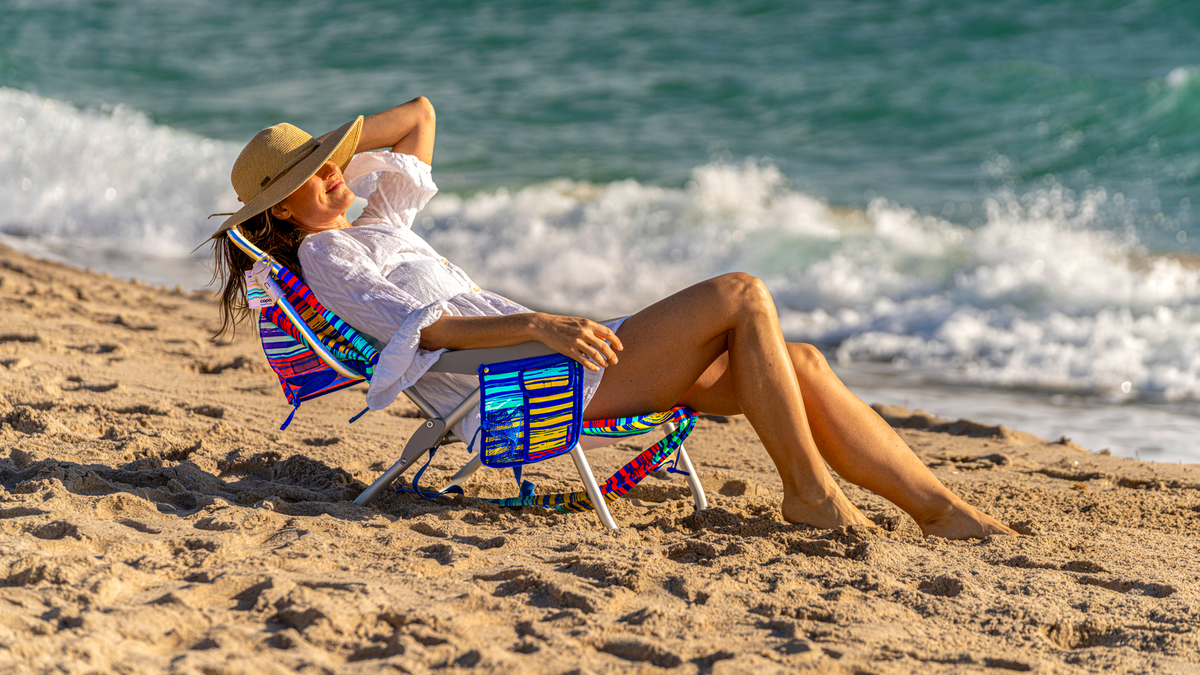
Copa's beach chair range, for example, is built for sustained outdoor use. Chairs designed to hold up across a full beach day, with sun, sand, and repeated setup cycles, can carry over well to the sideline. The same frame durability, fabric resilience, and carry system that makes a beach chair perform well on a Saturday morning at the shore can make it a solid option for a Sunday afternoon at the soccer complex: Copa designs its gear for "Beach days. Game days. Every day."
If you are already considering upgrading your beach gear for the summer, it is worth thinking about how that gear will perform at the field as well. A bundle that includes a quality chair and shade structure does double duty and reduces the total number of products you need to maintain.
Managing Multiple Kids and Multiple Games
The sideline calculus gets significantly more complex when you have more than one child playing, or when one child is playing while younger siblings need to be managed at the same time. This is the reality for a large portion of sports parents, and it requires a different approach to setup than a single-parent, single-viewer scenario.
The core challenge is that you need a setup that keeps everyone comfortable without requiring you to carry an impossible amount of gear. The solution is to think in terms of zones rather than individual pieces of equipment.
The Adult Zone
This is your primary seating area with the best sightline to the field. It should include one or two adult chairs positioned for clear viewing, with shade coverage if possible, and drink storage within reach. This is the zone you will spend the most time in and it should be optimized for sustained comfort.
The Sibling Zone
Adjacent to the adult zone but slightly offset, the sibling zone is where younger children can play, read, or watch without disrupting the adult viewing experience. A ground cloth defines this space clearly and keeps it clean. A small bag with activities, snacks, and a dedicated water bottle makes this zone self-sustaining for short periods, which is what you need to actually watch the game.
The Gear Zone
A designated spot for bags, coolers, extra clothing, and equipment bags keeps the setup organized and prevents the scattered chaos that makes sideline setups feel stressful. The gear zone should be behind or beside the adult zone, not in front of it where it blocks sightlines or creates a tripping hazard.
For families navigating this kind of multi-zone setup, the principles are the same as a well-organized beach day. The logic transfers cleanly: define your space, assign a function to each zone, and stick to the system. You can browse Copa's full range of chairs and shade to build out each zone.
Sun Exposure on the Sideline: A Practical Risk Parents Underestimate
Sideline sun exposure is a serious and systematically underestimated issue. Parents who would never spend a day at the beach without sunscreen routinely sit through three-hour tournaments in direct sun without any protection at all, simply because they do not think of a soccer field as a sun-exposure environment. It is.
Grass reflects less UV than sand or water, but the direct UV coming from overhead on an open field with no canopy is the same as at the beach at the same time of day, and the Skin Cancer Foundation notes that prolonged UV exposure is a major risk factor for skin cancer. Cumulative UV exposure across a full season of weekend tournaments adds up, particularly for parents who are at the field multiple days per week.
The practical solution has two components: personal sun protection (sunscreen, hat, UV-protective clothing) and structural shade. They work best together. Shade cuts direct sun over a long day, but research shows a good deal of scattered and reflected UV still reaches you under an umbrella, so keep using sunscreen in the shade too.
A quality umbrella positioned correctly can reduce your direct UV exposure by a meaningful amount across the course of a game. For this to work, the umbrella needs to be stable enough that it stays in position as conditions change, and adjustable enough that you can angle it appropriately as the sun moves across the sky. An umbrella that tips over or needs constant repositioning is worse than no umbrella, because it creates a distraction and a safety concern.
This is where secure anchoring becomes specifically relevant to the sideline context. Copa's Anchor Max® was designed for the beach, where wind and soft sand are constant variables, and it holds an umbrella steady so you can watch the game instead of your shade structure. On grass fields, check that your anchoring method suits the surface (for example a weighted base or a ground stake) before game day.
Tournament Day Logistics: The Gear List That Actually Works
Tournament day packing is its own skill, and most parents develop it slowly through painful experience. Here is a practical framework for the parent who wants to get there faster.
The fundamental principle is to pack in layers of priority. Everything in your kit should be categorized by how much you would miss it if it were not there, and you should pack accordingly. The highest-priority items are the ones that affect your ability to stay comfortable for the whole day. The lowest-priority items are the ones that would be nice to have but do not fundamentally change the experience.
Non-Negotiables (Pack These First)
- Your chair. The entire premise of this guide. Do not leave without it.
- Sunscreen. SPF 30 minimum, water-resistant, and enough to reapply every two hours. Bring more than you think you need.
- Water. At least one large water bottle per person, plus extras for the athlete. Dehydration affects concentration and mood for everyone on the sideline.
- Shade structure. An umbrella or personal canopy for extended sun exposure. On full tournament days, this is not optional.
- Cash and card. Most tournament venues have food vendors with variable payment options.
High Value (Pack These Second)
- Cooler with snacks and cold drinks. Having your own food supply means not depending on concession stand timing or pricing.
- Extra layers. Morning games are often cold even in warm months. A packable jacket or hoodie takes up minimal space.
- Hat. Wide-brimmed for maximum sun protection, but any hat is better than nothing.
- Portable phone charger. Tournament days are long, and you will use your phone for scores, schedules, and photos.
- Camp blanket or ground cloth. Defines your space and provides clean surface for younger kids.
Situational (Pack Based on Conditions)
- Rain gear. Check the forecast but bring a packable poncho if there is any chance of precipitation.
- Bug spray. Essential for evening games or fields near wooded areas.
- Sibling activity bag. Books, small toys, tablets with downloaded content for younger children between games.
- First aid basics. Band-aids, pain reliever, and blister treatment for the athlete after games.
- Folding side table. If you are managing snacks for multiple kids, this pays for itself immediately.
Many of the same planning habits that make a long beach day easy also work for tournament day prep. You can browse Copa's full range of chairs and shade to see what fits both settings.
The Cross-Season Investment: Gear That Works at the Field and the Beach
One of the most underappreciated aspects of investing in quality outdoor gear is the cross-context value it provides. Parents who spend money on premium chairs and shade structures specifically for soccer season often discover that the same gear performs equally well at the beach, the campsite, the backyard, and the park. This dramatically changes the value calculation.
A Copa beach chair purchased for summer beach days does not sit idle during fall soccer season. It goes to the field. Copa's portable umbrellas can come along too, using an anchoring method suited to the field surface, since the Anchor Max® is designed as a sand-filled base for the beach. The gear earns its cost across multiple contexts rather than sitting in storage for eight months a year.
This is particularly true for families who are active across multiple seasons. The spring soccer parent who becomes the summer beach family who becomes the fall lacrosse parent can build a gear kit that serves all three contexts without duplicating equipment. One quality chair, one quality shade solution, one well-organized bag system covers the whole year.
Copa's bundled product offerings make this cross-season approach practical from a purchasing standpoint. The Deluxe Bundle and Essentials Bundle allow families to get a complete coordinated system in a single order, with free shipping included. Rather than purchasing a beach chair here and an umbrella there and eventually realizing the pieces do not work well together, a bundle gives you a system that was designed to be cohesive from the start.
For families thinking about how beach gear fits into their larger outdoor lifestyle, Copa's full range shows how durable, well-designed gear can become part of a family's outdoor rhythm over time rather than a single-use purchase.
Sideline Etiquette and Setup Positioning: The Unwritten Rules
Getting your gear right is only half the battle. Where and how you set up on the sideline affects your experience and everyone else's. These are the conventions that experienced sideline parents understand instinctively and newer parents often learn the hard way.
Give Coaches Space
The coaching area typically extends along the sideline nearest the team bench. Avoid setting up in this zone or immediately adjacent to it. Coaches need space to move, communicate with players, and manage the game without navigating around spectator setups. Leave a generous buffer from the coaching area, and follow any spectator-area rules your league or venue sets.
Do Not Block Other Parents
Shade structures are wonderful for the person using them, but they can create significant visibility problems for parents positioned behind them. If you are setting up an umbrella or canopy, position it so that it covers you without obstructing the sightlines of the people immediately behind you. Angling it slightly toward the sun rather than straight vertical often accomplishes this.
Arrive Early to Claim Your Spot
The best sideline positions go to the parents who arrive early. This is not pushiness, it is simply how outdoor spectator events work. Arriving thirty minutes before game time gives you first access to the good ground, which means better sightlines, more space for your setup, and the ability to choose your sun orientation rather than accepting whatever is left.
Keep Your Footprint Manageable
A well-organized compact setup is better for everyone than a sprawling one that takes up three times the necessary space. Your zone should be large enough to be comfortable but small enough that other families can set up nearby without conflict. Using a ground cloth to define your space clearly helps prevent the gradual encroachment that happens when setups are not clearly delineated.
Manage Your Noise Level
This is the one that causes the most sideline friction: volume. Cheering enthusiastically is part of the culture. Coaching loudly from the sideline, arguing calls, or creating a distraction for players on both teams is not. The families who are enjoyable to sit near are the ones who cheer genuinely and maintain a basic awareness of how their noise level affects the experience of the people around them.
Building the Sideline Habit: How Experienced Parents Think About Their Setup
After a season or two of regular sideline attendance, the parents who have figured it out share a common characteristic: they have systemized their setup. They do not think about what to bring each week because the decision is already made. Their bag is semi-permanently packed with the right gear, their chair is always in the car, and their pre-game routine is efficient enough that they can be fully set up within five minutes of arriving at the field.
This level of efficiency is not born from exceptional organization. It comes from having made enough decisions about what works that the decisions no longer need to be made again. The chair that is always comfortable becomes the chair that always comes. The shade solution that never tips over becomes the shade solution that always gets packed. The cooler that keeps drinks cold through a full afternoon becomes the cooler that lives in the car during season.
Getting to this point requires an upfront investment of both money and attention. The money goes into gear that is good enough to become permanent fixtures of your sideline routine. The attention goes into noticing what works and what does not across the first few weeks and making adjustments before the habits solidify around the wrong gear.
The parents who are still lugging the same tired folding camp chair into their fourth season are not making an informed choice. They are just not thinking about it. The parents who look genuinely comfortable at hour five of a tournament day made one or two good decisions early in their sideline career and have been benefiting from those decisions ever since.
Frequently Asked Questions
What makes a chair specifically good for sports sidelines versus general outdoor use?
Sideline-specific performance comes down to three factors: structural stability over extended multi-hour use, portability for carrying across large sports complexes, and seat and back geometry that supports comfort during sustained sitting. Chairs engineered for beach and camping use often perform better on sidelines than chairs marketed specifically for sports spectating, because the durability requirements are closer to actual sideline conditions.
How heavy should a portable chair for kids sports be?
For sideline use, aim for a chair that weighs under ten pounds packed. Above that threshold, carrying the chair across a large sports complex alongside other gear becomes genuinely burdensome, especially when managing young children at the same time. The lightest chairs sacrifice structural integrity, so the sweet spot for most parents is in the six-to-nine pound range for a high-quality portable option.
Are beach chairs suitable for use on grass sidelines?
Yes, and often they outperform chairs designed specifically for sports spectating. High-quality beach chairs are engineered for sustained outdoor use, variable terrain, and repeated setup cycles, all of which are exactly what sideline conditions require. Wide-legged designs that work well on sand also provide good stability on soft grass. Narrow-legged designs intended for hard beach access paths may sink slightly on very soft ground, which can be mitigated with a small ground cloth under the legs.
How do I keep a shade umbrella stable on a grass sideline?
The challenge on grass is that traditional sand anchors do not work, and most umbrella stakes are designed for specific soil types. Weighted umbrella bases work on almost any surface but add carrying weight, and ground stakes or tie-downs can help on soft turf where the field allows them. Copa's Anchor Max® is built for sand, so it is ideal for beach days. On a grass sideline, choose an anchoring method made for turf and check the wind before you open your shade.
What is the best seating option for a parent managing young children on the sideline?
For parents managing toddlers or young children simultaneously, the priority is a stable, higher-profile chair that makes it easy to stand up quickly without the chair tipping or folding. A wide-based design with sturdy armrests for leverage is ideal. A dedicated ground cloth defines the sibling play zone clearly and reduces the chaos of managing gear and children in the same space.
How many chairs should I bring for a tournament day?
For a two-adult family, two chairs is the obvious answer. For single parents or parents who frequently attend games alone, one high-quality chair is the priority, with a ground blanket or mat as secondary seating for children. For families with multiple adults attending, a coordinated set of two to three chairs in a matching system (like Copa's bundled offerings) creates a more organized sideline presence than mismatched chairs from different purchase occasions.
How do I protect myself from sun exposure during a full tournament day?
The layered approach works best: SPF 30 or higher sunscreen reapplied every two hours, a wide-brimmed hat, UV-protective clothing where possible, and a structural shade solution (umbrella or canopy) for overhead protection. No single measure is enough on its own. Research has found that umbrella shade alone does not fully prevent sunburn, because scattered and reflected UV still reaches you, so use shade together with sunscreen and clothing rather than instead of them.
What should I do between games at a tournament?
Use the break to reapply sunscreen, hydrate, refill your cooler if possible, and reposition your setup if the sun has moved significantly. If you have younger children, the break is also the time to address their needs before the next game begins. Tournament venues often have restrooms and concession areas that can get crowded during breaks, so sending one adult to handle logistics while the other manages the setup is an efficient division of labor.
Is it worth investing in a sideline chair if my child only plays for one season?
Yes, for two reasons. First, one-season children often become multi-season children, and having good gear ready makes the ongoing commitment more comfortable. Second, a quality portable chair has value far beyond the sports sideline. The same chair that serves you at Saturday games works at the beach, the campsite, the outdoor concert, and the backyard. The investment pays dividends across the full calendar year.
What is the Copa Anchor Max® system and how does it work at sports sidelines?
The Anchor Max® is Copa's patented anchoring system for its umbrellas and cabanas. It is designed to anchor shade securely in sand, using the sand itself to resist wind uplift and tipping. That makes it a strong choice for beach days. On a grass sports sideline, where there is no sand to anchor into, use a weighted base or a turf-appropriate anchor instead, and always keep an eye on wind conditions.
How do I organize my sideline setup when I have gear for multiple children?
Use the zone-based approach: a defined adult seating zone with the best sightline, an adjacent sibling zone with a ground cloth and activity bag, and a rear gear zone for bags and equipment. This spatial organization prevents the chaos that occurs when everything is mixed together and makes it much faster to find what you need during the game.
Can I use the same gear for both beach days and sports sidelines?
Absolutely, and this is one of the strongest arguments for investing in quality beach gear rather than sport-specific products. High-quality beach chairs and shade structures are designed for exactly the kind of conditions that sideline parents face: extended outdoor use, variable terrain, sun exposure, and the need for reliable repeated setup. Copa's product range performs consistently across both environments, making it a practical investment for families who split their outdoor time between the shore and the sports complex.
Key Takeaways for Sideline Parents
- Your chair is the highest-impact investment in your sideline kit. Prioritize seat height, back height, structural integrity, and carry system over feature extras.
- The standard soccer mom chair underperforms on tournament day. Chairs designed for sustained beach and camping use handle multi-hour sideline conditions significantly better.
- Shade is not optional on full tournament days. Sun exposure across a six-to-eight hour outdoor day carries genuine health consequences. A stable, well-anchored shade solution reduces your direct sun exposure, but use it together with sunscreen, a hat and protective clothing, because shade alone does not block scattered UV.
- Read the sideline before you set up. Sun angle, ground condition, wind direction, and sightlines all affect where your optimal position is. Arriving thirty minutes early gives you the access to make a good choice.
- Zone-based organization transforms a chaotic multi-kid sideline into a manageable one. Define adult, sibling, and gear zones clearly and stick to the system.
- Quality gear earns its cost across multiple contexts. A Copa beach chair or shade structure that serves you at the beach in summer and the soccer field in fall provides far better value than sport-specific gear used for only a few months per year.
- Systemize your setup so it requires no decisions on game day. The parents who are consistently comfortable are the ones who have already made the decisions and packed the bag before the season started.
- Sideline etiquette matters. Give coaches space, manage your shade structure's impact on other parents' sightlines, and keep your footprint proportionate to the space available.
The sideline is where parents spend a significant portion of their children's youth sports years. Making that experience genuinely comfortable rather than merely endurable is not an indulgence. It is a reasonable investment in your own wellbeing and your ability to be present and engaged for your kid. Get the gear right once, and every game after that is better for it.
Shop Now
Learn more →
Share:
8 Things Frequent Beach Families Should Know About Durable, Long-Lasting Beach Gear
Why a Backpack Chair Beats a Folding Chair When You Are Carrying Gear Across a Field