

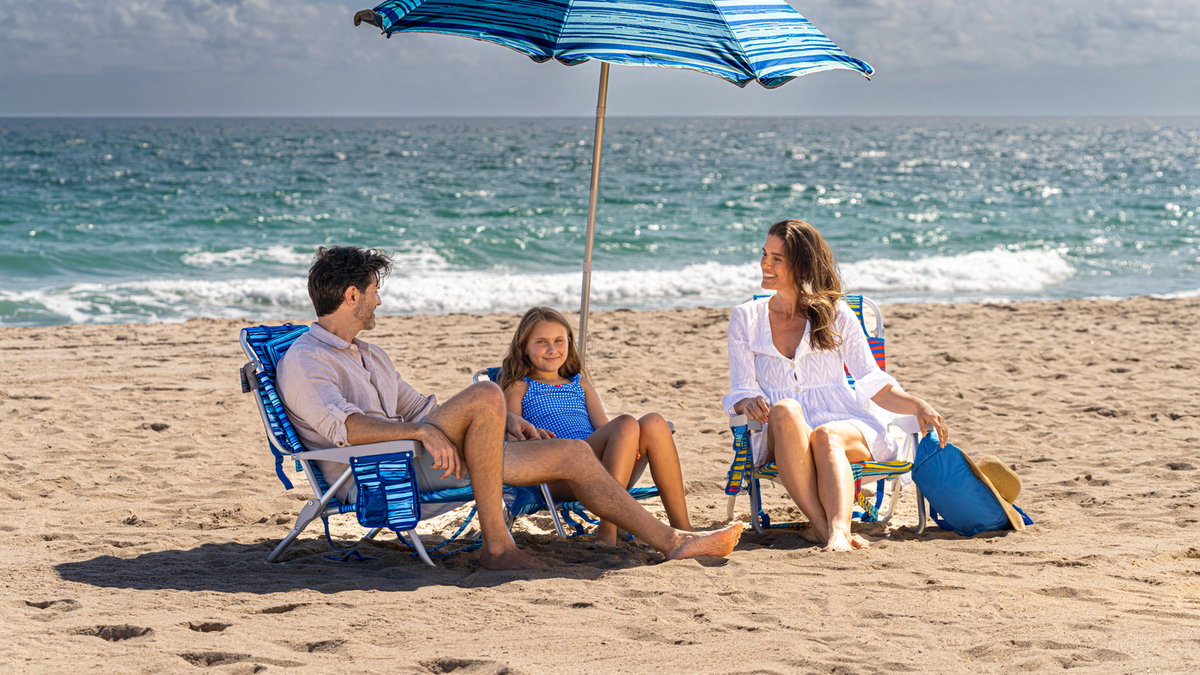
Picture this: you are standing at the edge of a parking lot, staring across three hundred yards of open grass toward a festival stage, a youth soccer field, or a beach access path. In one hand, you have a cooler. Slung over a shoulder, a bag stuffed with sunscreen, snacks, and a change of clothes for the kids. And leaning against your leg, a folding chair with a shoulder strap that keeps slipping down your arm every twelve steps. You have not even started walking yet, and already the trip feels like a logistical negotiation.
This scenario plays out at parks, beaches, sports fields, outdoor concerts, and campgrounds every single weekend. The question of how to carry a chair across open ground sounds trivial until you are doing it while also wrangling a four-year-old and a beach bag that weighs more than a carry-on suitcase. That is when the design difference between a backpack chair and a conventional folding chair stops being an abstract feature comparison and starts feeling very personal.
This article gives you an honest, thorough breakdown of both carry styles: how each performs when you are loaded down with gear, which body of users each genuinely serves, and where the folding chair still holds an edge. If you have ever arrived at your destination sweaty, lopsided, and one shoulder lower than the other, this comparison was written for you.
What Actually Happens to Your Body When You Carry a Folding Chair
A folding chair with a single shoulder strap or a carry handle creates an asymmetric load on your body. The weight hangs from one point, usually on one side, which means your spine, hip, and shoulder compensate to keep you balanced. Over a short walk, this is a minor inconvenience. Over a quarter mile of uneven ground while also carrying other gear, it becomes a genuinely fatiguing problem.
The fundamental issue is that conventional folding chairs were designed to be carried by one person making a single trip from a car trunk to a nearby destination. The original use case assumed the chair was the only thing being carried, or at most one of two items. That use case no longer matches how most outdoor consumers actually use these products.
The Single-Point Carry Problem
When a chair hangs from a single carry strap or handle, its weight shifts constantly as you move. On flat pavement, this is manageable. On grass, sand, or gravel, your gait becomes irregular, and the chair swings with each step. The swing creates momentum that pulls against your grip or shoulder, compounding the effort required to hold it steady. Most people respond by gripping tighter, which accelerates forearm fatigue, or by hiking their shoulder up to prevent the strap from slipping, which creates tension in the neck and upper trapezius.
If you are also pushing a stroller, holding a child's hand, or carrying a cooler in your other arm, the single-point carry becomes genuinely untenable. You end up making multiple trips, asking another adult to carry the chair, or leaving it in the car altogether.
What Happens to Your Hands
The hands-free carry issue is separate from the weight distribution issue, and it matters just as much. With a folding chair on a single-strap carry, both hands are technically available, but in practice one hand is usually occupied steadying the strap or adjusting the chair's position as it shifts. That means one hand is functionally committed to managing the chair throughout the walk, leaving only one hand truly free. For a parent managing children, that is often not enough.
A hands-free chair carry accomplished through a proper backpack harness solves this completely. Both hands are free from the moment you close the car door to the moment you drop the chair at your spot. That difference has real consequences when you are navigating a crowd, crossing a parking lot with children, or carrying a second load of gear.
How a Backpack Chair Changes the Physics of the Trip
A backpack beach chair or backpack outdoor chair shifts the load from a single point on one side of your body to two shoulder straps, distributing weight across your upper back and both shoulders simultaneously. This is the same ergonomic principle behind hiking packs, school backpacks, and military field packs: bilateral load distribution reduces per-shoulder strain, keeps the spine more aligned, and frees both hands for other tasks.
The result is not just more comfort. It is a fundamentally different carrying experience that changes what you are able to bring and how far you are able to walk without stopping.
Weight Distribution Across the Back
When a chair's weight sits across both shoulders with a padded harness, the load tends to feel easier to carry. The chair weighs the same, but spreading that weight across more surface area reduces localized pressure, which can slow how quickly discomfort and fatigue build. A backpack chair that weighs the same as a folding chair will often feel more comfortable over a longer walk because the load is shared more evenly across your body.
For parents who are already carrying a diaper bag, a cooler, and a shade structure, this reduction in perceived effort is significant. It is the difference between arriving at your beach spot feeling ready to enjoy the day and arriving already depleted.
Hands-Free Carry in Practice
With a backpack chair properly worn, both hands remain completely free for the duration of the walk. This matters in ways that only become obvious when you are managing the full complexity of a family outing: holding a child's hand across a parking lot, carrying a second bag in front, steadying a shade structure under your arm, or simply having a hand available when a child stumbles or asks to be picked up.
The hands-free chair carry provided by a backpack harness is not a luxury feature. For parents of young children, it is a safety and practicality requirement that a single-strap folding chair simply cannot meet.
Copa's Backpack Chair: What the Adult Backpack Chair Delivers
Copa's Adult Backpack Chair represents a specific design philosophy: a chair that is genuinely easy to transport across real-world distances while also being comfortable enough to sit in for a full day at the beach or an outdoor event. It is built for the specific scenario described at the opening of this article, where the walk from the car to the destination is long, the load is already heavy, and both hands need to be free.
The Adult Backpack Chair carries on your back via adjustable backpack straps, which spread the chair's weight across both shoulders and keep it against your back as you walk. It also has a carry handle for short hops. Unlike chairs with a single carry strap that swings freely, a backpack-style carry reduces the pendulum effect and makes it easier to navigate crowds, narrow paths, and uneven terrain.
The Carry System
The backpack carry system on the Adult Backpack Chair is designed for the kind of distance and terrain families actually encounter. The adjustable straps let you fit the chair to your back for longer walks, and the chair's profile when packed is compact enough to move through crowded beach access points, sports field gates, and festival entry queues without constantly apologizing to the person behind you.
This matters because the shape of a packed chair determines how much it snags on other people, how easily it fits through turnstiles or narrow gaps, and whether it stays balanced on your back or constantly wants to tip to one side. A well-engineered backpack chair stays centered and close to the body, behaving more like a pack than like a chair you happen to be wearing.
Sitting Comfort After the Walk
A backpack chair that carries well but feels like a lawn chair when you sit in it has only solved half the problem. The Adult Backpack Chair is designed for extended seated comfort, with a wide seating frame and five reclining positions that hold up through a full day outdoors rather than just a few hours. The point is to make the entire experience, from loading the car to sitting in the sun, feel effortless rather than effortful.
Copa builds the Adult Backpack Chair for the family that is already carrying a lot. It is not designed as a minimalist ultralight option for solo hikers; it is designed for the parent who needs the chair to essentially disappear from their mental load once it is on their back, so they can focus on the children, the cooler, and everything else that actually requires attention.
Folding Chair vs Backpack Chair: A Feature-by-Feature Breakdown
Both carry styles have genuine strengths, and choosing between them depends on your specific situation. The comparison below covers the categories that actually matter when you are loading out for a day at the beach, a sports event, or an outdoor festival.
| Feature | Folding Chair (Single Strap) | Backpack Chair (Dual Harness) |
|---|---|---|
| Weight Distribution | ⚠️ Single shoulder, asymmetric load | ✅ Bilateral, spine-aligned distribution |
| Hands-Free Carry | ❌ One hand often used to manage strap | ✅ Both hands fully free |
| Fatigue on Long Walks | ⚠️ Builds quickly on longer walks | ✅ Low, comparable to wearing a daypack |
| Stability While Walking | ⚠️ Tends to swing and shift | ✅ Flush against the back, stays centered |
| Navigating Crowds | ⚠️ Wide profile, catches on people | ✅ Compact profile, easier to navigate |
| Setup Speed | ✅ Generally fast, simple unfold | ✅ Fast, unpack and unfold |
| Child Interaction During Walk | ❌ One hand compromised | ✅ Both hands free to hold, guide, carry children |
| Storage When Not in Use | ✅ Leans against walls easily | ✅ Stands or leans, similar footprint |
| Suitable for Families | ⚠️ Works for adults without children in tow | ✅ Designed for multi-item, multi-person hauls |
| Price Range (Market Average) | $15–$80 depending on quality tier | $60–$150 for premium options |
Scenarios Where the Backpack Chair Wins Decisively
Not every outdoor scenario creates equal pressure on your gear-carrying system. Some situations expose the folding chair's limitations immediately and obviously, while others are more forgiving. The backpack chair wins decisively in several specific contexts that represent the majority of how families actually spend their outdoor time.
Beach Days With Children
A family beach day with children under ten is perhaps the most gear-intensive recreational scenario outside of a camping trip. The typical load includes chairs for every adult, a beach umbrella or shade structure, a cooler, a bag of towels and clothes, sunscreen, toys, snacks, and often a stroller or wagon. Every item needs to get from the parking lot to the beach, and in most cases, the beach access path is not vehicle-accessible.
In this scenario, the folding chair becomes a liability. It is one more thing to carry with a hand that is already full, or a strap that fights with the bag on your other shoulder. A backpack chair eliminates itself as a logistics problem. Once it is on your back, it stops requiring conscious management, and your hands and arms are free to handle everything else.
For families building out their complete beach setup, Copa's approach of bundling chairs with shade structures is specifically designed for this reality. Getting everything as a coordinated system, rather than assembling it piecemeal from different brands, means fewer compatibility surprises and a cleaner carry arrangement. If you are still working through what that full setup looks like, Copa's full range of chairs, shade and bundles is a good place to see how the pieces fit together.
Outdoor Sports Events and Sidelines
Youth sports sidelines represent a particularly challenging carry scenario. Parents typically arrive at a field carrying a camp chair, a bag of team supplies, a personal bag, and often food and drinks for the family. The walk from the parking area to the field can be several hundred yards, often across grass or gravel. The sideline is crowded, and there is no dedicated spot to set down a chair while you manage other items.
A backpack chair in this environment means you walk from the car to your spot in a single trip, hands free, without negotiating the chair around other parents, equipment bags, and children running in every direction. The folding chair equivalent of this experience involves at least one moment of the chair slipping off your shoulder at the worst possible time.
Music Festivals and Outdoor Events
Outdoor concerts and festivals often involve long walks from remote parking areas, security lines, and dense crowds. A folding chair carried on a single strap becomes an obstacle in a crowd, catching on other people and requiring constant repositioning. A backpack chair keeps a compact, back-mounted profile that moves through a crowd the way a backpack does, which is to say, cleanly.
Many outdoor events that allow seating have their own rules about chair size and bags, so check the policy before you go. A backpack chair that packs into its own integrated carry system can be simpler to handle at entry screening because there is less loose gear to repack after inspection.
Campgrounds and Nature Areas
Campground walk-ins, where you park at a trailhead or lot and carry everything to your site, represent the most demanding version of the gear-carry scenario. Here, every pound matters and every free hand is valuable. A backpack chair in this environment behaves like part of your pack system rather than an awkward extra item, which makes a meaningful difference over a walk of five minutes or more.
Scenarios Where the Folding Chair Still Holds Its Own
An honest comparison requires acknowledging where the folding chair continues to be the right answer. The backpack chair wins on carry ergonomics and hands-free convenience, but it is not universally superior in every situation.
Car-Adjacent Seating
If your event or destination allows you to set up immediately beside your vehicle, the carry system becomes irrelevant. Tailgates, drive-in events, beachfront parking lots with direct beach access, and similar situations involve a carry distance of ten to thirty feet. In this context, a folding chair is perfectly adequate and often less expensive. The backpack harness adds cost and complexity that are simply not needed when you are carrying the chair fifteen steps.
Venue Seating That Supplements Fixed Seating
At some events, a personal chair supplements existing bleacher or bench seating rather than replacing it entirely. If you are carrying a chair as a backup or personal preference item in a situation where fixed seating exists, the lightweight, compact folding chair may be the more practical choice purely because it will spend most of its time folded and stored rather than being actively used.
Budget-Driven Purchases
Premium backpack chairs carry a higher price point than entry-level folding chairs. If budget is the primary constraint and the carry distance is short, a basic folding chair is a defensible choice. The ergonomic and convenience advantages of a backpack chair are real, but they require a meaningful spend to access. For occasional, short-distance use, that investment may not be justified.
| Use Case | Best Chair Type | Reason |
|---|---|---|
| Beach day with kids, 200+ yard walk | ✅ Backpack chair | Hands needed for children and gear |
| Youth sports sideline, grassy field | ✅ Backpack chair | Long walk, crowded setup zone |
| Outdoor festival, remote parking | ✅ Backpack chair | Crowd navigation, long carry distance |
| Tailgate directly beside vehicle | ⚠️ Either works | Carry distance is negligible |
| Walk-in campsite, half-mile carry | ✅ Backpack chair | Distance and total load make ergonomics critical |
| Budget purchase for occasional use | ⚠️ Folding chair | Lower price point acceptable for infrequent use |
| Multigenerational beach outing | ✅ Backpack chair | Adults carrying maximum gear, children present |
The Strap Design Decision: Why It Matters More Than Weight
When people compare portable outdoor chairs, the conversation almost always starts with weight. How heavy is it? Can I carry it a long way? But weight is actually the secondary variable. The primary variable is strap design, because a well-designed harness can make a heavier chair feel lighter than a poorly designed strap on a chair that weighs less.
This is a counterintuitive insight that gets overlooked in most chair comparisons, which tend to focus on frame weight and packed dimensions. The strap system determines how that weight is distributed across your body, and distribution is what your muscles actually feel over time.
Padding Placement
On a backpack chair, shoulder strap padding needs to be positioned where the strap contacts the trapezius and the top of the shoulder, not just along the strap's general length. Padding in the wrong position creates pressure points even on a lightweight chair, while correctly positioned padding on a heavier chair can feel almost effortless over a ten-minute walk.
Entry-level backpack chairs sometimes use thin, uniform padding that does not account for the specific contact points on the shoulder. Better-designed options address this with harness geometry built around real-world carry scenarios, so it is worth checking strap padding and placement before you buy.
Strap Width and Stability
Wider straps distribute the same load across more shoulder surface area, which reduces the per-square-inch pressure that causes the "dig" sensation during longer carries. Narrow straps concentrate the load on a smaller area, which is fine for ultralight applications but becomes uncomfortable quickly when the chair has real mass and is being carried alongside other gear.
Strap stability, meaning how well the straps stay in position on the shoulder without sliding inward or outward, is equally important. Straps that migrate during a walk force constant readjustment, which is annoying and defeats the purpose of a hands-free design.
Back Panel Contact
A backpack chair that sits flush against the carrier's back is more stable and more comfortable than one that protrudes or hangs away from the body. When the chair's packed form sits close to the back, the center of gravity stays close to the body's own center of gravity, which means less compensatory muscle engagement and less fatigue. Chairs that hang away from the back create a lever effect that puts continuous strain on the shoulders and upper back even when the chair itself is not particularly heavy.
What Families Actually Forget to Account for When Choosing a Chair
Most families purchasing a beach or outdoor chair focus on the seating experience: comfort, recline angle, armrests, cup holders, and weight capacity. These are all legitimate considerations. But the carry experience is usually evaluated only in retrospect, after the first trip across a long field or through a crowded festival with the wrong chair on the wrong strap.
There are several factors that consistently get underweighted in the buying decision.
The Return Trip
Most people mentally simulate the walk from the car to the destination when they are thinking about carry comfort. They forget to simulate the return trip. At the end of a long beach day or a full afternoon at a sports field, everyone is tired, children are often cranky or half-asleep, and energy reserves are depleted. The return trip with a folding chair slipping off your shoulder while you are also managing a tired four-year-old is a genuinely miserable experience.
A backpack chair carries just as well on the return trip as on the way in, because the dual harness distributes weight regardless of how tired you are. A folding chair's single strap becomes harder to manage as fatigue sets in, because grip strength and shoulder stamina are both lower at the end of the day than at the beginning.
The Mid-Day Chair Relocation
At a beach, a festival, or a sports event, you often move your chair at least once during the day: to follow shade, to get closer to the action, or to accommodate new arrivals in your group. Every mid-day relocation requires picking up and carrying the chair, potentially while already carrying other items. A backpack chair makes this trivial. A folding chair requires setting down whatever else you are holding, rearranging the strap, and then picking everything back up.
How Many Trips Are Actually Required
A family of four going to the beach for a full day typically needs to move: four chairs, a shade structure, a cooler, two to three bags, and various loose items. If two adults are managing this load, each adult is carrying the equivalent of two chairs plus additional gear. The number of trips required to accomplish this with folding chairs versus backpack chairs often differs by one full additional trip, which sounds minor but means leaving children unsupervised at the car or at the beach while the other adult returns for the second load.
Building a complete, coordinated setup that minimizes trips is one of the practical advantages of going with a brand like Copa, where the chairs, shade, and accessories are designed to work together and be carried as a system. If you are planning your next beach day from scratch, Copa's full range of chairs, shade and accessories is a useful starting point for thinking through the full load.
The Decision Framework: Choosing the Right Chair for Your Situation
Rather than offering a generic recommendation, the following framework is designed to walk you through the actual variables that determine which chair type is right for your specific use pattern. Answer each question honestly and the answer becomes clear.
Step 1: How Far Is Your Average Carry Distance?
If your typical walk from vehicle to destination is under one hundred feet, the carry system is largely irrelevant. Either chair works. If your typical walk is one hundred to five hundred feet, the backpack chair becomes noticeably more comfortable, especially with additional gear. If your walk is over five hundred feet or involves rough terrain, the backpack chair is the clearly superior choice and the folding chair will actively create frustration.
Step 2: How Many Other Items Are You Carrying?
If the chair is the only item you are carrying, a folding chair's single-strap system is manageable. If you are also carrying one other item, the folding chair becomes awkward but workable. If you are carrying two or more additional items, which is the normal situation for a family beach day, the backpack chair is the only sensible choice. Your hands need to be free to manage the rest of the load.
Step 3: Are Children Present?
If children under ten are present, the backpack chair is the right answer regardless of carry distance or load. Children require hand-holding in parking lots, guidance on uneven terrain, and occasional lifting or steadying. A chair that occupies one of your hands or one of your shoulders is a safety compromise in a child-present environment.
Step 4: How Often Will You Use It?
If you are a seasonal beachgoer who takes four to six trips per year, the investment in a premium backpack chair delivers clear value. If you are a coastal resident who goes weekly, it becomes essential gear rather than a nice upgrade. If you go once a year and the destination has easy beach access, a folding chair may be adequate and the price difference becomes a legitimate consideration.
Step 5: What Is the Total Carry System?
A backpack chair works best when it is part of a total carry plan. If you have a rolling wagon or cart for the cooler and heavy items, a backpack chair keeps the adults mobile and hands-free while the wagon handles the bulk. If everything is being hand-carried, the backpack chair becomes even more important because there is no mechanical assist for the rest of the load.
Copa's approach to bundling, which pairs chairs with shade structures and accessories as a coordinated system, reflects this total-carry thinking. Copa's backpack chair does not exist in isolation; it is part of a beach day toolkit, alongside shade secured by Copa's patented Anchor Max® technology, designed to make the full experience manageable rather than just optimizing one piece of the puzzle.
For families planning a big beach outing, including for holiday weekends, it is worth thinking about the full setup early. Copa's full collection of chairs and shade is a good place to start if you are planning a major family beach trip and want to think through your gear.
Backpack Chair vs Folding Chair: The Honest Recommendation
For the majority of the families reading this article, the backpack chair is the right answer. The scenario in the opening paragraph, crossing a field or a beach access path with children and a full load of gear, is not an edge case. It is the standard experience of outdoor recreation for families with young children, and it is the scenario where the folding chair's single-strap design fails most visibly and most consistently.
The folding chair vs backpack chair debate tends to be settled quickly by anyone who has done both, because the practical difference in carry experience is immediate and obvious. The backpack chair feels like wearing a daypack. The folding chair feels like carrying a piece of furniture.
The folding chair earns its place in specific scenarios: car-adjacent setups, budget-constrained purchases, and situations where the chair is the only item being carried. Outside of those contexts, the ergonomic, safety, and convenience advantages of a properly designed backpack chair are clear enough that the higher price point is almost always justified by the end of the first long walk.
Copa's backpack chair is built for the family that knows this distinction from experience. The dual-strap backpack carry and the compact packed profile are design choices that came from understanding what actually happens when a parent walks a quarter mile across a beach with two children and a full day's worth of gear. That understanding is what separates a genuinely useful outdoor chair from one that just looks good in a product photo.
Frequently Asked Questions About Backpack Chairs and Folding Chairs
What is a backpack chair?
A backpack chair is a portable outdoor chair that packs into a carry form with two shoulder straps, allowing it to be worn on the back like a backpack rather than carried by a handle or single strap. This design distributes the chair's weight across both shoulders and keeps both hands free during transport.
Is a backpack beach chair comfortable to sit in?
Yes, premium backpack beach chairs are designed for extended seated comfort, not just convenient carry. The seating frame, fabric, and support structure of a well-made backpack chair are comparable to a quality folding chair. The carry system is an addition to the seating experience, not a compromise of it.
How much heavier is a backpack chair than a folding chair?
Backpack chairs are not necessarily heavier than folding chairs of comparable quality. The weight difference, where it exists, is typically in the harness and carry system components. However, because the weight is distributed across two shoulders and your back rather than a single strap, a backpack chair often feels lighter in practice than a folding chair of equal or lesser weight.
Can I carry other items while wearing a backpack chair?
Yes. That is the primary advantage of the backpack carry design. With the chair on your back, both hands are free to carry a cooler, a beach bag, a shade structure, or a child. This is what makes the backpack chair particularly valuable for family outings where the total gear load is high.
What makes the Copa Adult Backpack Chair different from other backpack chairs?
Copa's Adult Backpack Chair is designed for the family beach day scenario: it carries on your back with two shoulder straps, so the weight sits across both shoulders and both hands stay free on the way to the sand. It is also part of Copa's coordinated beach system, so you can pair it with Copa shade and the Anchor Max umbrella base rather than buying it as a standalone product.
Are backpack chairs allowed at outdoor concerts and festivals?
Most outdoor events that allow personal chairs also accommodate backpack chairs. The backpack carry form is often more convenient at events because it maintains a compact, body-close profile through security lines and crowds. Always check the specific event's chair policy for size restrictions before attending.
How do I clean a backpack beach chair?
Most backpack beach chairs can be wiped down with a damp cloth and mild soap for sand, sunscreen, and general grime. For fabric components, allow the chair to air dry completely before storing to prevent mildew. Check the manufacturer's specific care instructions for your chair's fabric type.
Is a folding chair ever a better choice than a backpack chair?
Yes. If your seating destination is directly adjacent to your vehicle, if budget is the primary constraint, or if you are the only person carrying only the chair, a folding chair is a practical and reasonable choice. The backpack chair's advantages are most pronounced in high-load, long-carry, child-present scenarios.
What carry distance justifies upgrading to a backpack chair?
As a general guide, if your average walk from vehicle to seating destination is over one hundred feet and you are carrying any additional gear, the backpack chair will feel meaningfully better. If you are also managing children, that threshold drops further. For walks of five minutes or more with a full load, the backpack chair is the clearly superior choice.
Can a backpack chair double as a hiking chair?
Premium backpack chairs are suitable for moderate outdoor carry scenarios including campground walk-ins and short trail hiking. For technical hiking where every gram matters, dedicated ultralight camp chairs may offer a better weight-to-comfort ratio. For general outdoor recreation including beaches, fields, and campgrounds, a quality backpack chair handles the full range of scenarios well.
Do backpack chairs have weight limits?
Yes, all chairs have a stated weight capacity. Always check the specific product's weight rating before purchase, particularly if you are shopping for a heavier-set adult or a chair that will be shared across users of different sizes.
What should I look for in a backpack chair harness?
Look for padded shoulder straps that are wide enough to distribute weight without digging, a back panel design that holds the chair close to your body rather than letting it hang away from you, and strap adjustment points that allow you to customize the fit. Straps that are narrow, unpadded, or poorly positioned will cause shoulder fatigue even on a lightweight chair.
Key Takeaways
- Weight distribution is more important than weight. A backpack chair's dual-strap harness distributes load across both shoulders and the back, making it feel lighter than a same-weight folding chair on a single strap.
- Hands-free carry is a safety requirement, not a luxury, when children are present. Both hands need to be available for child management in parking lots, on uneven terrain, and in crowds.
- The return trip matters as much as the outbound walk. Fatigue at the end of a beach day makes a poorly designed carry system significantly worse. A backpack chair performs consistently regardless of how tired you are.
- Folding chairs are the right choice in specific contexts: car-adjacent setups, minimal gear loads, and budget-constrained purchases. Outside those contexts, the backpack chair wins.
- Copa's Adult Backpack Chair is designed for the full family scenario, with a two-strap backpack carry that keeps your hands free from car to beach.
- A coordinated gear system reduces trips and logistics complexity. Pairing a backpack chair with a bundled shade and accessory system means fewer carry decisions and a cleaner overall experience from car to beach and back.
- Strap design, not chair weight, is the primary variable in carry comfort. Evaluate padding placement, strap width, and back panel contact before choosing between options.
Shop Now
Learn more →
Share:
The Sideline Parent's Guide to Staying Comfortable Through Back-to-Back Games
Fall Outdoor Events: Choosing Seating for Parades, Festivals and Outdoor Concerts