

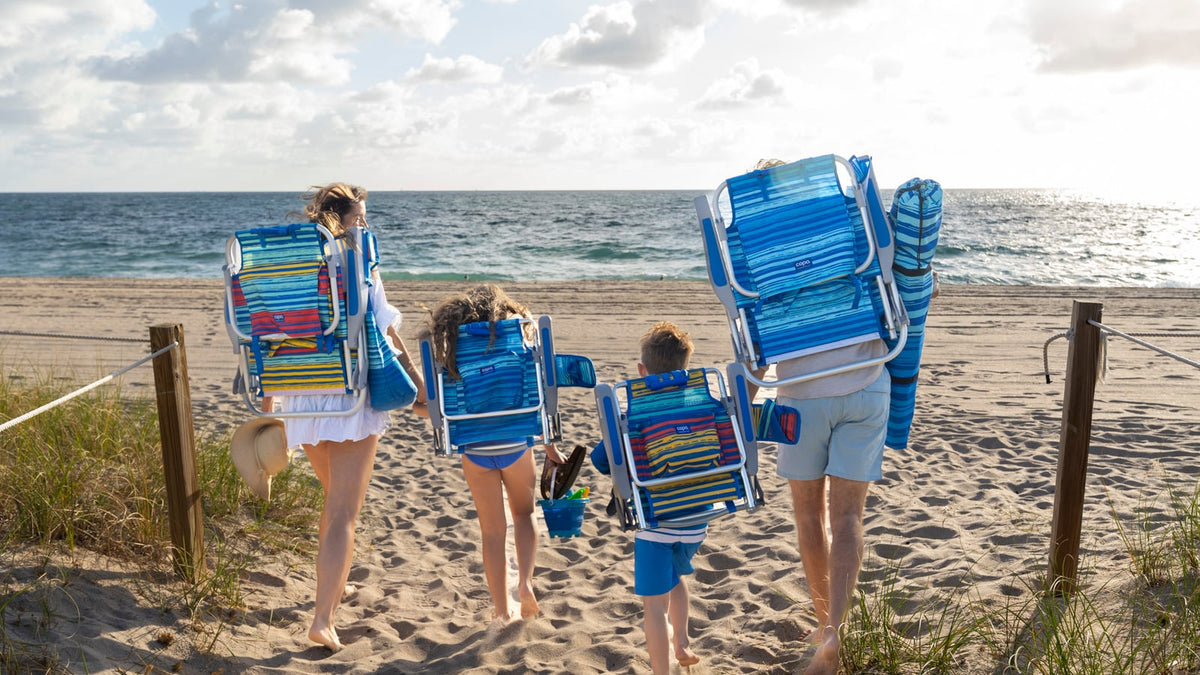
It happens faster than you'd expect. You've hauled the cooler across the sand, wrestled the chairs into position, slathered sunscreen on three squirming kids, and finally planted your beach umbrella with what feels like enough force to anchor a ship. Then a gust rolls in off the water, and your umbrella tilts, spins, and goes airborne, tumbling down the beach like a tumbleweed while everyone in a fifty-foot radius ducks for cover.
A beach umbrella that isn't properly anchored isn't just an inconvenience. It's a genuine hazard. The U.S. Consumer Product Safety Commission has documented injuries from windborne beach umbrellas, and local beaches from Cape Hatteras to Santa Monica have issued safety advisories about improperly secured shade structures during peak season. The problem is almost never the umbrella itself. It's the setup.
This guide walks you through exactly how to anchor a beach umbrella in sand the right way, step by step, so it stays put through afternoon sea breezes, gusts, and the general chaos of a family beach day. Whether you're working with a basic pole umbrella or a purpose-built beach umbrella that won't fly away, the principles here will transform how you set up shade for the rest of your beach-going life.
What You Need Before You Start (Tools, Gear, and Prerequisites)
Before driving a single pole into the sand, take stock of what you're working with. The right gear makes every subsequent step easier, and going in underprepared is the most common reason beach umbrellas fail. This prep phase takes five to ten minutes and saves you from a frustrating reset mid-morning.
The Umbrella Itself
Not all beach umbrellas are engineered equally when it comes to wind resistance. A standard patio umbrella with a flimsy center pole will fail in a stiff sea breeze regardless of how well you anchor it. For a genuinely windproof beach umbrella, look for:
- A vented canopy: A double-canopy or vented design allows wind to pass through the top rather than catching it like a sail. This is one of the single most effective design features for wind resistance.
- A tilt mechanism: The ability to angle the umbrella into the wind dramatically reduces lift forces on the canopy.
- A corrosion-resistant pole: Aluminum or fiberglass poles resist rust and maintain structural integrity in salt air.
- A purpose-built anchor system: This is where products like Copa's Anchor Max technology genuinely change the game. Rather than relying on a simple spike pressed into loose sand, the Anchor Max system is engineered to create a secure, stable hold that resists the lateral and rotational forces that typically dislodge beach umbrellas. It's the difference between hoping your umbrella stays put and knowing it will.
Additional Tools That Help
- A rubber mallet (for dense, compacted sand near the waterline)
- A sand anchor or sand screw (as a supplement to the primary pole anchor on very windy days)
- A small bucket of water (to soften dry, loose sand before insertion)
- A wind meter or weather app (to know what you're dealing with before you set up)
Know Your Conditions
Check the wind forecast before you leave home. Sustained winds above 20 mph create challenging conditions for any beach umbrella setup. Above 25 mph, even the best beach umbrella for wind should be closed and stowed as a safety measure. The National Weather Service provides beach forecast conditions for coastal areas, including wind speeds and gust advisories. Knowing the forecast lets you make an informed decision about umbrella placement and setup strategy before you arrive.
Estimated time for this step: 5–10 minutes (mostly gear check and weather review the night before)
Step 1, Choose the Right Spot on the Beach
Location is the first and most underrated factor in anchoring a beach umbrella that won't fly away. Where you plant your umbrella on the beach determines the sand density, wind exposure, and long-term stability of your setup throughout the day. Spending two minutes choosing the right spot saves you from re-anchoring every hour.
Read the Sand
Sand is not uniform across a beach. The dry, loose sand near the top of the beach (furthest from the water) is the hardest to anchor in because it's granular and shifts easily. The damp, compacted sand closer to the waterline provides far more holding power. The sweet spot is typically the transition zone: damp enough to compact firmly around your pole, but far enough from the surf that you won't be repositioning every time the tide comes in.
Avoid areas where the sand looks churned up, heavily footprinted, or unusually soft. These are signs of poor compaction. Press your heel firmly into a potential spot before committing. If your foot sinks more than two inches without resistance, keep walking.
Position Relative to Wind Direction
Observe the wind direction when you arrive. On most ocean beaches, the prevailing wind comes off the water and blows inland. Position yourself so the wind hits the back of the umbrella canopy, not the face. This creates a natural aerodynamic advantage. When wind pushes against the back of a tilted umbrella, the force drives the pole deeper into the sand rather than prying it loose.
Look for any natural windbreaks nearby: dunes, vegetation lines, or other families' large shade structures can all reduce wind exposure significantly. On an open, flat beach with no natural shelter, your anchor technique becomes even more critical.
Avoid These Common Location Mistakes
- Too close to the dunes: Foot traffic from beachgoers walking around dunes can loosen the sand around your anchor point throughout the day.
- Too close to the water: Wave wash and tidal creep can undermine your anchor over time, and wet sand that's constantly disturbed by wave action offers less stable holding than it appears.
- On a slope: Even a slight grade causes umbrella poles to lean, shifting force onto one side of the anchor and eventually causing it to fail.
- Near rocks or shells: Subsurface objects prevent the pole from being driven to adequate depth and can create a fulcrum effect that multiplies wind forces on the anchor point.
Estimated time for this step: 2–5 minutes
Pro tip: If you arrive early in the morning, the sand near the high-tide line is often at its most compact from overnight wave action. This is prime anchoring territory before the beach fills up and foot traffic loosens the surface.
Step 2, Prepare the Sand Before You Insert the Pole
Most beach umbrella failures happen because the pole was simply pushed or pounded straight into unprepared sand. Preparing the insertion point first takes less than two minutes and dramatically increases how securely the anchor holds throughout the day.
Why Sand Preparation Matters
Dry, loose sand offers almost no lateral resistance to a pole. The pole creates a narrow channel as it enters, but the surrounding sand doesn't compress tightly around it. The result is a wobbly, easily dislodged anchor. When you prepare the sand first, you create a denser, more cohesive matrix around the pole that grips it from all sides.
The Water Method (Most Effective for Dry Sand)
If you're setting up in the dry sand zone, pour roughly half a cup of water directly onto the spot where you plan to insert the pole. Wait thirty seconds for it to absorb and percolate down. Then pour another quarter cup. This temporarily increases the sand's cohesion and compaction. The effect lasts long enough to get your pole inserted and seated, after which the sand dries and tightens around the pole as the moisture evaporates.
The Starter Hole Method
Use a pointed stick, a sand screw, or the tip of a closed umbrella pole to create a pilot hole. Rotate as you push down, removing a small amount of sand from the hole in a spiraling motion rather than just compressing it. This keeps the sand around the hole walls dense while clearing the center for clean insertion. A pilot hole should be roughly six to eight inches deep and slightly narrower than your umbrella pole diameter.
Wetting and Packing the Pilot Hole
Once you have a pilot hole, pour a small amount of water into it. Use your finger or a stick to work the water into the walls of the hole, encouraging the surrounding sand to compact. This creates a sleeve of denser sand that will grip your pole far more effectively than the loose surface layer.
Estimated time for this step: 2–3 minutes
Warning: Avoid over-saturating the sand. Waterlogged sand can become almost liquefied in the top layer, which paradoxically reduces holding power. The goal is damp and compacted, not wet and loose.
Step 3, Insert the Pole Using the Auger (Corkscrew) Technique
How you drive the pole into the sand is just as important as where and how deep. The auger technique, sometimes called the corkscrew method, is the single most effective way to create a strong anchor hold in beach sand, and it works with any umbrella that has a pointed pole tip.
The Auger Technique, Explained
Rather than pushing or pounding the pole straight down, you rotate it clockwise while applying steady downward pressure. Think of how a corkscrew enters a wine bottle: the rotation allows it to bite into the material and pull itself deeper with each turn, while also displacing material to the sides in a way that creates a tight, interlocking grip.
In sand, the rotation displaces grains outward and downward rather than compressing a loose channel directly below the tip. The displaced grains pack tightly around the pole as it descends, creating a spiral column of compacted sand that resists lateral movement from all directions.
Step-by-Step Rotation Instructions
- Place the pole tip at the center of your prepared pilot hole, keeping it perfectly vertical.
- Apply firm, even downward pressure with both hands near the top of the pole.
- Begin rotating clockwise in full, deliberate rotations (not quick back-and-forth wiggles).
- Maintain consistent downward pressure throughout each rotation. The pole should descend roughly one to two inches per full rotation in well-prepared sand.
- Continue until the pole is at least 18 inches deep. For windier conditions or loose sand, aim for 24 inches.
- Once at depth, give the pole three or four firm presses (not rotations) to seat the base firmly.
Depth Is Non-Negotiable
Eighteen inches is the minimum effective depth for any beach umbrella pole. A pole inserted only eight to twelve inches, which is what most casual beachgoers achieve by just pushing down, has a short lever arm below the sand surface. Wind forces on the canopy create enormous torque at the sand line. The deeper the pole, the longer the counter-lever arm underground, and the more force is required to tip it.
For reference: a six-foot umbrella canopy catching a 20 mph wind generates roughly the same torque at the base as a moderately loaded wheelbarrow being tipped sideways. An 18-inch anchor depth can handle this; an 8-inch depth cannot.
How Copa's Anchor Max Changes This Step
Copa's Anchor Max system is built around a purpose-designed anchor mechanism that goes beyond a standard pointed pole. The system is engineered specifically to maximize holding power in beach sand conditions, translating the auger principle into a product-level solution. When you use the Anchor Max, the mechanics of Step 3 are optimized from the start, because the anchor geometry is designed to displace and compact sand most effectively as it rotates into position. You're not fighting the setup; the product works with the physics of sand anchoring.
Estimated time for this step: 3–5 minutes
Common mistake: Using a back-and-forth rocking motion instead of clean clockwise rotation. Rocking loosens the sand on both sides of the pole instead of compacting it, creating a wider, looser channel that actually reduces holding power.
Step 4, Angle the Umbrella Into the Wind
Anchoring the pole is only half the equation. How you position the canopy relative to wind direction is what determines whether your umbrella stays put or acts like a sail. This step is quick but absolutely critical for any setup, and it's the step most families skip entirely.
The 20-Degree Rule
Once the pole is anchored, tilt the umbrella approximately 20 degrees into the wind (toward the direction the wind is blowing from). On most ocean beaches, this means tilting the umbrella toward the water. This simple adjustment accomplishes three things:
- It reduces the effective surface area of the canopy exposed to wind, because the canopy is no longer perpendicular to the airflow.
- It changes the aerodynamic force from a lifting force (which pulls the anchor out from above) to a pushing force (which drives the pole deeper into the sand).
- It shifts the canopy's center of pressure closer to the anchor point, reducing the torque arm that wind creates at the base of the pole.
Using the Tilt Mechanism Correctly
Most quality beach umbrellas include a tilt mechanism at the top of the pole that allows the canopy angle to be adjusted independently of the pole itself. Use this to direct shade onto your seating area while keeping the pole vertical or slightly inclined into the wind. A vertical pole with a forward-tilted canopy offers the best combination of anchor stability and effective shade coverage.
If your umbrella does not have a tilt mechanism, you can achieve a similar effect by adjusting the angle of the entire pole. Lean the pole toward the water (into the wind) at a slight angle during insertion. This is less precise than a tilt mechanism but accomplishes the same aerodynamic goal.
Monitoring Wind Shifts Throughout the Day
Wind direction on ocean beaches can shift by 30 to 45 degrees over the course of a morning as thermal gradients change between land and sea. Make a habit of checking the umbrella's orientation relative to wind every hour or so. A quick repositioning of the tilt mechanism costs thirty seconds and can prevent a failure that costs you an afternoon of shade.
Estimated time for this step: 1–2 minutes
Alternative approach: On calm days (under 10 mph), position the umbrella vertically to maximize shade coverage rather than angling it into the wind. Save the 20-degree tilt for moderate to strong wind conditions.
Step 5, Reinforce the Base with Packed Sand
Once the pole is inserted at the correct depth and angle, reinforcing the base adds a final layer of stability that can make a meaningful difference on windy days. This step takes less than three minutes and requires no additional tools.
The Sand Collar Technique
Scoop loose sand from around the insertion point and pack it firmly against the base of the pole in all directions, creating a collar or mound of compacted sand roughly two to three inches high and six inches in diameter. Press down firmly with your palms as you build this collar, compressing the sand as densely as possible.
The sand collar accomplishes two things. First, it seals any gap between the pole and the surrounding sand that may have formed during insertion (especially if some sand was displaced upward during the auger process). Second, it adds a physical buttress at the surface level that resists the lateral movement of the pole as wind forces try to rock it.
The Water-Pack Method for Extra Hold
For particularly windy conditions, pour a small amount of water over the sand collar after you've built it up. Work the water into the collar with your fingers, packing the wet sand tightly against the pole. As this dries in the sun over the next thirty to sixty minutes, it forms a surprisingly solid, cementlike grip around the base of the pole. This is the beach equivalent of setting a fence post in concrete, on a much smaller and more temporary scale.
Weighing Down the Base
If you have a heavy beach bag, a cooler, or a mesh bag of wet sand available, placing it directly at the base of the umbrella pole adds downward force that counteracts the lifting and tipping forces generated by wind. This is especially useful if the sand in your chosen spot is looser than ideal or if wind conditions escalate after you've already set up.
Many families also use purpose-built sand anchor bags: fabric bags that you fill with sand on-site and weight down over the base of the umbrella pole. These are compact to pack and can add fifteen to twenty pounds of stabilizing ballast in under two minutes.
Estimated time for this step: 2–3 minutes
Pro tip: Check the sand collar after the first thirty minutes. If the umbrella has settled or shifted, the collar may have loosened. Repack it firmly and add the water-pack treatment if you haven't already.
Step 6, Use a Sand Screw Anchor as a Secondary Anchor Point (Advanced)
For the most demanding conditions, including sustained winds above 15 mph or particularly loose, dry sand, adding a secondary anchor point using a dedicated sand screw dramatically increases your setup's resilience. This step is optional for calm days but should be considered standard practice for beach locations known for strong coastal winds.
What Is a Sand Screw Anchor?
A sand screw anchor (also called a beach anchor or spiral stake) is a helical metal or heavy-duty plastic screw, typically eight to twelve inches in diameter, designed to be twisted into the sand and provide a fixed, low-profile anchor point. They are widely available at beach supply shops and outdoor retailers, and they pack flat enough to slip into a beach bag.
How to Set Up a Secondary Anchor Point
- After completing Steps 1 through 5, identify the windward side of your umbrella pole (the side facing into the wind).
- Twist the sand screw into the sand approximately 18 to 24 inches from the base of the umbrella pole on the windward side, using the same clockwise rotation technique used for the pole itself. Drive it down until only the top loop is visible above the sand.
- Attach a guy rope, bungee cord, or heavy-duty cord from the umbrella pole (tied just above the sand line) to the loop on the sand screw anchor.
- Pull the cord taut and tie it off securely. The angle between the cord and the sand surface should be approximately 30 to 45 degrees for maximum holding efficiency.
- Optionally, add a second sand screw on the leeward side (downwind) to prevent the pole from rocking in that direction as gusts subside.
When This Step Is Worth the Extra Effort
If you're setting up at beaches known for afternoon sea breezes (such as many Atlantic Coast or Gulf Coast locations), or if the forecast shows wind gusts above 20 mph, this secondary anchor step is worth the five minutes it takes. It transforms a well-anchored umbrella into an exceptionally stable one, giving you genuine peace of mind throughout the day rather than periodic anxiety every time a gust rolls through.
Estimated time for this step: 5–7 minutes
Warning: When using guy ropes or cords at ankle height, mark them visibly with brightly colored ties or position them so they're not crossing walkways. Tripping hazards at the beach are a real concern, especially with young children running around.
Step 7, Monitor, Adjust, and Know When to Close the Umbrella
A well-anchored beach umbrella still requires periodic attention throughout the day. Sand conditions change, wind picks up, and even the best anchor setup can loosen over several hours of sustained wind pressure. Building a simple monitoring habit into your beach day keeps everyone safe without requiring constant vigilance.
The Thirty-Minute Check
Set a casual reminder to glance at your umbrella anchor point every thirty minutes. You're looking for three things:
- Any visible lean or tilt in the pole that wasn't there when you set up (a sign the anchor is loosening)
- A gap opening between the pole and the sand collar (indicating the base has shifted)
- Unusual vibration or oscillation of the canopy in gusts (a sign the wind angle has changed and the tilt needs adjustment)
If you notice any of these, address them immediately. Re-packing the sand collar takes less than a minute. Adjusting the tilt mechanism takes thirty seconds. Early intervention prevents the kind of dramatic failure that sends the umbrella tumbling down the beach.
When to Close the Umbrella
No anchor technique makes a beach umbrella safe in all wind conditions. When sustained wind speeds exceed 20 to 25 mph, the safest decision is to close and secure the umbrella. Signs that conditions have exceeded safe limits include:
- The canopy is straining visibly against the pole connection point
- The umbrella is rocking or creaking despite a properly set anchor
- Other families around you are closing their umbrellas
- Lifeguard staff are advising shade structures be secured
Closing an umbrella takes thirty seconds. Retrieving an airborne umbrella from the beach, or dealing with an injury it causes, takes far longer. When in doubt, close it.
Re-Setting After Wind Events
If a gust has rocked your umbrella and you feel it has loosened, don't just push it back into position and hope for the best. Remove the pole completely, re-prepare the hole using the water method from Step 2, and re-insert using the full auger technique from Step 3. A quick patch-up of a loosened anchor rarely holds as well as a proper reset.
Estimated time for this step: Ongoing, 30-second checks every 30 minutes
For families who want to spend less time managing their setup and more time actually enjoying the beach, this is exactly where investing in the right gear pays off. Copa's Anchor Max system is designed to minimize how often you need to intervene with a re-anchor. A solid initial setup with quality equipment should hold through a normal beach day without constant adjustment.
For a broader look at everything that goes into a smooth family beach day, the complete beach setup guide for families covers the full picture from gear selection to teardown.
Choosing the Right Umbrella for Wind-Resistant Performance
The best anchor technique in the world is only as good as the umbrella it's supporting. For families who want a beach umbrella that won't fly away, the design and engineering of the umbrella itself are just as important as the anchoring method. Understanding what separates a genuinely wind-resistant umbrella from a marketing claim helps you make a smarter purchase decision.
Vented vs. Non-Vented Canopies
A vented canopy has a gap or secondary layer at the top of the umbrella through which wind can escape. When wind hits a non-vented canopy, all of the force is transferred to the pole and anchor. When wind hits a vented canopy, a significant portion of that force bleeds off through the vent, reducing load on the anchor by a meaningful margin. For families in coastal areas with regular afternoon breezes, a vented canopy is not a luxury feature; it's a functional necessity.
Canopy Size and Wind Load
Larger canopies provide more shade, but they also catch more wind. A 7-foot canopy in a 15 mph wind generates considerably more force than a 6-foot canopy in the same conditions. For families with young children who need maximum shade coverage, the tradeoff is worth it, but the anchor technique must be proportionally more thorough. Going through every step of this guide becomes even more important with a larger canopy.
The Role of Copa's Anchor Max System
Copa designed the Anchor Max specifically to address the anchor-failure problem that plagues standard beach umbrellas. Rather than relying on a basic sharpened pole tip that simply punctures the sand, the Anchor Max uses an engineered anchor mechanism designed to create maximum holding resistance in real beach sand conditions. The system is built into Copa's shade products, meaning customers get the anchor advantage as part of the product rather than as a separate add-on.
This matters because the physics of sand anchoring favor systems that maximize the contact area between the anchor and the surrounding sand, create a mechanical interlock with the sand matrix rather than just relying on friction, and resist the specific combination of lateral, rotational, and upward forces that wind generates on a beach umbrella.
The Anchor Max addresses all three of these requirements, which is why Copa positions it as a core engineering differentiator rather than a marketing feature. You can explore Copa's full range of shade and bundle options at love-copa.com.
Comparison: Umbrella Types and Wind Performance
| Umbrella Type | Vented Canopy | Tilt Mechanism | Purpose-Built Anchor | Wind Rating |
|---|---|---|---|---|
| Basic patio umbrella | ❌ | ❌ | ❌ | Low |
| Standard beach umbrella | ⚠️ Sometimes | ⚠️ Sometimes | ❌ | Moderate |
| Vented beach umbrella | ✅ | ✅ | ❌ | Good |
| Copa umbrella with Anchor Max | ✅ | ✅ | ✅ | Excellent |
Beach Umbrella Safety: What You Need to Know Beyond Anchoring
Anchoring technique is the foundation of beach umbrella safety, but it's not the complete picture. A comprehensive approach to using a windproof beach umbrella safely includes understanding local regulations, recognizing your own umbrella's limits, and knowing what to do when conditions change unexpectedly.
Local Beach Regulations on Umbrella Anchoring
Many popular beach destinations have enacted specific regulations around beach umbrella setup, driven largely by the documented hazard of improperly anchored umbrellas. Some jurisdictions require umbrellas to be anchored to a minimum depth. Others restrict umbrella use entirely during high-wind advisories. Before setting up at an unfamiliar beach, check with local beach management or the park service for any specific requirements. The National Park Service's beach safety resources are a good starting point for beaches within national seashore areas, including Cape Hatteras, Cape Cod, and Canaveral.
Understanding Your Umbrella's Load Limits
Every beach umbrella has a practical wind load limit beyond which no anchoring technique can keep it safely in place. Manufacturers rarely publish specific wind speed ratings, but a general rule of thumb is that any beach umbrella should be closed when sustained winds exceed 20 mph, regardless of anchor quality. Use a simple wind meter app on your phone or observe the visual cues: whitecaps on the water typically correspond to sustained winds of 11 to 16 mph; blowing sand and spray correspond to 17 mph and above.
Beach Safety for Families with Young Children
Young children are the most vulnerable to injuries from airborne beach umbrellas, both because they're closer to the ground (where a tumbling umbrella first makes contact) and because they're less able to react quickly to a falling or rolling hazard. Position children's seating and play areas to the leeward side of the umbrella, away from the direction a falling pole would travel. And always involve older children in understanding that the umbrella is not a toy or climbing frame; even a well-anchored pole can be destabilized by a child hanging from the canopy edge.
The Multigenerational Beach Day Consideration
For multigenerational family beach days that include elderly family members, the shade and safety stakes are even higher. Older adults are significantly more vulnerable to heat-related illness from sun exposure, and a failed shade structure mid-afternoon creates a genuine health risk. Building a robust anchor setup at the start of the day means the whole family can relax without the periodic anxiety of watching the umbrella lean further with each gust.
How to Anchor a Beach Umbrella in Sand: The Quick-Reference Decision Framework
Different beach conditions call for slightly different approaches. Use this framework to quickly determine which steps to prioritize based on what you're dealing with when you arrive at the beach.
| Condition | Sand Type | Wind Speed | Priority Steps | Secondary Anchor Needed? |
|---|---|---|---|---|
| Ideal conditions | Damp, compact | Under 10 mph | Steps 1, 3, 4 | ❌ No |
| Moderate challenge | Dry, loose | 10–15 mph | All steps 1–5 | ⚠️ Consider it |
| Challenging | Very dry/loose | 15–20 mph | All steps 1–6 | ✅ Yes |
| Close the umbrella | Any | Above 20 mph sustained | Step 7 (close) | N/A |
Packing for a Wind-Ready Beach Day: The Gear List That Makes Anchoring Easier
Half the battle of proper beach umbrella anchoring happens before you leave home. Having the right items in your beach bag means you can execute every step of this guide without improvising or making do with whatever happens to be nearby.
The Wind-Ready Beach Bag Checklist
- A beach umbrella with a vented canopy and tilt mechanism (ideally with a built-in anchor system like Copa's Anchor Max)
- A small water bottle dedicated to sand preparation (16 to 24 oz is plenty; don't waste drinking water on this)
- One or two sand screw anchors (compact enough to fit in any beach bag, invaluable in windy conditions)
- A length of bright-colored paracord or bungee cord (8 to 10 feet, for guy lines if needed)
- A rubber mallet or heavy stick (for dense sand near the water line)
- A wind speed app on your phone (free options are widely available; Weather Underground and Windfinder both offer reliable coastal readings)
For a comprehensive look at everything worth packing for a family beach day, the ultimate family beach packing list covers gear selection across all categories, from shade and chairs to snacks and first aid.
Bundling Your Shade System
One of the most practical decisions a beach-going family can make is purchasing a coordinated shade system rather than assembling mismatched components. When the umbrella, chairs, and anchor system are designed to work together as a unit, setup is faster, more reliable, and less prone to the compatibility problems that often cause anchor failures (like a pole diameter that doesn't fit the available sand screw collar, or a canopy that overwhelms the pole's structural rating).
Copa's bundled packages are built around this systems-thinking approach. The Deluxe Bundle and Essentials Bundle pair Copa's shade solutions with the brand's premium beach chairs and accessories, so everything you need arrives together, fits together, and works together from the first day you use it. Free shipping on bundles removes the last friction point from the purchase decision.
Frequently Asked Questions: How to Anchor a Beach Umbrella in Sand
How deep does a beach umbrella pole need to be in the sand?
For reliable anchoring in typical beach conditions, the pole should be inserted at least 18 inches deep. In loose, dry sand or when wind speeds are above 15 mph, aim for 24 inches. Anything shallower than 12 inches provides minimal resistance to the torque generated by wind on the canopy and is the primary cause of beach umbrella failures.
What is the best technique for anchoring a beach umbrella in sand?
The auger (corkscrew) technique is consistently the most effective method. Rotate the pole clockwise while applying steady downward pressure, driving it to a minimum depth of 18 inches. Prepare the sand with a pilot hole and light moisture application before insertion, and reinforce the base with a packed sand collar after insertion. Tilt the umbrella 20 degrees into the wind to reduce aerodynamic lift on the anchor.
Can I use a regular patio umbrella at the beach?
Technically yes, but it's not advisable. Patio umbrellas are typically designed for weighted base stands on flat surfaces, not sand anchoring. They generally lack vented canopies and tilt mechanisms, making them significantly more vulnerable to wind. A purpose-built beach umbrella with a sharpened pole and proper anchor system is far safer and more practical for beach use.
What is the safest wind speed for using a beach umbrella?
Most beach umbrellas can be safely used in sustained winds up to 15 to 20 mph with proper anchoring technique. Above 20 mph sustained winds, the safest choice is to close and secure the umbrella. Always monitor local conditions and follow any wind advisories issued by beach management or lifeguard staff.
How do I stop my beach umbrella from spinning in the wind?
Spinning is caused by wind hitting the canopy at an angle that creates rotational torque on the pole. To prevent it: (1) ensure the pole is inserted using the auger technique to create a tight, friction-based grip; (2) pack the sand collar firmly around the base; and (3) use a secondary sand screw anchor with a guy cord to prevent rotation. Umbrellas with vented canopies also spin less because wind pressure is more evenly distributed around the canopy.
What makes Copa's Anchor Max different from a standard beach umbrella pole?
Copa's Anchor Max is an engineered anchor system built into Copa's shade products, designed specifically to create maximum holding resistance in beach sand. Unlike a standard pointed pole that relies primarily on friction, the Anchor Max mechanism is designed to mechanically interlock with the surrounding sand matrix and resist the lateral, rotational, and upward forces that wind generates. It's a product-level solution to a problem that most beach umbrellas address only through user technique.
Do I need to re-anchor my beach umbrella throughout the day?
With a properly executed anchor setup, you should not need to fully re-anchor during a normal beach day. However, a quick check every 30 minutes is recommended. Look for any visible lean in the pole or gaps in the sand collar. If the umbrella has shifted, re-packing the sand collar and adjusting the tilt takes less than two minutes and prevents more significant failures later.
Is the location on the beach important for anchoring?
Extremely important. The damp, compacted sand in the transition zone between the dry upper beach and the wet waterline offers the best combination of density and cohesion for anchoring. Dry, loose sand near the top of the beach requires more preparation and provides less inherent holding power. Avoid areas with visible shell debris or rocky substrate just below the surface, as these prevent the pole from reaching adequate depth.
What should I do if my beach umbrella flies away?
Do not chase a rolling umbrella across a crowded beach. Alert people in its path loudly and clearly. Once it has come to rest against a natural barrier or has been stopped by another beachgoer, retrieve it carefully. Inspect the pole and canopy for damage before re-using it. Then execute a complete re-anchor using the full technique in this guide, not just a quick push back into the original hole.
Are there beaches that require specific anchoring methods?
Yes. Several national seashore areas and municipal beaches have specific regulations. Cape Hatteras National Seashore, for example, has documented enforcement actions related to improperly anchored beach umbrellas. Check with the managing authority (National Park Service, local municipality, or state park system) before visiting any beach you're unfamiliar with. A quick call or check of the beach's official website takes less than five minutes and prevents potential fines or ejection from the beach.
Can I use a beach umbrella anchor in rocky or hard-packed sand?
Very hard-packed or gravelly sand can prevent the pole from reaching adequate depth. In these conditions, a rubber mallet (not a standard hammer) can help drive the pole deeper without damaging it. If the substrate is genuinely too hard to allow at least 12 inches of insertion, consider repositioning to a softer spot. A shallow anchor in hard substrate is not significantly better than a shallow anchor in loose sand, and may be worse if the hard layer creates a fulcrum effect at the insertion point.
How does a vented canopy help in windy conditions?
A vented canopy allows a portion of the wind energy to pass through the top of the umbrella rather than being fully redirected as lift force on the canopy and torque on the pole. The result is a measurable reduction in the force transferred to the anchor point during gusts. On a practical level, a vented canopy umbrella will stay in position in conditions that would dislodge a non-vented canopy of the same size anchored in the same way. It's one of the most impactful design features for wind resistance and a key reason to prioritize it when choosing a best beach umbrella for wind.
Key Takeaways
- Depth is the most critical variable: A minimum of 18 inches is required for reliable anchoring in typical beach conditions. Shallower poles are the primary cause of beach umbrella failures.
- The auger technique outperforms simple insertion: Rotating the pole clockwise during insertion compacts sand around it rather than creating a loose channel, generating dramatically more holding power.
- Sand preparation matters: A pilot hole and light moisture application before insertion significantly improve anchor quality, especially in dry, loose sand.
- Angle into the wind: Tilting the umbrella 20 degrees toward the wind converts aerodynamic lift forces into downward forces that actually improve anchor hold.
- The sand collar adds a final layer of stability: Packing and optionally wetting the sand around the pole base seals gaps and adds a physical buttress that resists lateral movement.
- Secondary anchors matter in serious wind: A sand screw anchor and guy cord on the windward side provides meaningful additional stability when sustained winds exceed 15 mph.
- Equipment quality multiplies technique quality: Copa's Anchor Max system, vented canopies, and tilt mechanisms aren't premium extras; they're the engineering foundation that makes good technique work even better.
- Know when to close: Above 20–25 mph sustained wind, no anchoring technique replaces the simple safety of closing the umbrella. Monitor conditions throughout the day and act before a problem develops.
- Location selection sets up everything else: Two minutes choosing the right spot on the beach, with damp, compact sand and wind-advantaged positioning, reduces the difficulty of every subsequent anchoring step.
A beach umbrella that stays put through an afternoon of sea breeze isn't a product of luck or a specially gifted anchoring instinct. It's the result of deliberate technique, the right equipment, and a few minutes of focused setup at the start of the day. Master these steps once and they become second nature, a routine that takes under ten minutes and delivers a full day of stable, reliable shade for everyone under the canopy.
Browse Copa's complete range of shade solutions, chairs, and family bundles at love-copa.com, including the Anchor Max-equipped umbrellas built specifically to stay where you put them.
Shop Now
Learn more →
Share:
How to Choose the Right Beach Chair for Every Member of Your Family
Beach Chair Buying Guide: What Families Should Actually Look For