

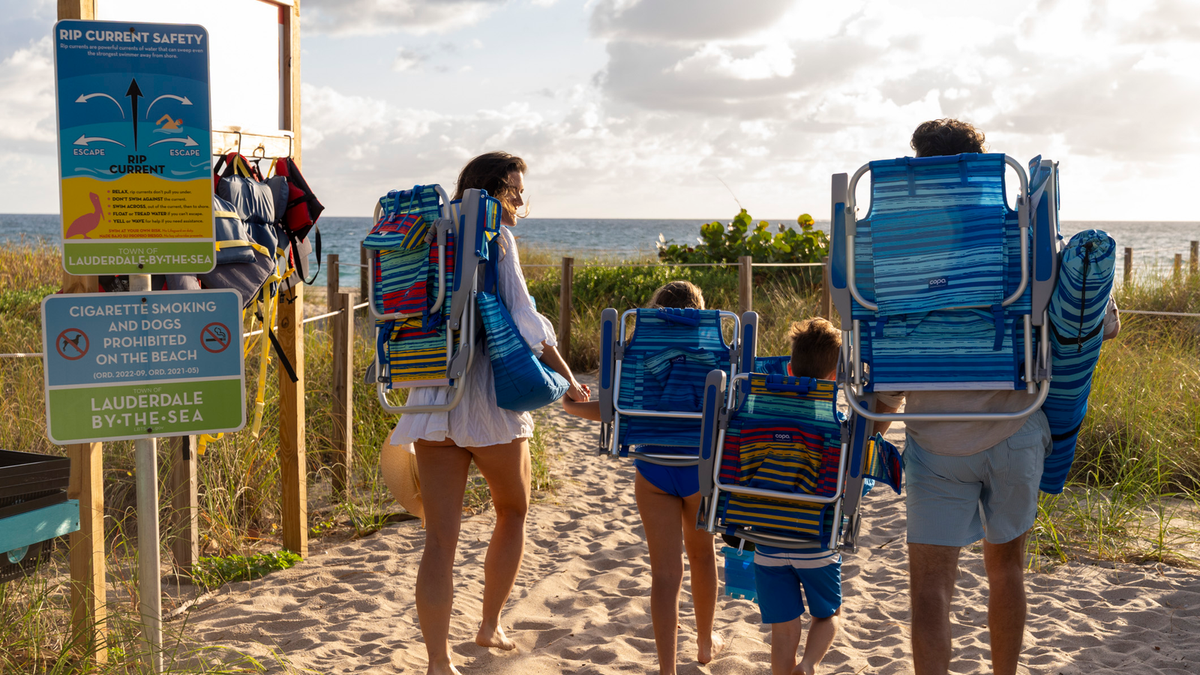
A summer afternoon at the shoreline. The sand is warm, the water is sparkling, and your three-year-old is running toward the surf with complete abandon. You've packed the sunscreen, the hats, the rash guards, you've done everything right. But as you scan the beach, you notice something: every shade structure, every UV-blocking shirt, every beach tent seems to carry a different number. UPF 15. UPF 30. UPF 50+. And somewhere in the back of your mind, a question surfaces that nobody ever fully answered: what do those numbers actually mean?
It's not a trivial question. For parents bringing babies and toddlers to the beach, UV exposure isn't just a comfort issue, it's a genuine health concern. The skin of a child under five is thinner, less melanin-rich, and more vulnerable to both immediate sunburn and cumulative UV damage than adult skin. Getting sun protection right at the beach isn't about following a marketing checklist. It's about understanding the science well enough to make smart, confident decisions about what gear you buy, how you use it, and what actually keeps your kids safe under a bright coastal sky.
This article breaks down the real science behind UPF ratings, explains what those numbers do and don't protect against, and helps you evaluate everything from beach cabana sun protection to the shade tent you're about to anchor into the sand. By the end, you'll know exactly what to look for, and why some products genuinely outperform others.
What UPF Actually Measures (And How It Differs From SPF)
UPF (Ultraviolet Protection Factor) measures how much UV radiation a fabric or material blocks before it reaches the skin beneath it. Unlike SPF, which applies only to topical sunscreen products, UPF is the rating system used for physical sun-blocking materials: clothing, tents, canopies, umbrella fabrics, and shade structures. Understanding the distinction is the first step toward building a genuinely effective sun protection strategy at the beach.
SPF (Sun Protection Factor) measures how long a sunscreen allows you to stay in the sun without burning, relative to unprotected skin. It primarily quantifies protection against UVB radiation, the wavelength range most directly responsible for sunburn. A sunscreen rated SPF 30 theoretically allows thirty times more exposure before burning than bare skin would tolerate.
UPF, by contrast, measures the fraction of UV radiation, both UVA and UVB, that passes through a fabric. A garment or shade structure rated UPF 50 allows just 1/50th of incident UV radiation to penetrate the material. That translates to roughly 98% of UV rays being blocked. A UPF 50+ rating, the highest standard recognized by most testing bodies, indicates that less than 2% of UV radiation passes through under standardized laboratory conditions.
The critical word there is "laboratory." UPF ratings are assigned based on controlled testing, typically using the American Association of Textile Chemists and Colorists (AATCC) Test Method 183 or the equivalent Australian/New Zealand Standard AS/NZS 4399. These tests measure UV transmittance through dry, unstretched fabric at a fixed angle to a UV light source. Real-world beach conditions, wet fabric, stretched material, oblique sun angles, sand reflection, can all reduce a fabric's effective UPF performance.
The UVA vs. UVB Distinction Parents Often Miss
Here's the nuance that most product marketing glosses over: not all UV radiation behaves the same way, and not all shade solutions address both types equally. The UV spectrum that reaches Earth's surface is divided into two primary bands that matter for sun protection:
- UVA (320–400 nm wavelength): These longer-wavelength rays penetrate deeper into the skin. They are responsible for photoaging, suppression of immune function, and play a significant role in the development of melanoma. UVA intensity remains relatively constant throughout the day and can penetrate light cloud cover and glass. Critically, UVA is not what causes the visible redness of sunburn, meaning you can accumulate significant UVA damage without any immediate warning signal.
- UVB (280–320 nm wavelength): Shorter-wavelength rays that primarily affect the outer layers of skin. UVB causes sunburn, plays the dominant role in vitamin D synthesis, and is the principal cause of most non-melanoma skin cancers. UVB intensity peaks around solar noon and is more affected by season, altitude, and cloud cover than UVA.
A proper UPF rating accounts for both UVA and UVB transmittance across the full solar spectrum. This is why UPF is generally considered a more comprehensive measure of UV protection for physical barriers than SPF is for sunscreens. When you see a beach shade tent or beach cabana advertising UPF 50+ fabric, that number should reflect protection against the full solar UV spectrum, not just the sunburn-causing portion.
For parents focused on sun protection at the beach for kids, this distinction matters enormously. Children's skin is especially susceptible to UVA damage, which accumulates silently without the visible cue of redness. A shade structure that dramatically reduces total UV transmission, not just UVB, provides meaningfully superior protection compared to one that only filters the wavelengths that cause visible burns.
How UPF Ratings Are Assigned: The Testing Process Explained
A UPF rating is not self-assigned by manufacturers, or at least, it shouldn't be. Legitimate UPF ratings come from standardized laboratory testing that measures the actual UV transmittance of a material under controlled conditions. Understanding this process helps parents evaluate product claims with a more critical eye.
In standardized UPF testing, fabric or material samples are placed in a spectrophotometer, an instrument that measures how much UV radiation of each wavelength passes through the sample. The transmittance is measured across the full UV spectrum (typically 280–400 nm), and the results are weighted against a reference spectrum that accounts for the sun's actual output and the human skin's sensitivity at each wavelength. The final UPF number is calculated as the ratio of UV that would reach skin without the material versus the UV that reaches skin with the material in place.
Several factors are known to affect real-world UPF performance relative to lab ratings:
- Moisture: Wet fabric often transmits more UV radiation than dry fabric. The degree of change varies by fiber type, some synthetic fabrics maintain their UPF rating when wet, while cotton can lose significant protective capacity.
- Stretch: Stretching fabric opens gaps between fibers, reducing UV blockage. This is particularly relevant for fitted clothing items but less so for shade structures that are held under tension rather than stretched over a body.
- Weave density and construction: Tightly woven fabrics with small pore sizes block more UV regardless of color. Looser weaves, even in dark colors, may perform worse than expected.
- UV-absorbing treatments: Many UPF fabrics are chemically treated with UV-absorbing agents that enhance their rating beyond what the raw fiber weave would achieve. These treatments can degrade with repeated washing and UV exposure over time.
- Color: Darker and more saturated colors generally absorb more UV than light colors, though this is a secondary factor compared to construction and treatment.
What the UPF Number Tiers Actually Mean
| UPF Rating | Protection Category | UV Blocked | UV Transmitted | Suitable for Kids? |
|---|---|---|---|---|
| UPF 15–24 | Good | 93.3–95.9% | 6.7–4.1% | ⚠️ Minimal, short exposure only |
| UPF 25–39 | Very Good | 96–97.4% | 4–2.6% | ⚠️ Acceptable for moderate exposure |
| UPF 40–50 | Excellent | 97.5–98% | 2.5–2% | ✅ Recommended |
| UPF 50+ | Excellent (Maximum) | >98% | <2% | ✅ Highest standard, ideal for infants and toddlers |
Notice that UPF 50 and UPF 100 are functionally very close, the difference between blocking 98% and 99% of UV radiation is one percentage point of transmitted radiation. This is why most testing standards cap their highest classification at UPF 50+: beyond that threshold, the incremental gain is too small to be clinically meaningful. A shade structure rated UPF 50+ is providing the maximum level of tested UV protection available from a physical fabric barrier.
Why the Beach Is One of the Highest UV-Risk Environments
The beach combines multiple UV amplification factors that make it one of the most intense UV exposure environments outside of high-altitude settings. Understanding why the beach is uniquely demanding helps parents calibrate their protection strategy beyond simply reapplying sunscreen every two hours.
Several factors converge at a typical beach setting to dramatically increase effective UV exposure:
Sand Reflection (Albedo Effect)
White or light-colored sand reflects a significant portion of UV radiation back upward. This reflected UV reaches skin from below and from the sides, angles that shade structures and hats are not designed to address. According to the World Health Organization's UV Index guidance, sand can reflect up to 25% of UV radiation. This means that even when a child is sitting under a shade structure, reflected UV from the ground around them continues to contribute to their total UV dose.
This is one reason why beach shade for babies needs to be designed with low-profile coverage in mind. A standard tall beach umbrella creates a cone of overhead shade but does little to intercept ground-reflected UV. A lower-profile beach cabana or shade tent with side walls provides far more comprehensive protection by reducing the angle of entry for reflected UV.
Water Reflection
Water surfaces reflect UV radiation as well, though the reflection angle depends heavily on the sun's position and the water's surface texture. On calm, glassy water, UV reflectance can be notably high. For children playing near the water's edge or in the shallows, this adds another UV exposure pathway that overhead shade cannot fully address. Protective clothing and broad-spectrum sunscreen on exposed skin remain essential even when shade is available.
Atmospheric Scattering
UV radiation doesn't only travel in straight lines from the sun. A portion scatters through the atmosphere and arrives from multiple directions across the sky dome. This scattered UV, sometimes called diffuse UV, can contribute meaningfully to total UV dose even on partially cloudy days. It is one reason why UV exposure at the beach can feel deceptively manageable on overcast days while still reaching significant levels.
The UV Index and Peak Hours
The EPA's UV Index scale provides a daily forecast of UV intensity at ground level. At popular US beach destinations during summer months, UV Index values of 10 or higher are common during peak hours, a level classified as "very high" to "extreme." At these levels, unprotected skin can begin to redden in as little as 10–15 minutes. For infants and fair-skinned toddlers, that window may be even shorter. Beach days that stretch from mid-morning through late afternoon can involve five to seven hours of cumulative exposure, a very different situation from a lunchtime walk in the suburbs.
All of this context explains why shade structures designed for beach use need to deliver genuine, tested UV protection, not just aesthetic coverage. A thin decorative canopy that hasn't been tested for UPF performance may provide almost no UV benefit despite appearing to block the sun visually.
UPF Beach Shade Tents: How Shade Structures Are Rated and What to Look For
A UPF beach shade tent rated 50+ provides the highest level of fabric-based UV protection available, blocking more than 98% of UV radiation from passing through the canopy material. But fabric rating is only one part of what makes a beach shade structure genuinely protective for children. Coverage geometry, stability, and setup reliability all determine how much of that rated protection actually reaches your family on a real beach day.
When evaluating a UPF beach shade tent or beach cabana, parents should assess several dimensions beyond the UPF number on the label:
Coverage Geometry: What the Shade Actually Protects
A shade structure's effective protection depends on how much of the body it shields from direct and reflected UV. Flat overhead canopies provide good protection against direct overhead sun but leave the sides open to low-angle morning and late-afternoon sun, as well as ground-reflected UV. Beach cabanas with multiple side walls dramatically improve total UV interception by reducing the solid angles through which UV can reach occupants.
For infants and non-mobile toddlers who will spend extended time in one spot, a fully enclosed or three-sided beach shade tent provides significantly more comprehensive protection than an umbrella. For older children who move in and out of shade, the calculus shifts, the shade structure becomes a base of operations rather than a continuous shield, and sunscreen coverage on exposed skin becomes proportionally more important.
Structural Stability: When Protection Depends on Setup
A shade tent that collapses or tilts in beach wind provides intermittent protection at best. The structural stability of a shade tent is not a comfort feature, it's a safety feature. On a breezy coastal day, an unstable umbrella or poorly anchored tent can shift out of position, expose previously shaded occupants to direct sun, and create a physical hazard for children nearby.
This is where Copa's approach to shade engineering becomes directly relevant. The brand's shade solutions use a patented anchoring system, the Anchor Max technology, specifically engineered to hold securely in sandy conditions. Unlike standard beach umbrella spikes that can loosen and shift as dry sand settles around them, or tent stakes that pull free in soft coastal soil, the Anchor Max system is designed to maintain a stable, secure hold throughout a full beach day. In windy coastal environments where UV protection depends on consistent shade positioning, that kind of anchoring reliability isn't a luxury, it's the mechanism by which the rated UPF protection is actually delivered to your family.
The Difference Between Beach Umbrellas and Beach Cabanas for Sun Protection
| Feature | Standard Beach Umbrella | Beach Cabana / Shade Tent |
|---|---|---|
| Overhead UV coverage | ✅ Good (when positioned correctly) | ✅ Excellent |
| Side UV coverage | ❌ Minimal | ✅ Good to Excellent (with walls) |
| Ground-reflected UV reduction | ❌ None | ⚠️ Partial (depends on side coverage) |
| Ideal for infants/non-mobile babies | ⚠️ Adequate only with careful positioning | ✅ Strongly preferred |
| Wind stability (standard anchor) | ⚠️ Variable | ⚠️ Variable (depends on anchoring system) |
| Ventilation | ✅ Excellent | ⚠️ Good (with mesh panels or open front) |
| Protection during low-angle sun (morning/afternoon) | ❌ Poor | ✅ Good |
| Portability | ✅ Very portable | ✅ Good (modern designs are lightweight) |
For families with babies or toddlers spending a full day at the beach, the data strongly favors a beach cabana or shade tent as the primary shade structure, supplemented by a beach umbrella for flexibility. The complete beach setup for families that Copa outlines in its Beach Tips guides reflects exactly this layered approach, creating a protected home base with comprehensive shade coverage rather than relying on a single umbrella to do everything.
Sun Protection at the Beach for Kids: A Layered Strategy That Actually Works
No single sun protection product provides complete protection at the beach. Effective sun safety for children at the coast is a layered system, each layer addressing UV exposure pathways that the others don't fully cover. Understanding how the layers interact helps parents build a strategy that's genuinely comprehensive rather than just reassuring-feeling.
Layer 1: Shade (the Foundation)
Physical shade from a high-UPF structure is the most effective first-line defense against UV exposure. Unlike sunscreen, shade doesn't wear off, doesn't need reapplication, and doesn't depend on thorough coverage of all skin surfaces. A well-positioned, stable beach cabana rated UPF 50+ dramatically reduces the UV burden on all occupants simultaneously, without requiring any action from the children inside.
The key operational principle: shade is most effective when children are actually inside it. This sounds obvious, but in practice, children move. Building beach routines that use shade as the default resting state, returning to the cabana for snacks, drinks, rest, and play breaks, creates significantly more shade time than simply having the structure available. When evaluating beach shade for babies, parents should prioritize coverage area and side protection over compactness or minimalist design. A generous shade footprint gives caregivers flexibility to keep babies comfortably inside without restricting their own ability to sit nearby.
Layer 2: UV-Protective Clothing
UPF-rated clothing is the second layer, and it's especially important for body areas that shade structures don't consistently cover: arms, legs, and the back of the neck during movement. Rash guards rated UPF 50+ have become standard beach attire for children, and with good reason, they provide consistent, wash-and-wear protection that doesn't depend on reapplication or thorough coverage technique.
For infants who aren't yet mobile, a UPF 50+ all-in-one swimsuit or sun suit provides full-body coverage during the periods when they're outside the main shade structure, during transitions, feeds, or position changes. Long-sleeved rash guards in quick-dry synthetic fabrics typically maintain their UPF rating when wet better than cotton alternatives, making them a better choice for children who will be in and out of the water.
Hats are a critical sub-component of this layer. Wide-brimmed hats (minimum 3-inch brim) protect the face, ears, and back of the neck, areas that are frequently missed by sunscreen application and not covered by overhead shade when children are upright. For babies, a hat with a chin strap prevents the inevitable attempts to remove it.
Layer 3: Broad-Spectrum Sunscreen on Exposed Skin
Sunscreen addresses the skin areas not covered by clothing or shade, primarily the face, hands, and lower legs. The FDA's guidance on sunscreen recommends broad-spectrum SPF 30 or higher, applied generously and reapplied every two hours or after swimming. "Broad-spectrum" is the key qualifier, it indicates protection against both UVA and UVB, paralleling the full-spectrum protection that UPF-rated shade structures are designed to provide.
For children under 6 months, the American Academy of Pediatrics advises keeping infants out of direct sunlight entirely and using minimal sunscreen only on small exposed areas when sun avoidance is not possible. This makes high-quality beach shade for babies not just preferable but essentially mandatory for families with very young infants at the beach.
Layer 4: Timing and Behavior
The final layer isn't a product, it's behavior. Scheduling beach time to avoid peak UV hours (generally 10 AM to 4 PM), building regular shade breaks into the day's rhythm, and staying hydrated all reduce total UV exposure and heat stress. In practice, many families can't avoid midday beach time entirely, which makes the physical protection layers proportionally more important. But awareness of UV Index forecasts and adjusting activity patterns accordingly provides a meaningful additional margin of safety.
For parents planning their next beach outing, Copa's ultimate family beach packing list covers all the gear dimensions of this layered approach, from shade structures to the small details that make a full day at the shore manageable with young children.
Beach Cabana Sun Protection: How Copa Approaches the Problem
Beach cabana sun protection is only as good as the structure that delivers it. A shade tent with excellent UPF-rated fabric that tips over in 15-knot coastal winds provides exactly zero UV protection during the time it's down, and potentially poses a hazard to children nearby. Copa's design philosophy for its shade products starts from this operational reality: protection that works in the real conditions of a beach day, not just in calm weather.
Copa's shade solutions use the patented Anchor Max technology, an anchoring system specifically engineered for the soft, shifting substrate of coastal sand. Sandy beach conditions are uniquely challenging for stake-based anchoring. Dry fine-grained sand offers minimal resistance to standard stakes; as the day warms and foot traffic loosens the surface, a standard anchor can begin to shift under the lateral force of wind on a canopy. The Anchor Max system addresses this with a design that creates more surface contact with surrounding sand, distributing load and resisting pull-out under the kind of sustained lateral force that coastal breezes generate.
The practical consequence for sun protection is significant. When a shade structure stays in position throughout a full beach day, its rated UPF protection is delivered consistently. When it shifts, tilts, or collapses, occupants are exposed to direct UV during the gap, and those gaps can be long enough to cause meaningful UV exposure, especially for fair-skinned infants and toddlers. A stable shade structure is therefore a core component of effective beach cabana sun protection, not an optional convenience feature.
Copa's fabric choices for their shade products align with this protection-first philosophy. UPF 50+ rated canopy materials block more than 98% of UV radiation, addressing the overhead UV exposure that is the primary concern for seated and reclining occupants. Combined with the structural stability provided by the Anchor Max system, this creates a shade environment that delivers its rated protection reliably rather than theoretically.
Copa's approach to family beach comfort also recognizes that a shade structure needs to serve the whole family, not just the baby. Generous coverage areas allow adults to sit comfortably inside the shade while attending to infants, managing gear, or simply resting between water sessions. This matters for practical sun protection because caregivers who are comfortable inside the shade are more likely to maintain the shade-first behavioral habits that maximize cumulative UV protection for everyone in the group.
For families exploring Copa's full beach setup options, the brand's bundled packages, including the Deluxe Bundle and Essentials Bundle, combine shade structures with premium beach seating in coordinated configurations. This systems approach means that the chairs, the shade structure, and the anchoring solution are designed to work together, rather than being assembled from mismatched components that may create setup challenges or coverage gaps. You can explore Copa's full collection by visiting the Copa Beach Tips blog, which covers setup guidance, gear recommendations, and practical planning advice for families at every beach experience level.
Beach Umbrella for Families: What Standard Umbrellas Can and Can't Do
A beach umbrella for families is a versatile and genuinely useful piece of beach gear, but its UV protection capabilities have specific limitations that parents of young children need to understand. Used correctly and in the right situations, a high-UPF beach umbrella provides meaningful overhead UV reduction. Used as the sole shade solution for an infant on a full summer beach day, it may leave significant protection gaps.
The core limitation of any umbrella is geometric. An umbrella shades a roughly conical area directly beneath its canopy. As the sun's angle changes throughout the day, the shadow cone shifts. During the morning hours when the sun is low in the east, a vertically positioned umbrella provides very little shade for occupants to its west, the direct sun reaches them below the canopy edge. The same applies in late afternoon from the western sun. Only when the sun is high overhead (roughly 10 AM to 2 PM in summer) does a vertical umbrella provide consistent overhead shade to a fixed position beneath it.
Tilting beach umbrellas address this limitation partially by allowing the canopy to angle toward the sun, increasing the shade footprint on the sun-facing side. However, this introduces a tradeoff: tilting the umbrella toward the sun leaves the back side more exposed and may reduce the stability of the anchor if the lateral wind load increases.
For families with older children and adults, a beach umbrella supplemented by appropriate clothing and sunscreen represents a practical and portable shade solution. For families with infants and toddlers who need consistent shade throughout a long beach day, a beach umbrella works best as a complement to a primary shade structure, providing additional coverage flexibility when occupants move beyond the footprint of the main cabana or tent.
When selecting a beach umbrella for families, UPF rating is the first filter. Umbrellas sold without any stated UPF rating may be constructed from decorative fabrics with minimal UV blocking capability. An umbrella rated UPF 50+ uses fabric that has been tested to block more than 98% of UV radiation, a meaningful difference compared to an unrated decorative canopy.
Diameter matters more than most buyers realize. A standard 6-foot beach umbrella creates a shade footprint that's adequate for one or two adults seated close together. Families with strollers, gear, and multiple children sitting spread out need larger coverage, either a wide-diameter umbrella (7.5 feet or larger) or a primary shade tent supplemented by a smaller umbrella for flexibility. Copa's lineup is designed with family-scale coverage in mind, recognizing that the real use case involves more gear and more people than a single-adult beach setup.
For family beach days around major holidays, when beaches are crowded and setup real estate is limited, having a compact but high-performing shade solution becomes especially important. Copa's guide to the best beaches for Fourth of July weekend touches on planning considerations for high-traffic beach days where smart shade positioning makes the difference between a comfortable day and a frustrating one.
Evaluating UPF Claims: A Parent's Guide to Reading Product Labels
Not all UPF claims on beach products are created equal. The absence of a universal mandatory testing standard in the US means that some manufacturers self-assign UPF ratings without third-party verification. Knowing how to evaluate product claims helps parents invest in shade gear that genuinely delivers its stated protection.
Here's a practical decision framework for evaluating UPF claims on beach shade products:
The Parent's UPF Claim Evaluation Framework
- Is the UPF rating specifically stated for the canopy or fabric material? Some products advertise sun protection in general terms without specifying a UPF number. A specific UPF rating (e.g., UPF 50+) is a better indicator of intentional UV-blocking material selection than vague "sun protection" language.
- Does the product mention the testing standard used? References to AATCC Test Method 183, AS/NZS 4399, or equivalent standards indicate that the rating is based on standardized measurement rather than manufacturer estimation. This is the strongest signal of a credible rating.
- Is the rating third-party verified? Some manufacturers submit products to independent testing laboratories and display certification marks. Third-party verification adds credibility, though the absence of a certification mark doesn't necessarily indicate a fraudulent claim.
- Does the product specify both UVA and UVB protection? A complete UPF rating should reflect protection across the full UV spectrum. Products that reference only SPF-style sun protection or only UVB blocking may be using sunscreen-adjacent language rather than a true fabric UPF rating.
- What is the material construction? High-density woven polyester or nylon with UV-stabilizing treatments is the standard material for legitimate UPF 50+ shade fabrics. Very thin or loosely woven materials are unlikely to achieve UPF 50+ ratings regardless of what the label claims.
- Is the anchoring system designed for beach conditions? As discussed, a shade structure's effective UV protection depends on it staying in position. The presence of a beach-specific anchoring system, like Copa's Anchor Max technology, is a signal that the product was designed for real coastal use, not just for display in a product photo.
Parents who apply this framework consistently will find that the field of credible, family-appropriate beach shade products is smaller than the market would suggest, but the products that genuinely pass these tests provide meaningfully superior protection for children.
Frequently Asked Questions
What does UPF 50+ mean on a beach shade tent?
UPF 50+ is the highest standard rating for fabric UV protection. It means that the canopy material blocks more than 98% of UV radiation (both UVA and UVB) from passing through, transmitting less than 2% to the space beneath. It's the rating parents should look for when selecting a UPF beach shade tent for use with infants and young children.
Is UPF the same as SPF?
No. UPF (Ultraviolet Protection Factor) applies to physical materials like fabrics and shade structures. SPF (Sun Protection Factor) applies to topical sunscreen products. UPF measures protection against the full UV spectrum (UVA and UVB), while traditional SPF primarily measures UVB protection. Both ratings are important but apply to different products in a layered sun protection strategy.
How much sun protection does a beach umbrella provide?
A beach umbrella rated UPF 50+ blocks more than 98% of UV radiation that passes directly through the canopy. However, umbrellas provide limited protection from low-angle sun (morning and afternoon), ground-reflected UV from sand, and scattered diffuse UV from the sky dome. A beach umbrella for families works best as a complement to a primary shade tent or cabana, not as the sole shade solution for infants or toddlers on a full beach day.
What kind of beach shade is best for babies?
For babies, especially those under six months, a beach cabana or shade tent with UPF 50+ fabric and enclosed or semi-enclosed sides provides the most comprehensive UV protection. The enclosed design reduces exposure to low-angle sun and ground-reflected UV that open umbrellas don't address. A stable anchoring system, such as Copa's Anchor Max technology, ensures the structure stays in position throughout the day, delivering consistent shade coverage regardless of coastal wind conditions.
Does a wet beach tent or umbrella lose its UPF rating?
It depends on the material. Many synthetic fabrics (polyester, nylon) maintain their UPF rating when wet because the UV-blocking mechanism is based on fiber construction and UV-absorbing chemical treatments rather than simple opacity. However, some natural fibers like cotton can transmit more UV when wet. For beach shade structures, manufacturers typically use synthetic materials that are designed to maintain performance in wet coastal conditions. Checking manufacturer specifications for wet-performance claims is advisable for any product marketed for beach use.
Can children get sunburned under a shade tent?
Yes, though with much lower likelihood than in direct sun. UV radiation can reach children inside a shade tent through several pathways: the open front or sides of the structure, ground-reflected UV from surrounding sand, and diffuse scattered UV from the sky. This is why shade is the foundation of sun protection at the beach, not the entirety of it. Children inside a shade tent should still wear UV-protective clothing and have sunscreen applied to exposed skin areas, particularly if they move in and out of the structure frequently.
How often do I need to reapply sunscreen if my child is mostly in the shade?
Even for children spending most of their time in a shade tent, sunscreen on exposed skin should be reapplied every two hours and immediately after swimming or toweling off. The residual UV exposure from reflected sand, diffuse sky radiation, and brief periods in direct sun during transitions can accumulate over a long beach day. Sunscreen is part of the layered protection system, not a substitute for shade.
Does the color of a shade tent affect its UV protection?
Color is a secondary factor in UPF performance. Darker and more saturated colors tend to absorb more UV radiation than lighter colors, which can provide a modest increase in protection. However, the primary determinants of UPF performance are fabric construction (weave density, fiber type) and UV-absorbing chemical treatments. A high-quality UPF 50+ fabric in a lighter color will outperform a low-quality dark fabric. When a manufacturer specifies a UPF 50+ rating with reference to standardized testing, the color's contribution is already incorporated into that rating.
What is the difference between a beach cabana and a beach shade tent?
The terms are often used interchangeably in the market. Generally, a beach cabana refers to a larger, more structured shade shelter with defined walls and a roof panel, often resembling a small open-fronted room. A beach shade tent may describe a similar structure or a more compact pop-up design. The functional difference for sun protection purposes lies in the coverage geometry: structures with more walls provide better protection against low-angle and reflected UV than purely overhead canopy designs.
At what UV Index level should I be most concerned about children at the beach?
The EPA classifies UV Index 6 and above as "High", and at popular US coastal destinations in summer, values of 8–11+ are common during peak hours. At UV Index 8 and above, unprotected skin can burn within 15–25 minutes. For infants and fair-skinned toddlers, the threshold is lower. Any beach day with a UV Index above 6 warrants the full layered protection approach: UPF 50+ shade, protective clothing, hats, and broad-spectrum SPF 30+ sunscreen on exposed skin.
Do I need a shade tent if I'm already using high-SPF sunscreen?
Sunscreen alone is not a substitute for shade at the beach. Sunscreen degrades with sweat, water exposure, and UV itself, requiring consistent reapplication that is difficult to maintain on active children. Sunscreen also provides no protection against heat stress, which can be a serious concern for infants in direct sun. A shade structure reduces total UV load, lowers ambient temperature in the protected area, and provides a recovery zone that sunscreen alone cannot replicate. The most effective approach combines shade and sunscreen as complementary tools.
How do I know if my beach shade tent's UPF rating is legitimate?
Look for specific UPF rating numbers (not just "UV protective" language), references to standardized testing methods (AATCC Test Method 183 or equivalent), and third-party verification where available. Material specifications that reference high-density woven polyester or nylon with UV-stabilizing treatments are consistent with genuine UPF 50+ performance. Brands like Copa that engineer their products specifically for beach conditions and provide detailed product specifications give parents a stronger foundation for confidence in the protection claims.
Key Takeaways
- UPF measures full-spectrum UV blocking in physical materials, including both UVA and UVB radiation. UPF 50+ is the highest standard, indicating that more than 98% of UV is blocked by the fabric.
- The beach is one of the highest UV-risk environments because sand reflection, water reflection, and atmospheric scattering all amplify effective UV exposure beyond what direct overhead sun alone would produce.
- Shade structures are most effective when they're stable. A shade tent that shifts or collapses in coastal wind delivers intermittent protection. Anchoring systems designed for beach conditions, like Copa's patented Anchor Max technology, are a core component of reliable UV protection, not a convenience feature.
- Beach cabanas and shade tents outperform standard umbrellas for infant and toddler sun protection because their enclosed or semi-enclosed geometry reduces exposure to low-angle and reflected UV that overhead canopies don't address.
- Effective sun protection at the beach for kids requires multiple layers: UPF 50+ shade as the foundation, UV-protective clothing on exposed body areas, broad-spectrum SPF 30+ sunscreen on uncovered skin, and behavioral habits that maximize time in shade during peak UV hours.
- UPF claims vary in credibility. Prioritize products with specific UPF numbers, references to standardized testing methods, and transparent material specifications over vague "sun protection" marketing language.
- Infants under six months should not be in direct sunlight at the beach. High-quality beach shade for babies is not optional for this age group, it is the primary sun safety measure, with sunscreen playing only a supplementary role on minimal exposed areas.
- Sun protection is a system, not a single product. No shade structure, clothing item, or sunscreen alone provides complete protection at the beach. The layered approach addresses all UV exposure pathways that a single product would miss.
Building a Sun-Safe Beach Day Your Family Will Actually Enjoy
The science of UPF ratings isn't complicated once you understand what the numbers are actually measuring. UPF 50+ fabric blocks more than 98% of UV radiation. The beach amplifies UV exposure through reflection and scattering in ways that make comprehensive shade coverage more important than in any other outdoor environment. And the difference between a shade structure that delivers its rated protection and one that tips over by noon isn't a minor inconvenience, it's the practical margin of safety for the youngest and most vulnerable members of your group.
The gear decisions that follow from this understanding are straightforward: prioritize UPF 50+ rated shade structures with stable, beach-specific anchoring systems. Choose beach cabanas or shade tents over open umbrellas as the primary shade solution for infants and toddlers. Layer UV-protective clothing and broad-spectrum sunscreen on top of that foundation. And build beach day habits that use shade as the default state rather than the occasional retreat.
For families investing in beach gear that takes all of this seriously, Copa's shade solutions, engineered with UPF-rated fabrics, the patented Anchor Max anchoring system, and family-scale coverage in mind, represent exactly the kind of protection-first design this science supports. A beach day should be one of the great pleasures of summer. Getting the sun protection right means it can be that, for everyone in your family, from the baby in the shade tent to the grandparents in the chairs alongside them.
For more on building the complete family beach setup, visit Copa's Beach Tips collection, where practical guides cover everything from setting up the perfect family beach base to packing strategies for days when you're bringing the whole crew to the shore.
Shop Now
Learn more →
Share:
Deluxe Bundle vs. Essentials Bundle: Which Copa Beach Package Is Right for Your Family?
Portable vs. Heavy-Duty Beach Chairs: An Honest Comparison for Families Who Beach Often