

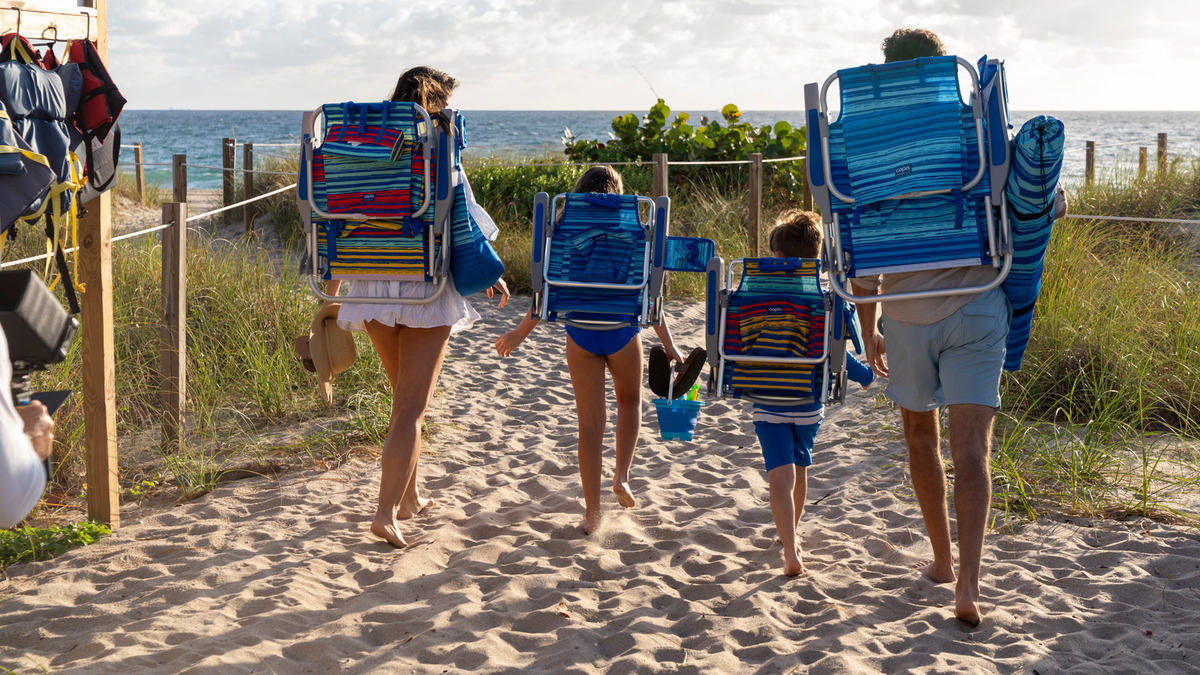
Most beach families buy the wrong chairs. Not because they make a careless decision, but because they optimize for the wrong moment: the trip to the car, not the six hours in the sand. A featherlight folding chair feels like a brilliant choice in the parking lot and a flimsy disappointment by noon, when you're resetting it for the fourth time because the back keeps slipping, or you're watching it skid across the sand in a mild gust. The opposite mistake is just as real: hauling an oversized, padded throne to the shore every week until someone's shoulder gives out and the chair starts living permanently in the garage.
For families who beach often, the stakes are higher. You're not renting chairs for a once-a-summer occasion. You're investing in gear that will see real use, real weather, and real kids. The chair that works for a solo traveler on a calm day is not the same chair that works for a family of five on a breezy Saturday in July. This comparison exists to close that gap.
Below, you'll find an honest, side-by-side look at lightweight beach chairs and heavy-duty alternatives, covering weight, durability, comfort, packability, and long-term value. The goal is not to declare a universal winner but to match the right category of chair to your actual beach habits, your family's physical needs, and the kind of shore experience you're building toward.
Why the "Best Beach Chair" Debate Misses the Point for Families
The standard beach chair conversation focuses on weight ratings, fabric type, and how low to the ground a seat sits. Those details matter, but they're secondary to a question most buying guides never ask: how often does your family actually go to the beach, and what does a typical trip look like? The answer changes everything about which category of chair deserves your money.
A family that visits once or twice per season has very different needs from a coastal family that packs up every weekend from Memorial Day through Labor Day. The occasional visitor benefits from chairs that store compactly and don't demand a lot of physical upkeep. The frequent beachgoer needs a chair that holds up to dozens of setups and breakdowns, resists salt and sand degradation, stays comfortable through long afternoons, and fits into a transport system that doesn't add twenty minutes of frustration to every outing.
There's also the matter of scale. A couple with no children can get away with almost any beach chair. Add two toddlers, a grandparent, a shade structure, a cooler, and a bag stuffed with sand toys, and suddenly the logistics of chair transport become their own project. Portable beach chairs designed for families need to balance genuine packability against the kind of structural integrity that holds up under repeated, real-world use by people of varying sizes and weights.
The tension between portability and durability is not imaginary, but it is often overstated. Modern materials science has closed the gap considerably. The key is understanding where real trade-offs still exist so you can make an informed call rather than an optimistic one.
The Three Beach Profiles That Drive Chair Choice
Before comparing categories, it helps to identify which beach profile fits your family. Most families fall into one of three patterns:
- The Occasional Visitor: One to four beach trips per season, often as a special outing or vacation. Portability and storage convenience matter more than long-term durability. Comfort is important but not tested over dozens of sessions.
- The Regular Beachgoer: Weekly or biweekly trips during beach season. This family needs chairs that hold up structurally over time, stay comfortable through full-day sessions, and integrate cleanly into a larger beach setup that includes shade and gear storage.
- The Coastal Local: Near-daily beach access, often with a car dedicated to beach gear. Weight matters less because the chairs rarely leave the vehicle. Durability and comfort are paramount. Style and aesthetic become a real factor because these chairs are essentially outdoor furniture.
Most buying guides treat all three profiles identically. This comparison does not. Where a recommendation differs based on beach profile, that distinction is called out explicitly.
Lightweight Beach Chairs: What You're Actually Getting
Lightweight beach chairs occupy a broad category ranging from basic folding camp chairs to genuinely engineered, low-profile sand chairs designed for serious beachgoers. Weight alone does not define quality in this category. A chair that weighs four pounds but collapses after twelve outings is not a lightweight chair; it's a disposable one dressed up as a portable solution.
The defining characteristics of a well-designed lightweight beach chair include an aluminum or high-grade steel frame, polyester or nylon fabric rated for UV and moisture exposure, a carry system (usually a shoulder strap or integrated sleeve), and a weight-to-capacity ratio that doesn't sacrifice structural integrity to hit a low number on a scale.
Portability: The Real-World Test
True portability is not just about how light a chair is in isolation. It's about how it integrates into the full load a family carries to the beach. A five-pound chair that packs into a compact tube is genuinely portable. A six-pound chair with a wide, awkward footprint that refuses to fit alongside a cooler and a bag is not, regardless of what the spec sheet says.
Beach chairs with a carrying bag or integrated carry sleeve solve a real problem: they keep the chair's footprint predictable and protect the fabric from abrasion during transport. When evaluating portability for family use, consider the carry system as seriously as the weight. A padded shoulder strap distributes load across the body more efficiently than a bare wrist strap, which matters when you're also holding a toddler's hand or managing a tote bag on the other shoulder.
Comfort Over Time: Where Lightweight Chairs Often Fall Short
The most common failure mode for lightweight beach chairs is comfort degradation over a long session. A chair that feels fine at 10 AM may become genuinely uncomfortable by 2 PM as the fabric stretches, the frame settles into soft sand, and the lack of lumbar support begins to register in your lower back. This is not inevitable, but it is common enough that families planning full-day beach sessions should test chairs over extended periods before committing to a bulk purchase.
Low-slung, lightweight chairs that sit close to the ground are popular for sand stability and ease of getting in and out for adults, but they can be genuinely difficult for older family members or anyone with knee or hip issues. Some lightweight designs now include adjustable recline positions and higher seat heights, partially closing the gap with heavier, more structured alternatives.
Durability: Separating Budget Lightweight from Premium Lightweight
The lightweight category contains an enormous quality range. At the lower end, chairs use thin aluminum tubing with plastic connectors that fatigue quickly under repeated use. At the premium end, aerospace-grade aluminum frames with reinforced fabric attachment points and double-stitched seams can handle hundreds of uses without meaningful degradation.
Salt air accelerates corrosion in lower-grade aluminum. Sand infiltrates fabric welds and weakens stitching over time. A lightweight chair that costs less upfront but requires replacement every season is not actually a cost-efficient choice for a family that beaches frequently. The total cost of ownership calculation almost always favors a higher-quality chair purchased once over a succession of budget replacements.
Heavy-Duty Beach Chairs: Premium Comfort With Real Trade-Offs
Heavy-duty beach chairs, sometimes marketed as premium beach chairs for families, prioritize structural integrity, load capacity, comfort features, and longevity over packability. They typically feature steel or reinforced aluminum frames, thicker fabric (often with padding), wider seats, cup holders, adjustable footrests, and sometimes canopy attachments or accessory mounts.
The trade-off is real: these chairs are heavier, often bulkier, and require more deliberate planning to transport. A heavy-duty chair that weighs twelve to eighteen pounds is not something you carry easily alongside a full family load. It needs a cart, a dedicated carry bag with wheels, or a vehicle that stays close to the beach access point.
Where Heavy-Duty Chairs Genuinely Win
For multigenerational beach groups, heavy-duty chairs solve problems that lightweight options simply cannot. A wider, more supportive seat with a higher weight capacity is not a luxury for larger adults or older family members; it's a safety and comfort necessity. Armrests, lumbar pillows, and adjustable recline positions transform a beach chair from a place to sit into a place to genuinely rest, which matters when you're spending six to eight hours at the shore.
Durable beach furniture in this category also tends to perform better on uneven or soft sand. A heavier frame with wider feet distributes load across a larger surface area, reducing the tendency to sink. Some heavy-duty designs include sand anchoring features, wide-base legs, or rubberized feet that grip without digging in excessively.
The aesthetic dimension matters too, especially for coastal families who use their beach gear as an extension of their outdoor living space. Heavy-duty chairs with coordinated color options and premium fabric finishes look intentional rather than assembled from whatever was on sale. For families investing in a full beach setup that includes shade structures and coordinated accessories, the visual cohesion of matching gear is a genuine consideration.
The Transport Problem: Honest About the Weight
There is no design trick that makes a fifteen-pound chair feel like a five-pound chair. Oversized wheels on a cart help. A vehicle parked close to beach access helps. A family with older children who can carry their own gear helps. But for parents of toddlers navigating a boardwalk or a long sand path to the water, a heavy-duty chair is a significant physical commitment on top of everything else they're already carrying.
The families for whom heavy-duty chairs work best are those who have solved the transport problem at the system level: they own a beach cart rated for significant load, they have a dedicated beach vehicle with easy chair storage, or they frequent beaches with vehicle access close to the water. Without that infrastructure, the comfort benefits of a heavy-duty chair can be offset by the exhaustion of getting it there.
Longevity: The Hidden Advantage
A well-constructed heavy-duty beach chair, properly maintained, can last a decade or more. The economics of this are significant for frequent beach families. A premium chair purchased once at a higher price point, amortized over eight to ten seasons of regular use, often costs less per beach trip than a lightweight chair replaced every two to three seasons. The calculus changes if the chair sees infrequent use, but for families who beach weekly, the longevity advantage of quality heavy-duty construction is real and measurable.
Copa's Approach: Where the Two Categories Meet
Copa's beach chair line reflects a deliberate design philosophy: families who beach often should not have to choose between portability and durability. The brand's chairs are built from materials chosen specifically for the demands of regular coastal use, with attention to both transport efficiency and long-session comfort.
Copa chairs are engineered for the regular beachgoer profile described earlier. They're not ultralight backpacking chairs stripped down to the minimum. They're also not the oversized, vehicle-dependent loungers that require a dedicated cart and a clear path to the water. They occupy the productive middle ground where a family of four or five can realistically carry their gear, set up quickly, stay comfortable all day, and pack out without dreading the return trip.
The Anchor Max® System: Shade Integration That Changes the Equation
One feature that distinguishes Copa's shade products from generic alternatives is the Anchor Max® system, Copa's patented anchoring technology built into their beach umbrellas and shade structures. For families using Copa chairs alongside Copa shade, the Anchor Max® provides a genuinely secure hold in the kind of sandy, sometimes breezy conditions that send standard umbrella poles skittering across the beach.
This matters in the context of a chair comparison because the chair you choose should integrate with the rest of your beach setup. A lightweight chair paired with a shade structure that requires constant re-anchoring defeats the purpose of a streamlined beach experience. Copa's shade products, anchored with the Anchor Max® system, stay put while your chairs do the same, creating a coherent, stable beach station rather than a collection of gear that needs constant management.
For families who want to understand how the full Copa setup comes together, The Complete Beach Setup for Families (Without the Chaos) walks through the full configuration in practical detail.
Copa's Bundle Strategy: Chairs as Part of a System
Copa's Deluxe Bundle and Essentials Bundle are designed around the insight that families don't just need a good chair in isolation; they need a beach setup that works as a coordinated system. Chairs, shade, and accessories that were designed together perform better together. The dimensions, weight distribution, and aesthetic of Copa's products are calibrated to coexist without compromise.
Free shipping on bundles removes the friction of building that system incrementally. For a family outfitting a full beach setup, the bundle approach is both economically sensible and logistically cleaner than assembling mismatched gear from multiple brands.
Side-by-Side: Lightweight vs. Heavy-Duty for Frequent Beach Families
The table below compares the two chair categories across the dimensions that matter most to families who beach regularly. These ratings reflect general category performance, not any single specific product.
| Dimension | Lightweight / Portable | Heavy-Duty / Premium |
|---|---|---|
| Typical Weight | 3–8 lbs | 10–20 lbs |
| Transport Ease | ✅ Excellent, shoulder carry, no cart needed | ⚠️ Moderate, cart or strong carry system recommended |
| All-Day Comfort | ⚠️ Variable, depends on design and back support features | ✅ Strong, wider seat, lumbar support, recline options |
| Durability (Budget Tier) | ❌ Often poor, thin frames, weak fabric joints | ⚠️ Moderate, heavier frames but still prone to corrosion if low-grade |
| Durability (Premium Tier) | ✅ Excellent, aircraft-grade aluminum, reinforced stitching | ✅ Excellent, robust frame, high-denier fabric, long service life |
| Storage Footprint | ✅ Compact, fits in closets, car trunks easily | ⚠️ Larger, needs dedicated storage space |
| Best For | Active families, long walks to water, travel trips | Coastal locals, multigenerational groups, full-day sessions |
| Cost Efficiency (Frequent Use) | ⚠️ Lower upfront, but higher replacement rate at budget tier | ✅ Higher upfront, better long-term value for weekly beachgoers |
| Carry System | Usually included, sleeve or strap | Often requires separate cart or bag |
| Multigenerational Fit | ⚠️ Limited, lower seat heights can challenge older adults | ✅ Strong, higher seats, armrests, better weight capacity |
The Carry System Problem: Why "Beach Chairs With a Carrying Bag" Matters More Than You Think
The carrying system attached to a beach chair is one of the most underrated purchase criteria in the entire category. Families buying beach chairs with a carrying bag or integrated carry sleeve often focus on the chair itself and treat the bag as an afterthought. In practice, the carry system determines whether that chair actually makes it to the beach on a hard day.
Consider the physics of a typical family beach trip. You have chairs for four or five people. You have a shade structure. You have a cooler. You have a bag for towels, sunscreen, and snacks. You have, quite possibly, a toddler who has decided that today is not a walking day. The carry system for each chair needs to work within this full-load context, not just in isolation.
Shoulder Strap vs. Hand Carry: A Real Difference
A padded shoulder strap that distributes a chair's weight across the shoulder and chest is meaningfully better than a bare hand-carry strap for beach transport. The difference becomes especially apparent over distances longer than a quarter mile or on sand, where each step requires more effort than pavement walking. Families who frequent beaches with long access paths, boardwalks, or significant distance from parking should weight the carry system as a primary criterion, not a secondary one.
Some lightweight chairs include a carry sleeve that doubles as a backpack. This design frees both hands for other tasks, which is genuinely transformative for parents managing children. The trade-off is that backpack-style carry systems are less common on premium or heavy-duty chairs, which are typically too large and heavy to wear comfortably on a back.
Bag Quality and Weather Resistance
A carrying bag made from thin nylon that deteriorates after a season of beach use is not a feature; it's a liability. The bag should be rated for the same environmental conditions as the chair itself: UV exposure, sand abrasion, salt spray, and moisture. Look for reinforced handles, robust zippers (or simple open sleeves without zipper points of failure), and enough interior volume to accommodate the chair without forcing it into position.
For families running a full packing system for beach days, the ultimate family beach packing list from Copa is worth reviewing alongside any chair purchase. The carry system for each piece of gear affects how the full packing strategy works, and chairs that don't integrate cleanly into that system create friction every single trip.
Fabric and Frame Materials: What Actually Lasts at the Beach
The beach is one of the most corrosive environments consumer products face. Salt air, UV radiation, sand abrasion, and repeated wetting and drying cycles degrade materials at an accelerated rate compared to standard outdoor conditions. A chair that performs well in a backyard or at a lake may show significant wear after a single beach season if its materials aren't specifically rated for coastal use.
Frame Materials: Aluminum Grades and Steel Options
Aluminum is the dominant frame material for both lightweight and premium beach chairs, but not all aluminum is equivalent. Lower-grade aluminum alloys corrode in salt air within a season or two, developing pitting and white oxidation that weakens the frame structurally. Higher-grade aluminum alloys, including those used in marine and aerospace applications, resist salt corrosion significantly better and maintain structural integrity over multiple seasons.
Powder-coated steel frames offer excellent strength and a premium feel but require more maintenance than aluminum. A small chip in a powder coating on a steel frame exposes bare metal to salt air and can initiate rust within weeks at a high-use coastal location. For families who are diligent about rinsing and drying their gear after each use, steel frames are viable. For families whose gear spends more time wet or stored in humid conditions, aluminum is more forgiving.
Fabric: Denier, Coating, and UV Rating
Beach chair fabric is rated by denier, which measures the fiber thickness and weight of the textile. Higher denier fabrics are more resistant to abrasion and tearing but are also heavier. The balance point for beach chairs sits in the range of 600–1200 denier polyester or nylon, depending on the application. Fabrics below this range are common in budget chairs and show wear faster under real beach use conditions.
UV inhibitors woven into the fabric or applied as a coating extend the life of the material and prevent the color fading that makes beach chairs look shabby after a few seasons. Solution-dyed fabrics, where the color is integrated into the fiber rather than applied as a surface treatment, are the most UV-stable option and are worth seeking out in a premium purchase.
Water resistance and quick-dry properties matter more than full waterproofing for beach chairs. A chair that dries quickly after a wave splash or a rainstorm is more practical than one that holds moisture in its fabric and frame joints, which accelerates corrosion and mold growth.
Comfort Anatomy: What Makes a Beach Chair Actually Comfortable for Six Hours
Short-term comfort and long-session comfort are different things. A chair that feels plush in a showroom or reasonable during a thirty-minute test sit may become genuinely uncomfortable over a full beach day due to factors that don't register on a brief evaluation.
Seat Height and Getting In and Out
Low-slung beach chairs are popular because they feel stable and casual in the sand. They also require meaningful effort to stand up from, which is a minor inconvenience for a healthy thirty-year-old and a real problem for older adults, anyone with knee or hip limitations, or parents who are getting up and down constantly to manage children. A seat height of fourteen to eighteen inches from the ground is generally accessible for a wide range of adults without being uncomfortably elevated.
Back Angle and Lumbar Support
The back angle of a beach chair determines whether you're sitting upright, semi-reclined, or fully reclined. Single-position chairs force you into one posture for the entire session, which leads to discomfort as different muscle groups fatigue. Multi-position recline systems that allow adjustment throughout the day are a meaningful comfort upgrade, particularly for sessions longer than three hours.
Lumbar support is often overlooked in beach chair marketing, which focuses on fabric colors and cup holders. The absence of lower back support is the primary reason beach chairs become uncomfortable over long sessions. Some premium designs include a built-in lumbar pillow or a curved lower back section that provides passive support without requiring an accessory. This feature alone can extend comfortable sitting time by an hour or more.
Armrests and Accessories
Padded armrests are a genuine comfort feature, not a luxury add-on. The difference between a bare aluminum tube armrest and a wrapped foam or fabric armrest becomes very apparent after four hours of contact. Cup holders, phone pockets, and side tables are convenience features that affect how much you're getting out of your chair rather than standing up or rooting through a bag.
For multigenerational family groups, accessory features become more important because different family members use the chair differently. A grandparent sitting in a beach chair for six hours needs more support features than a teenager who's in the chair for twenty minutes between swims.
The Decision Framework: Matching Chair Category to Family Profile
Rather than declaring a universal winner, the most useful framework for frequent beach families is a decision tree based on the specific conditions of their beach life. The table below maps family profiles to chair category recommendations with reasoning.
| Family Profile | Recommended Category | Reasoning |
|---|---|---|
| Parents of toddlers, long walk to beach access, no cart | Premium Lightweight | Hands-free carry systems and low total load are essential when managing young children. Weight savings matter most here. |
| Coastal locals, car parked close to beach, weekly use | Heavy-Duty or Premium Hybrid | Transport is solved. Long-session comfort and durability over many seasons are the dominant factors. |
| Multigenerational group (includes adults 60+) | Heavy-Duty with high seat and armrests | Accessibility and comfort are non-negotiable. Lower-slung chairs create real safety and comfort issues for older adults. |
| Family with kids ages 6–14, owns a beach cart | Premium Hybrid or Heavy-Duty | Cart solves transport. Kids can help carry. Comfort and durability over a full season of weekly use justify the investment. |
| Traveling family, flying to beach destination | Lightweight or rent on-site | Baggage weight limits and pack size make heavy-duty chairs impractical for air travel. |
| Occasional visitors (1–4 trips per season) | Mid-range Lightweight | Durability over many seasons is less critical. Compact storage and reasonable comfort matter more. |
The Copa Chair Lineup: Premium Portable Beach Chairs Built for Families
Copa's beach chair collection reflects the brand's core conviction: family beach chairs should perform as a system, not as isolated pieces of gear. The chairs are designed to coordinate with Copa's shade structures, particularly the umbrella and cabana systems that use the Anchor Max® anchoring technology, creating a unified beach station that stays comfortable and organized throughout a full day.
Copa chairs sit in the premium hybrid category, combining the transport practicality of lightweight design with the comfort and durability features associated with heavier alternatives. The brand's Brazilian beach culture heritage informs the aesthetic, producing chairs that look intentional and vibrant rather than purely functional. For families who care about the visual experience of their beach setup, the color coordination between Copa chairs and shade structures is a real differentiator.
The Anchor Max® system, available on Copa's umbrella and cabana products, addresses one of the most frustrating problems at the beach: shade that won't stay put. By providing a more secure hold in soft sand than a standard push-in pole, the Anchor Max® allows families to set up their shade once and trust it through the afternoon. Paired with Copa's chairs, the result is a beach station that stays configured and comfortable without constant adjustment.
For families planning a Fourth of July or summer holiday beach outing with the full family, Copa's beach destination guide for the Fourth of July weekend is a useful companion to any gear decision. The right chairs matter more on a crowded holiday beach where setup efficiency and comfort over a long day are tested to their limits.
What the Bundled Approach Gets Right
One of the structural advantages of buying Copa chairs as part of a bundle is that the carry and storage systems are designed together. When a chair's bag is sized and shaped to coexist with the umbrella bag and the cooler straps in the same cart or carry configuration, the logistical friction of a beach trip drops significantly. Families who have assembled gear from multiple brands often discover incompatibilities in carry systems, storage footprints, and assembly sequences that create unnecessary complexity every trip.
Copa's bundle strategy eliminates that complexity by design. The Essentials Bundle and Deluxe Bundle are configured around the assumption that a family is outfitting a complete beach setup in a single purchase, and the components are selected to work together. Free shipping on bundles makes the economic case straightforward for families who were already planning to purchase multiple items.
Maintenance and Longevity: How to Get Full Value From Whichever Chair You Choose
The gap between a beach chair that lasts two seasons and one that lasts ten is often determined not by the chair itself but by the maintenance habits of the family that owns it. Beach chairs face conditions that accelerate degradation, and simple post-use practices extend service life substantially.
Rinsing: The Single Most Important Habit
Salt is corrosive. Sand is abrasive. Both infiltrate frame joints, fabric attachment points, and carry hardware. A thorough rinse with fresh water after each beach use removes the majority of salt and sand before they can do structural damage. This takes three minutes and extends the life of a quality beach chair by years. Families who skip this step, particularly in areas with high salt content in the air and water, will see accelerated frame corrosion and fabric degradation regardless of the chair's initial quality.
Drying Before Storage
Storing a damp beach chair, even briefly, creates conditions for mold and mildew in the fabric and accelerates rust or oxidation in metal components. After rinsing, stand the chair open in a well-ventilated area until it is fully dry before folding it for storage. This is especially important for chairs with padded elements or fabric that holds moisture in its weave.
Seasonal Inspection
At the beginning of each beach season, inspect every joint, connector, and stitching point on your beach chairs. Catch a stress fracture in a frame connector before it fails under load. Identify fraying stitching before it becomes a tear. Many chair failures that feel sudden are actually the result of cumulative stress that was visible on inspection but unnoticed. A ten-minute inspection at the start of each season saves the frustration of a chair failure mid-beach-day.
For families who invest in Copa's coordinated beach systems, the brand's Beach Tips blog regularly covers gear care and setup optimization alongside destination guides and packing strategies, making it a useful ongoing resource for families building and maintaining a serious beach kit.
Price Vs. Value: What Frequent Beach Families Should Actually Be Spending
Price comparisons in the beach chair category are misleading without accounting for expected service life and frequency of use. A $30 chair purchased every two seasons costs $15 per season. A $120 chair that lasts eight seasons costs $15 per season. A $200 premium chair that lasts ten seasons costs $20 per season, but provides substantially better comfort, a more coherent aesthetic, and eliminates the annual shopping and setup friction of replacing gear.
The table below illustrates the total cost of ownership comparison across common purchase tiers for a family using beach chairs weekly during a four-month season.
| Price Tier | Typical Per-Chair Cost | Estimated Service Life (Weekly Use) | Approximate Cost Per Season | Comfort Quality |
|---|---|---|---|---|
| Budget | $20–$45 | 1–2 seasons | $15–$30 | ❌ Basic |
| Mid-Range | $50–$100 | 3–5 seasons | $15–$25 | ⚠️ Moderate |
| Premium Lightweight | $100–$180 | 5–8 seasons | $15–$30 | ✅ Good |
| Premium Heavy-Duty | $150–$300+ | 8–12+ seasons | $15–$30 | ✅ Excellent |
The data above underscores a counterintuitive reality: at the premium tier, the annual cost of ownership is roughly equivalent across lightweight and heavy-duty categories. The choice between them at the premium level is genuinely about comfort preference, transport logistics, and family profile rather than economics. Budget buyers, however, face a meaningful quality cliff. The difference between a $30 chair and a $100 chair is not incremental; it's structural, in terms of both the physical chair and the beach experience it enables.
Frequently Asked Questions About Beach Chairs for Families
What is the lightest beach chair that is still durable enough for weekly use?
The lightest genuinely durable beach chairs use aircraft-grade aluminum frames and high-denier solution-dyed fabric. These typically weigh between four and six pounds. At this weight, you're in the premium lightweight category. Chairs lighter than four pounds generally compromise frame gauge or fabric quality in ways that show up quickly under weekly beach use conditions.
Are lightweight beach chairs comfortable enough for a full day at the beach?
A well-designed premium lightweight chair with a multi-position recline and adequate back support is comfortable for most adults through a full beach day. The key variables are lumbar support, seat width, and recline adjustability. Budget lightweight chairs without these features become uncomfortable within two to three hours for most adults.
What should I look for in beach chairs with a carrying bag?
Prioritize a padded shoulder strap over a bare hand strap. The bag itself should be UV-resistant, reinforced at the handles, and sized so the chair slides in and out easily without forcing. A bag that's difficult to use will get left behind, and the chair will be harder to manage without it. Also verify that the bag's closure system (strap, zipper, or open sleeve) is rated for beach conditions.
Can portable beach chairs handle heavier adults?
Many premium lightweight chairs are rated for 250–300 lbs or more. The weight rating is determined by the frame gauge and joint design, not the overall chair weight. A lightweight chair with a high-quality frame can be structurally superior to a heavy chair with lower-grade components. Always check the manufacturer's stated weight capacity before purchasing.
What makes durable beach furniture different from standard outdoor furniture?
Beach-specific furniture is designed to resist the specific degradation mechanisms of coastal environments: salt corrosion, UV radiation, sand abrasion, and repeated moisture cycles. Standard outdoor furniture rated for backyard use is not tested against salt air exposure and may show significant deterioration after one or two beach seasons. The material specs, particularly frame alloy grade and fabric UV rating, are the key differentiators.
How do premium beach chairs for families differ from standard camp chairs?
Premium family beach chairs typically include wider seats, higher weight capacities, multi-position recline, UV-rated fabric, rust-resistant frames, and carry systems designed for beach transport specifically. Standard camp chairs are optimized for occasional outdoor use and rarely include the material specifications or comfort features needed for regular coastal conditions.
Is it worth buying matching beach chairs as a set?
For families who beach regularly, coordinated sets offer practical advantages beyond aesthetics. Matching chairs typically use the same carry system design, making packing and setup more efficient. They also allow for uniform maintenance routines and replacement parts sourcing. The visual cohesion of a matching setup is a genuine quality-of-life factor for families who prioritize the beach experience.
How do I clean sand out of a beach chair?
The most effective approach is to shake the chair vigorously before folding it at the beach, then rinse it with fresh water at home. For fabric that traps fine sand, a soft brush before rinsing helps dislodge particles from the weave. Avoid storing a chair with significant sand in the fabric, as the abrasion against the frame attachment points accelerates wear.
What is the Copa Anchor Max® and how does it affect chair setup?
The Anchor Max® is Copa's patented anchoring system for their beach shade products, including umbrellas and cabanas. It provides a more secure hold in soft sand than standard push-in umbrella poles, which is particularly valuable on windy days or crowded beaches where an unsecured umbrella is both a nuisance and a safety concern. While it's a feature of Copa's shade products rather than the chairs themselves, it's relevant to chair choice because a stable shade structure allows families to position their chairs optimally without worrying about constantly resetting the umbrella.
Are heavy-duty beach chairs worth it for a family that only beaches a few times per season?
For families who beach fewer than six times per season, the comfort and durability advantages of heavy-duty chairs rarely justify the transport burden or the higher upfront cost. A premium lightweight chair is a better match for occasional visitors, offering adequate comfort for the shorter total use time without the logistical complexity of heavier gear.
Do beach chair bags protect against salt and UV damage during storage?
A quality carry bag provides meaningful protection against UV exposure during storage, particularly in vehicles or garages with windows. It also reduces salt accumulation between uses if the chair is stored near the coast. However, a carry bag is not a substitute for rinsing after each use. Salt that dries inside a closed bag against the chair frame can be more corrosive than open-air exposure because it concentrates in the joint areas.
What is the best beach chair option for a family with both toddlers and grandparents?
A multigenerational family with this range of needs benefits from two chair categories in the same kit: a lightweight chair with a backpack carry system for the parent managing toddlers, and a higher-seat, armrest-equipped premium chair for older adults. Copa's coordinated aesthetic means you can mix chair styles within the same product family without the setup looking mismatched.
Key Takeaways for Families Choosing Between Lightweight and Heavy-Duty Beach Chairs
- Transport logistics determine the choice more than comfort preferences. If you're walking more than a quarter mile to the water with a full family load, lightweight wins. If you're driving close to the beach and own a cart, heavy-duty becomes viable and arguably superior for full-day comfort.
- Budget lightweight chairs are the worst of both worlds. They're not light enough to offset the comfort compromises, and they don't last long enough to justify even their lower price. Invest in the premium tier of whichever category fits your profile.
- Chairs with carrying bags are not a minor feature. The carry system is part of the chair's functional design. A padded shoulder strap that frees your hands is genuinely transformative for parents managing children on the walk to the water.
- Material specs matter more than marketing claims. Look for frame alloy grade, fabric denier, UV rating, and weight capacity. These numbers predict performance better than brand-level descriptions.
- For multigenerational families, mix chair types intentionally. Not every family member needs the same chair. A strategic mix of lightweight and higher-support chairs serves the full group better than a uniform set that works well for some and poorly for others.
- Copa's integrated approach, including the Anchor Max® shade system and coordinated chair design, addresses the full beach setup problem rather than just the chair problem. For families building a serious beach kit, the system-level thinking pays dividends in setup speed and day-long comfort.
- Total cost of ownership, not purchase price, is the right metric for frequent beachgoers. Premium chairs amortized over many seasons often cost the same per season as budget replacements, with substantially better performance throughout.
Shop Now
Learn more →
Share:
The Science of UPF Ratings at the Beach: What Sun Protection Numbers Actually Mean for Your Kids
10 Best US Beach Destinations for Multigenerational Family Groups: Ranked by Amenities and Accessibility