

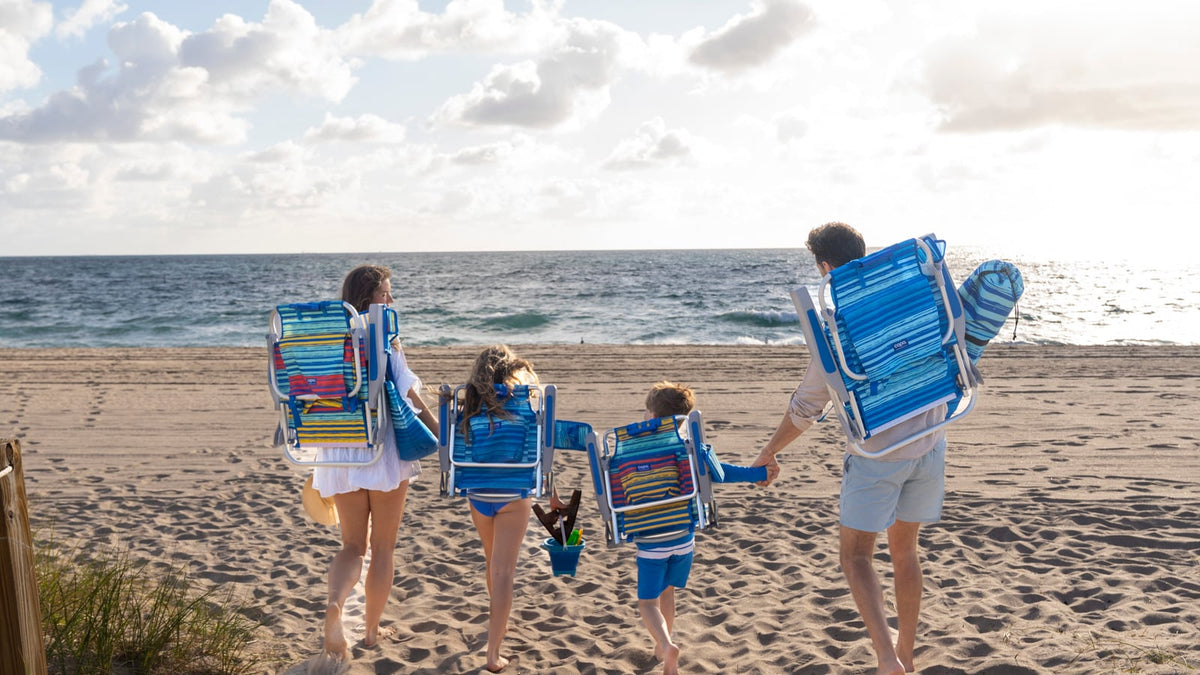
Picture a stretch of Rio de Janeiro's Ipanema beach on a Tuesday afternoon. Not a weekend, not a holiday, a Tuesday. The sand is packed with families, couples, groups of friends, and grandparents playing with grandchildren. Vendors weave through the crowd with cold coconut water and fresh açaí. Elaborate shade setups anchor dozens of social circles into their own comfortable territories. Nobody looks stressed. Nobody is wrestling with a collapsed umbrella or sweating through a vinyl chair. The beach isn't a destination these families are visiting, it is an extension of their living rooms, their dining tables, their lives.
This is not an accident. Brazil has spent generations developing what might be the most sophisticated beach culture on the planet, and that culture has produced a philosophy about outdoor living, comfort, and community that most American beach brands have never fully understood. The best beach gear doesn't just hold your body above the sand. It creates the conditions for the kind of day you actually want to have. That insight, deceptively simple, surprisingly rare, is the beating heart of what separates a beach lifestyle brand with genuine roots from one that just prints palm trees on a cooler bag.
This article traces that philosophy from the beaches of Brazil to your family's next outing, examining why culture produces better design, what Brazilian beach chairs and shade philosophy actually look like in practice, and how those ideas translate into the gear choices that matter most for families who take their beach days seriously.
How Brazil Turned the Beach Into a Living Philosophy
Brazilian beach culture is not simply a preference for outdoor recreation. It is a fully developed social institution with its own etiquette, economics, aesthetics, and values, one that has evolved over more than a century of daily practice across a coastline stretching nearly 5,000 miles.
The anthropology here matters. Brazil's relationship with its beaches, particularly in cities like Rio de Janeiro, Salvador, Fortaleza, and Florianópolis, developed in a way that is fundamentally different from the American beach experience. In the United States, the beach has historically been a vacation destination, a place you travel to, spend a few days at, and leave. In Brazil, particularly in coastal cities, the beach is a year-round social commons. Families don't pack for a trip to the beach; they pack for Tuesday. Then Wednesday. Then again on the weekend.
This frequency changes everything about how people think about beach gear, beach comfort, and beach behavior. When you go to the beach once or twice a year, you tolerate discomfort. You drag a cheap umbrella that fights you in the wind, sit in a chair that leaves creases in your back, and call it a good day if the kids had fun. When the beach is part of your weekly rhythm, tolerance evaporates. You demand gear that actually works. You develop opinions about shade angles, chair height, towel weight, and the ideal distance from the water for watching small children safely while still being in conversation with the adults around you.
Brazilian beach culture also carries a deeply communal orientation. The setup on an Ipanema beach isn't organized around individuals facing the ocean in a row. It's organized around groups facing each other, with shade overhead, food and drinks within arm's reach, and children able to move freely between family clusters. The beach setup is a social infrastructure, not just a sun-blocking solution. This distinction shapes every product decision made by brands that genuinely understand that culture.
The Role of the "Barraca" in Shaping Beach Design Thinking
In Brazilian beach culture, the barraca is the fundamental unit of beach organization. Literally translated as a stall or canopy, the barraca is the shaded home base that anchors a group's beach day. It creates a defined, comfortable territory. It signals to the group: this is where we belong today. Everything radiates out from it.
The barraca concept has influenced how thoughtful beach brands think about shade. Shade is not an afterthought, a last-minute umbrella jammed into the sand. It is the organizing principle of the entire setup. The chairs face inward or at angles that keep everyone in conversation. The cooler lives under the shade. The towels, the snacks, the sunscreen, all of it orbits the shade structure. This is a fundamentally different philosophy from the "plant an umbrella and hope for the best" approach that characterizes most American beach days.
Understanding the barraca concept helps explain why stability in a shade structure is non-negotiable for families who take their beach days seriously. A shade solution that collapses in a sea breeze isn't just inconvenient, it dismantles the entire social and logistical infrastructure of the day. This is why engineering solutions like the Anchor Max® system Copa developed represent something more meaningful than a product feature. They represent an understanding of what shade is actually for.
What American Beach Culture Gets Wrong (and Brazil Gets Right)
American beach culture has historically prioritized the individual experience over the collective one. The classic image of the American beach day involves a towel, a bottle of sunscreen, and a pair of sunglasses. Maybe a folding chair. The emphasis is on personal recreation, swimming, sunbathing, reading, rather than on creating a comfortable, sustained social environment for a group.
This individualistic orientation has shaped the American beach gear market in ways that are often invisible until you compare them to the alternatives. Most American beach chairs are designed for a single person's comfort in isolation. Most American beach umbrellas are designed to shade one or two people sitting directly beneath them. The gear reflects the assumption that you're going to the beach alone, or in a small pair, and that you'll be moving around a lot.
Families, of course, don't work this way. A family with two adults and three children ranging from a toddler to a twelve-year-old doesn't experience the beach as a set of individual activities. They experience it as a shared event that requires coordination, infrastructure, and a home base that everyone can return to. The gear designed for the solo sunbather serves this family poorly.
Brazilian beach culture, by contrast, has always designed for the group. Shade structures are sized for multiple people. Chairs are designed to be comfortable for hours, not minutes. The setup is meant to be a destination within a destination, a place where the family can eat, nap, play cards, and watch the kids without constantly relocating. This group-first orientation is what distinguishes a genuine family outdoor lifestyle brand from one that simply makes products in a family-friendly color palette.
The Comfort Duration Problem
One of the most revealing differences between cultures that take beach living seriously and those that treat it as an occasional novelty is what might be called the comfort duration problem. How long can you actually sit in that chair? How long does the shade hold before the wind catches it? How quickly does the seat fabric trap heat and become unbearable?
American beach chairs are frequently designed to survive the purchase decision, not the beach day. They look fine in the store or in a product photo. They fold compactly. They're priced to feel like a reasonable impulse buy. But the materials trap heat, the frames flex and creak, the back support disappears after an hour, and the cup holder is positioned at exactly the wrong angle for anything that isn't a specific size of can.
Brazilian beach culture, because it demands chairs that last through six-hour days repeated dozens of times per season, has developed an implicit standard for what "comfortable" actually means over time. A chair that's tolerable for ninety minutes is not a beach chair. It's a camping chair that someone brought to the wrong environment. A real beach chair supports the lumbar region, keeps the body at an angle that allows both relaxation and conversation, uses breathable materials that don't become a heat trap, and holds up to sand, salt, humidity, and repeated folding without losing structural integrity.
This is the standard Copa applies to its chair line, not the minimum viable comfort threshold, but the extended-duration test that Brazilian beach culture quietly applies to everything it brings to the sand.
The Shade Philosophy: Why Stability Is Everything
Shade at the beach is not a luxury. For families with young children, it is a medical necessity. The American Academy of Dermatology consistently emphasizes that shade is one of the most effective forms of sun protection, particularly for children under two whose skin is especially vulnerable to UV damage. But not all shade is created equal, and the engineering of a shade structure matters enormously for how well it actually performs.
The single most common failure point in beach shade is anchoring. A beach umbrella that isn't properly secured can become genuinely dangerous in wind, a documented hazard on American beaches that has led to injuries and, in rare cases, fatalities. Beyond the safety concern, an unstable shade structure is constantly demanding your attention, pulling you out of relaxation and into vigilance. Every time the wind picks up, you're bracing the pole, readjusting the angle, hoping it holds. That's not a beach day. That's a job.
Copa's Anchor Max® system addresses this failure point directly. Rather than relying on a simple push-in pole that can shift or tip in loose sand, the Anchor Max® uses a screw-in anchor design that creates genuine holding power in a variety of sand conditions. The system is engineered to resist wind load rather than simply sitting on top of the sand, which means that once your shade is set up, it stays set up. You can stop thinking about it and start being present with your family.
This is not a minor convenience feature. It is the difference between a shade structure that creates the conditions for a relaxed, enjoyable day and one that becomes an ongoing source of anxiety. From a Brazilian beach culture perspective, an unstable shade structure is almost a philosophical contradiction, the entire point of the shade setup is to create a stable, comfortable home base. If the home base is insecure, the day is insecure.
Shade Coverage and Social Architecture
Beyond stability, the geometry of shade matters more than most families realize until they've had a bad experience. A standard 7-foot beach umbrella covers roughly one adult sitting directly beneath it. It offers essentially no protection to anyone sitting at an angle, and it tracks the sun in a way that requires constant repositioning throughout the day.
Copa's approach to shade draws on the barraca philosophy, coverage that is sized and structured for a group, not an individual. Cabana-style shade structures that provide overhead coverage across a larger footprint allow families to spread out, position chairs in a social arrangement, and maintain consistent protection as the sun moves across the sky. This is especially important for families with children who need to move between sitting, eating, and resting without constantly entering and exiting the protected zone.
For families planning their full setup, the guidance in Copa's complete beach setup guide for families offers a practical framework for thinking through coverage, positioning, and the relationship between shade structures and seating, a systems-level view that most gear brands never provide.
Premium Beach Gear and the Philosophy of the Full Day
There is a concept in Brazilian beach culture that translates loosely as "the full day", the understanding that a proper beach outing isn't a two-hour visit but a sustained, multi-phase experience that moves through morning freshness, midday heat, afternoon breeze, and evening golden light. Each phase has its own demands. The gear that serves the full day has to flex across all of them.
This philosophy fundamentally changes how you think about premium outdoor beach gear. A chair that's comfortable for two hours isn't necessarily comfortable for six. A shade structure that holds in calm morning conditions may fail in afternoon sea breezes. A cooler that keeps drinks cold for a few hours isn't the same as one that's still cold when the kids want their third snack of the day. The full-day standard is significantly more demanding than the average American beach-day standard, and it's the standard that produces genuinely superior gear.
Copa's product line is designed around the full-day philosophy. The chairs use materials and construction methods chosen for extended comfort and durability rather than initial impressiveness. The shade systems are engineered for stability across changing wind conditions. The bundles are curated to include everything a family needs to sustain a full day without returning to the car or making do with inadequate equipment.
Why Bundles Reflect a Holistic Philosophy
The bundle model isn't just a sales convenience. It's a philosophical statement about how beach gear should work. When gear is designed as a system, every piece is dimensioned, weighted, and styled to complement the others. The chairs sit at the right height relative to the shade structure. The colors coordinate. The packing sizes are designed to work together in a single load from the parking lot to the sand.
This systems thinking is native to Brazilian beach culture, where the setup is always understood as a whole rather than a collection of individual items. You don't bring "a chair" and "an umbrella" and hope they work together. You bring a setup, a coherent, functional environment that you've refined over many seasons.
Copa's Deluxe Bundle and Essentials Bundle translate this thinking into a practical purchasing decision for American families. Rather than spending hours cross-referencing specifications to determine whether a chair from one brand will work with an umbrella from another, families can purchase a complete, coordinated system that has already been designed to function as a whole. Free shipping on bundles removes the last logistical friction, making it genuinely easy to get everything you need in a single transaction.
| Feature | Budget Beach Gear | Standard Mid-Range Gear | Copa Premium System |
|---|---|---|---|
| Shade Anchoring | ❌ Push-in pole, shifts in wind | ⚠️ Basic stake, moderate hold | ✅ Anchor Max® screw-in system, wind-resistant |
| Chair Comfort Duration | ❌ Uncomfortable after 60–90 min | ⚠️ Tolerable for 2–3 hours | ✅ Full-day comfort, breathable materials |
| Gear Coordination | ❌ Mismatched items from different brands | ⚠️ Some coordination, partial system | ✅ Designed as a complete family system |
| Pack-Out Weight | ⚠️ Variable, often heavy for quality level | ⚠️ Moderate weight | ✅ Lightweight materials, easy carry |
| Multigenerational Design | ❌ Optimized for single adult use | ⚠️ Some family-friendly features | ✅ Designed for families of all ages |
| Cultural Design Philosophy | ❌ Generic, trend-following | ⚠️ Lifestyle aesthetic without depth | ✅ Rooted in Brazilian beach living tradition |
Beach Lifestyle Wellness: The Connection Between Gear and Wellbeing
Beach lifestyle wellness is not a marketing phrase. It is a genuinely meaningful concept that connects the quality of your outdoor environment to measurable outcomes in stress reduction, family connection, and physical wellbeing. And the quality of your gear is a larger variable in that equation than most people account for.
Consider the stress arithmetic of a typical American family beach day with inadequate gear. The umbrella tips over twice before noon. The chairs are too low to get out of easily, which means every time a child needs something, there's a full physical production involved. The cooler wasn't packed right so drinks are lukewarm by 11am. The toddler keeps crawling out of the shade into direct sun, requiring constant redirection. By the time lunch is finished, both parents are exhausted and vaguely irritated, and the kids have picked up on that energy.
Now run the same family through a day with gear that works. The shade structure is anchored and stays put. The chairs are comfortable and positioned at the right height. The setup took fifteen minutes and hasn't required a single adjustment. The parents can sit and actually watch their kids play rather than managing equipment failures. The toddler has a clear, shaded zone to return to. The conversation flows. The cold drinks are within reach. The afternoon passes in that particular slow, golden way that beach days are supposed to feel.
The gear didn't create the joy, but it removed the obstacles to it. This is exactly the philosophy that Brazilian beach culture has always understood: you can't be present and relaxed if you're constantly managing your environment. The setup has to be solid enough that you can stop thinking about it.
Sun Safety as a Wellness Practice, Not a Worry
For families with young children, sun safety is often a source of low-grade anxiety rather than a practiced habit. The worry about whether everyone has enough sunscreen, whether the toddler has been in direct sun too long, whether the shade is actually covering the right people at the right angles, this anxiety is a real cost of the beach day, and it compounds over time.
Proper shade infrastructure transforms sun safety from an anxious reactive practice into a calm structural one. When the shade is wide enough, stable enough, and positioned correctly, the family's sun exposure is managed by the setup rather than by constant parental vigilance. The American Academy of Dermatology recommends seeking shade as a primary sun protection strategy, particularly during peak UV hours between 10am and 4pm. A shade structure that actually holds during those hours, rather than tipping or drifting, is doing real protective work.
Copa's shade systems, anchored by the Anchor Max® technology, are designed specifically to perform during those peak-heat, peak-wind afternoon hours when lesser setups fail. This isn't incidental. It's the application of a beach philosophy that treats shade as essential infrastructure rather than optional comfort.
The Founder's Story and Why Authenticity Changes Design
Most beach gear brands are designed by product teams working from trend reports and market research. Copa was built from lived experience, specifically, from a founder whose understanding of the beach came from Brazilian beach culture at its most genuine. That origin story isn't just compelling marketing. It produces meaningfully different design decisions.
When you've grown up experiencing the beach as a full-day social institution rather than an occasional recreational visit, you develop instincts about what matters and what doesn't that are simply not available to someone working from consumer surveys. You know which problems are annoying but tolerable and which ones genuinely ruin a day. You know how a group arranges itself in shade and what that means for how a shade structure should be sized. You know that a chair needs to work for a grandmother as well as a thirty-five-year-old parent. You know that the first thirty minutes of setup determines the emotional tone of the entire day.
These are the kinds of insights that produce better gear, and they're only accessible through authentic cultural engagement with beach living at the level Brazil practices it. Copa's Brazilian roots are not an aesthetic choice, they are a design philosophy made visible.
The brand's commitment to sharing that philosophy extends through its content as well. The Copa Beach Tips blog serves as a resource for families trying to develop their own beach-day practices, offering practical guidance on everything from packing strategies to setup logistics. This educational orientation reflects the Brazilian beach culture tradition of knowledge-sharing, the experienced beachgoer who helps the newcomer understand how to set up properly, where to position the shade, how to organize the day. Copa extends that tradition into a digital format, making it accessible to families who didn't grow up with a barraca culture as their reference point.
Multigenerational Design as Cultural Value
One of the most distinctive features of Brazilian beach culture is its genuinely multigenerational character. On an Ipanema beach, you will routinely see three generations of a family sharing the same shade setup, grandparents, parents, and small children all comfortably occupying the same space, in chairs suited to their different physical needs, under shade large enough to cover everyone.
This multigenerational orientation is built into Copa's product philosophy. The chairs are designed to accommodate a range of body types and physical needs, not just the idealized athletic adult that most outdoor gear defaults to. The shade systems are scaled for family groups rather than couples. The bundles are curated to provide enough equipment for a real family outing, not a streamlined minimalist setup that looks good in a catalog but leaves grandma without a chair.
For families planning beach outings that include multiple generations, Copa's gear functions as a genuine solution rather than a compromise. This matters especially for the kinds of milestone beach days, holiday weekends, family reunions, summer vacation anchors, that benefit from a setup that accommodates everyone. The best beaches for Fourth of July weekend deserve a setup that's worthy of the occasion, and that means gear designed for the full group.
How to Evaluate Beach Gear Through the Brazilian Lens
The most practical application of Brazilian beach philosophy for American families is a different set of evaluation criteria when shopping for beach gear. Most American consumers evaluate beach gear on price, appearance, and fold-down size. Brazilian beach culture would evaluate it on entirely different axes, and those axes are significantly more predictive of whether the gear will actually serve you well.
Here is a framework for evaluating beach gear through the lens of cultures that take beach living seriously:
The Five-Question Evaluation Framework
- Can I stay in this chair for four hours? Not "Is it comfortable when I sit down for thirty seconds in a store." Four hours. With real back support, breathable materials, and a seat height that lets you get up without assistance. If you can't answer yes with confidence, the chair is not a beach chair.
- Does this shade structure stay put in a 15 mph breeze? Afternoon sea breezes on most American coastal beaches regularly reach 10–20 mph. If the anchoring system isn't rated for that condition, it's not adequate. Look specifically for screw-in or auger-style anchors like the Anchor Max® system rather than push-in poles.
- Does this setup accommodate my whole group? Count the people, count the chairs, measure the shade coverage. If the shade covers two people and you have five, that's not a family shade solution. If the chairs are sized for solo adults and you have a grandmother with mobility needs, that's not a multigenerational setup.
- Does everything work together as a system? Mismatched gear creates friction. Chair heights that don't work with umbrella angles, bag sizes that don't accommodate everything you need to carry, colors that make the setup feel chaotic rather than cohesive, these are signals that the gear was not designed as a unified system.
- Is this brand's philosophy aligned with how I actually want to use the beach? A brand that understands beach days as full-day family experiences will make different choices at every design decision point than one that understands them as brief recreational visits. That philosophical alignment shows up in details you might not notice individually but feel collectively over the course of a day.
Applying these criteria will quickly distinguish gear that was designed to sell from gear that was designed to perform. Copa's product line was built to pass all five tests, which is why families who use it tend to use it for many seasons rather than replacing it annually.
The Packing Philosophy: What You Bring Reflects What You Believe
In Brazilian beach culture, how you pack for the beach reveals your relationship to the beach. A serious beach family packs for the full day with the same intentionality that someone else might pack for a camping trip. Not overpacking, but thoughtful, systematic preparation that ensures the day can unfold without logistics failures.
For American families developing this practice, the preparation stage is often where beach days succeed or fail before they've even begun. A family that arrives at the beach without enough shade, without chairs that work, without a cooler that keeps food safe, without adequate sun protection, that family is already managing a deficit rather than building on a strong foundation.
Copa's ultimate family beach packing list translates this philosophy into a practical checklist for American families, covering everything from gear to food to sun safety to entertainment for different age groups. It's the kind of resource that a Brazilian grandmother would give her daughter when she had her first child, accumulated wisdom about what actually matters, distilled into a format you can use.
The packing philosophy connects directly to the bundle model. When your core gear (chairs, shade, accessories) is already a coordinated system, the packing decision becomes simpler. You're not cross-referencing compatibility or calculating whether everything will fit in the car. You grab the bundle, add the cooler and the towels and the snacks, and go. This reduction in cognitive load before the beach day even starts is a real benefit that compounds over the course of a season.
The Gift-Giving Dimension of Premium Beach Gear
Brazilian beach culture places significant value on equipping others for good beach days. Giving someone the tools for a better beach experience is understood as a meaningful gift, not just a consumer transaction but an investment in their quality of life and their family's shared experiences.
This perspective reframes premium beach gear as gift material in a way that most American consumers haven't fully explored. A Copa bundle, combining premium chairs, a properly anchored shade structure, and coordinated accessories, is a genuinely meaningful gift for a family that loves the beach. It's the kind of gift that gets used dozens of times per year, that the whole family benefits from, and that improves the quality of experiences that already matter to them.
For gift shoppers, the bundle model is particularly well-suited because it provides a complete, coherent gift rather than a single item that the recipient then has to integrate with whatever else they own. The setup works as a system, which means the gift works as a system, from the moment it's opened.
What Beach Culture Teaches Us About the Outdoor Lifestyle Brands Worth Trusting
The outdoor lifestyle brand category is crowded with companies that have adopted the aesthetics of an outdoor lifestyle without genuinely understanding the culture that produced those aesthetics. They use the right colors, the right lifestyle photography, the right language about adventure and freedom and connection. But the products don't reflect a genuine understanding of how people actually live outdoors, the specific challenges, rhythms, and values that make outdoor experiences meaningful.
The difference between a genuine family outdoor lifestyle brand and an aesthetic imitation is visible in the design decisions that don't show up in marketing materials. It's in the choice of anchoring system for the umbrella. It's in the lumbar support angle of the chair. It's in whether the bag that holds the gear has handles positioned for two-person carrying or one. It's in whether the shade coverage was calculated for a family of five or a couple. These details are invisible in a product photo and obvious after a single day at the beach.
Brazilian beach culture, because it has practiced and refined outdoor living at this level for generations, produces brands with genuine depth in these invisible details. Copa's alignment with that culture means its design decisions are informed by real-world experience with what makes a beach day work, not trend reports, not focus groups, but generations of accumulated practice on some of the most demanding and most celebrated beaches in the world.
This is what makes the Brazilian beach philosophy worth understanding for any family that cares about their outdoor experiences. The principles that produce great beach gear, the commitment to full-day comfort, the prioritization of the group over the individual, the insistence on stability and reliability in outdoor infrastructure, the understanding of the beach as a social and wellness environment rather than a recreational backdrop, are universally applicable. They don't require a Brazilian coastline. They require a brand that genuinely understands them.
Frequently Asked Questions
What makes Brazilian beach culture different from American beach culture?
Brazilian beach culture treats the beach as a year-round social institution rather than an occasional vacation destination. This means Brazilians have developed far more refined expectations for beach gear, setup, and duration of comfort. The emphasis is on creating a stable, comfortable home base for a group rather than individual sun exposure or brief recreation. This group-first, full-day orientation produces different, and generally higher, standards for gear design.
What is the Anchor Max® system and why does it matter?
The Anchor Max® is Copa's patented anchoring system for shade structures. Unlike standard push-in umbrella poles that can shift or tip in wind, the Anchor Max® uses a screw-in mechanism that creates genuine holding power in sand. This makes a significant difference in safety and comfort during afternoon beach hours when sea breezes commonly reach 10–20 mph on most American coastal beaches. A shade structure that stays put allows families to relax rather than constantly manage their equipment.
Are Copa's Brazilian beach chairs actually different from standard beach chairs?
Yes, in ways that matter over the course of a full beach day. Copa's chairs are designed for extended-duration comfort using breathable materials and structural support suited to hours of use. Standard budget beach chairs are often designed to look acceptable at purchase but sacrifice back support, seat material quality, and structural integrity in ways that become apparent within the first hour of use. Copa's design philosophy draws on Brazilian beach standards, where chairs are expected to perform across full days repeated many times per season.
Why does it matter that Copa is a Brazilian-inspired beach lifestyle brand?
Cultural origin matters because it shapes design priorities. A brand rooted in Brazilian beach culture builds gear around full-day family use, group comfort, shade stability, and multigenerational accessibility, priorities that are native to how Brazil experiences the beach. A brand without that grounding tends to optimize for purchase appeal rather than day-of performance. Copa's founder's Brazilian background is not just a brand story; it's the source of genuine product insight.
What families benefit most from premium outdoor beach gear?
Families with young children benefit most from premium gear because the demands on beach infrastructure are highest for them. Toddlers need reliable, wide shade coverage. Parents need chairs that allow them to get up quickly. Multiple children need a setup stable enough to serve as a base of operations for hours. Multigenerational families also benefit significantly because premium gear is designed to accommodate a range of physical needs rather than defaulting to the idealized solo adult user.
How does the bundle model reflect the Brazilian beach philosophy?
The bundle model reflects the Brazilian understanding of the beach setup as a system rather than a collection of individual items. When everything is designed together, every piece works better in relation to the others, chair height relative to shade coverage, bag sizing relative to gear volume, aesthetic coordination that makes the setup feel like an intentional environment rather than a random assemblage. Copa's Deluxe Bundle and Essentials Bundle translate this systems thinking into a single purchasing decision with free shipping.
What does "beach lifestyle wellness" actually mean in practice?
Beach lifestyle wellness refers to the real connection between the quality of your beach environment and your physical and psychological wellbeing during a beach day. Gear that works creates the conditions for genuine relaxation, family connection, and stress reduction. Gear that fails, tipping umbrellas, uncomfortable chairs, inadequate shade, creates a low-grade stress that prevents families from fully benefiting from their time outdoors. Proper gear is not a luxury; it is a prerequisite for the wellbeing benefits that beach time is supposed to provide.
How should I evaluate whether a beach chair is genuinely comfortable for a full day?
Evaluate on four dimensions: lumbar support (does it maintain its shape and support after two hours?), seat material breathability (does the fabric trap heat or allow airflow?), seat height (can you stand from it without significant effort?), and structural stability (does it creak, flex, or shift under normal movement?). Budget chairs typically fail on at least two of these dimensions. Copa's chairs are designed to pass all four tests across a full day of use.
What is the best beach setup for a family with toddlers?
A setup for toddlers requires wide shade coverage (enough to keep the child in protected space even when they move around), stable anchoring so the shade structure doesn't tip toward the child, low ground-level space for a travel mat or blanket within the shade zone, and chairs positioned for adult sight lines to the water. Copa's shade systems with Anchor Max® anchoring are particularly well-suited for this use case because stability is non-negotiable when small children are nearby.
Why is free shipping on bundles significant for families?
Premium beach gear is both bulky and heavy, which makes shipping costs significant. Free shipping on bundles removes a real financial friction from the purchasing decision and makes it economically practical to get a complete, coordinated setup in a single order. For families who might otherwise compromise on gear quality to avoid shipping costs, free bundle shipping makes the premium choice accessible.
Is Copa's beach gear suitable for casual beach-goers or only serious beach families?
Copa's gear is suitable for any family that wants their beach day to actually work well, regardless of frequency. Even families who visit the beach a few times per season benefit from gear that performs reliably, provides adequate shade, and makes the setup process straightforward. The difference between Copa gear and budget alternatives becomes apparent on the first day of use, not after years of comparison. Quality gear isn't only for frequent users, it's for anyone who values the experience enough to invest in it.
How does Copa's content (like the Beach Tips blog) connect to its product philosophy?
Copa's Beach Tips content reflects the Brazilian beach culture tradition of knowledge-sharing, the idea that an experienced beach family helps others set up properly, pack effectively, and get more from their time outdoors. The blog serves families who want to develop their beach-day practices, not just buy gear. This educational orientation is consistent with a brand whose purpose is to make family beach days genuinely better, not just to sell products. Better-prepared families have better days, and better days create a genuine connection to the beach lifestyle Copa is built around.
Key Takeaways
- Brazilian beach culture treats the beach as a full-day social institution, which produces fundamentally different, and more demanding, standards for gear, comfort, and setup than American recreational beach culture.
- The "barraca" concept, the stable, shaded home base of a Brazilian beach group, is the philosophical origin of Copa's approach to shade structure design. Stability, coverage, and social architecture all flow from this idea.
- The Anchor Max® system is Copa's engineering answer to the most common failure point in beach shade: an unstable anchor that turns a relaxing day into a constant equipment management task. It reflects a genuine understanding of what shade is for.
- Premium outdoor beach gear is evaluated correctly not by purchase-moment appeal but by full-day performance across four dimensions: comfort duration, shade stability, group accommodation, and systems coordination.
- Beach lifestyle wellness is a real phenomenon, not a marketing phrase. Gear that works creates the conditions for relaxation and family connection; gear that fails creates low-grade stress that compounds across the day.
- The bundle model translates Brazilian systems thinking about beach setups into a practical purchasing decision, ensuring that every piece of gear works in relation to every other piece rather than requiring families to solve compatibility problems themselves.
- Multigenerational design is a core value of Brazilian beach culture and a distinguishing characteristic of Copa's product line, ensuring the setup works for grandparents and toddlers as well as parents in their prime.
- Authenticity matters in brand philosophy. Copa's Brazilian roots produce genuine design insight that shows up in invisible details, anchoring systems, chair angles, shade coverage calculations, that separate gear that performs from gear that merely sells.
Shop Now
Learn more →
Share:
Beach Umbrella vs. Beach Cabana: A Feature-by-Feature Comparison for Families
8 Best US Beaches for Families with Young Children, Ranked by Ease and Comfort