

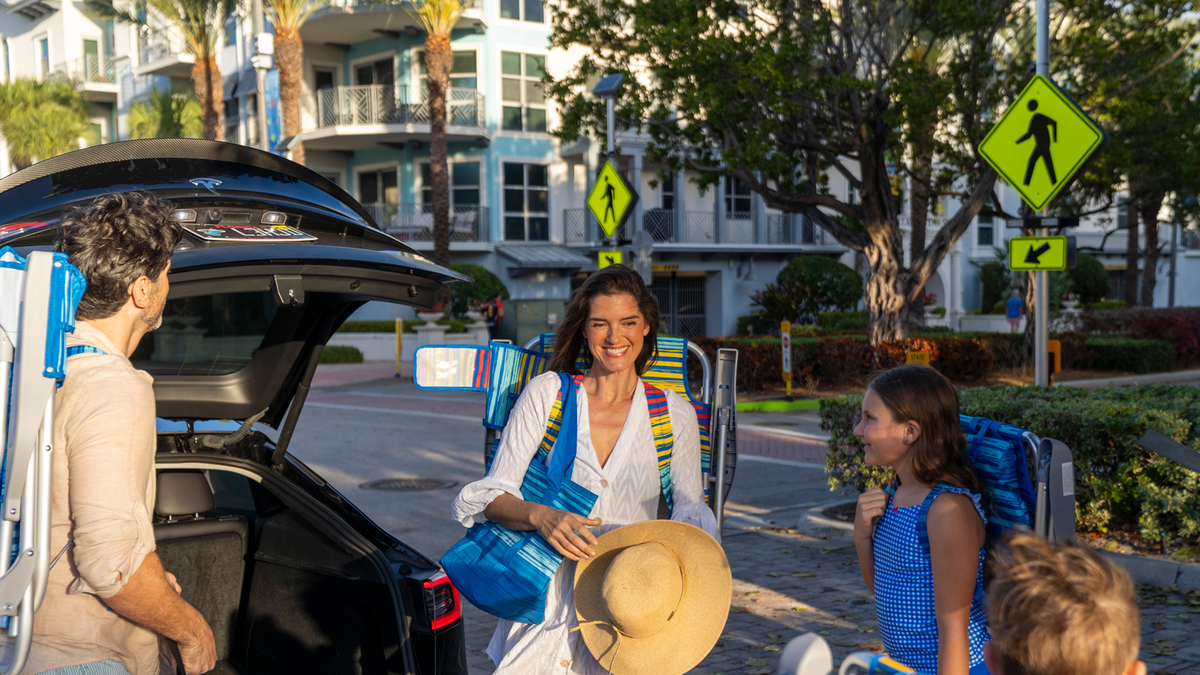
The drive to the beach takes forty-five minutes. The kids are already antsy. The cooler is packed, the umbrella is bungeed to the roof, and everyone has sunscreen on their faces but nobody on their ears. By 10 AM, you're planted in the sand with six hours ahead of you. By 1 PM, your lower back is talking to you. By 3 PM, it's shouting.
This scenario plays out on beaches from Cape Cod to Malibu every single summer weekend, and the culprit is almost never the sun, the heat, or even the sand. It's the chair. More specifically, it's the wrong chair, the kind that folds up small, costs $19, and treats your spine like an afterthought. For families spending four, six, or even eight hours at the shore, seat geometry and ergonomic design are not luxury considerations. They're the difference between a beach day you want to repeat and one you spend recovering from on Sunday night.
This deep-dive covers the biomechanics of beach seating, what the research on prolonged outdoor sitting tells us about posture and pain, how to evaluate chairs across every dimension that actually matters, and why investing in high quality beach chairs changes the entire texture of a family beach day. Copa's line of premium beach chairs for families serves as the practical reference point throughout, not as a sales pitch, but as a concrete example of what thoughtful ergonomic design looks like when it's actually executed.
Why Prolonged Sitting on the Beach Is Harder on Your Body Than It Looks
Beach chairs place the body in a uniquely challenging position. Unlike an office chair or a dining chair, a beach chair sits low to the ground, often reclines at an angle that seems relaxing but actually increases lumbar load, and sits on a surface (sand) that shifts under weight. Understanding why this matters starts with a quick look at what happens to the spine during extended sitting.
The lumbar spine has a natural inward curve called lordosis. When you sit, that curve tends to flatten, especially in low chairs where the hips drop below the knees. Flattening the lumbar curve increases pressure on the intervertebral discs and stretches the posterior spinal ligaments, which is what produces that familiar dull ache after a few hours. In a standard beach chair, the seat-to-ground height is often only 8 to 12 inches, which forces the pelvis into a posterior tilt and eliminates the natural lordotic curve almost entirely.
The recline angle compounds the problem in ways that feel counterintuitive. Many people assume that reclining back reduces spinal load, and to a degree, that's true, research published through the National Center for Biotechnology Information on lumbar disc pressure during various postures confirms that a mild recline (around 110 to 135 degrees) reduces disc pressure compared to an upright 90-degree position. But most beach chairs recline too far, past 135 degrees, which shifts the body's center of gravity and causes the neck and shoulders to crane forward to look at a phone, a book, or the kids in the water. This forward head posture adds significant load to the cervical spine and upper trapezius muscles, which is why many people finish a beach day with a stiff neck as much as a sore back.
For parents of young children, the problem is layered further. You're not sitting still. You're twisting to reapply sunscreen, leaning forward to hand a snack to a toddler, rotating to flag down a kid drifting too far in the surf. Every one of those asymmetrical movements is more stressful when the chair offers no lateral support and no stable base. The cumulative effect over a full day is measurable fatigue and soreness that has nothing to do with the physical exertion of swimming or playing, it comes entirely from the chair.
The Hidden Role of Sand Instability
An office ergonomics setup assumes a flat, stable floor. Beach chairs deal with sand, which compresses unevenly under load and allows chair legs to sink at different rates. This creates micro-tilts in the seating surface that the body has to constantly compensate for with small, sustained muscular contractions. Over six hours, those micro-contractions add up to real fatigue in the paraspinal and gluteal muscles. A chair with a wider footprint, or one designed with sand-specific leg geometry, dramatically reduces this effect by distributing weight more evenly and resisting differential sinking.
Children's Ergonomics Are Different, and Often Ignored
Most beach chair buying guides focus entirely on adult comfort. But families need to think about children's seating biomechanics too. A child sitting in an adult-sized beach chair spends the day with their legs dangling, which places the full weight of the lower limbs on the back of the thighs and compresses the femoral blood vessels. This is uncomfortable, causes the child to fidget constantly, and often results in them abandoning the chair entirely in favor of sitting in the sand, which then triggers a round of complaints about being gritty. A properly sized seat, or a chair with an adjustable recline that allows children to use it differently than adults, solves this without requiring a separate chair purchase for every family member.
The Five Dimensions of Beach Chair Ergonomics Every Buyer Should Understand
When evaluating comfortable beach chairs for adults and families, there are five structural dimensions that matter above everything else. Most product listings mention weight capacity and folded dimensions. Almost none of them explain the factors that actually determine how the chair will feel at hour four versus hour one.
1. Seat Height and Hip Angle
Seat height determines hip angle, and hip angle determines everything else about spinal position. The ergonomic sweet spot for beach seating is a hip angle of approximately 100 to 110 degrees (measured between the torso and thigh). This is slightly more open than a standard 90-degree seated position and allows the pelvis to tip slightly forward into a neutral position rather than tilting backward into a slouch.
Most inexpensive beach chairs sit so low that the hip angle drops below 90 degrees, forcing a posterior pelvic tilt. The body then compensates by rounding the lumbar spine, and the chain reaction of postural problems begins. A chair with a seat height of 14 to 18 inches from the ground, while still feeling like a beach chair rather than a patio chair, is meaningfully better for most adults. The tradeoff is that higher seats tend to feel less "beachy" and require a slightly wider folded profile, which is why cheap chairs all go low. Premium designs find the balance between aesthetic, portability, and biomechanical function.
2. Lumbar Support Architecture
Lumbar support is the most discussed ergonomic feature and also the most poorly implemented in beach chairs. A small foam bump at mid-back does very little if the surrounding seat fabric sags. Effective lumbar support in a beach chair requires a combination of three things: a back panel that maintains tension across its full surface (not just at the attachment points), a contour that follows the natural inward curve of the lower spine, and a position that hits the correct anatomical zone, typically the L3-L5 vertebral region, which sits just above the top of the pelvis.
When shopping for the best beach chairs for back support, look beyond the presence of a lumbar feature and evaluate its construction. Is the support integrated into the chair's frame structure, or is it a removable pillow that will migrate out of position within an hour? Is the back panel made from a material that maintains its shape under sustained load, or will it stretch and sag as the day progresses? These are questions most product descriptions don't answer, which is why reading detailed construction notes and, where possible, testing chairs before purchasing, matters considerably.
3. Armrest Height and Shoulder Positioning
Armrests are frequently treated as a comfort luxury in beach chairs. Ergonomically, they serve a functional purpose: they offload weight from the spine. When the arms rest at the correct height, approximately at elbow level when the forearm is parallel to the ground, the shoulder girdle relaxes, the trapezius muscles release tension, and approximately 10 to 15 percent of upper body weight is transferred from the spine to the armrests. Over a long day, that redistribution of load is meaningful.
Armrests that are too low force a slight shoulder hunch and offer no actual support. Armrests that are too high elevate the shoulders and increase trapezius tension. Fixed armrests at the wrong height are worse than no armrests at all. Adjustable armrests are ideal, but even fixed armrests at a well-considered height (typically 7 to 9 inches above the seat surface) serve the function correctly for most adults.
4. Recline Range and Angle Locking
A beach chair that only has one position, whether fully upright or fully reclined, is not designed for full-day use. The human body is not built to hold any single posture for six hours. Micropostural variation, the ability to shift slightly between positions throughout the day, is a critical component of prolonged sitting comfort. A chair with multiple recline positions (ideally three or more, covering a range from approximately 90 degrees to 160 degrees) allows the sitter to shift the loading pattern on their spine periodically, reducing cumulative fatigue in any single muscle group or disc.
The locking mechanism matters as much as the range. A recline that "locks" via a ratchet system but creeps under load will cause subtle but constant postural instability as the body subconsciously braces against the movement. A positive-locking system that holds its position firmly allows the muscles to fully relax rather than stay partially activated to stabilize the chair.
5. Seat Width, Lateral Support, and Material Breathability
Seat width affects not just comfort but postural alignment. A seat that is too narrow forces the arms outward and causes subtle lateral leaning. A seat that is too wide allows the pelvis to shift asymmetrically during extended sitting, which loads the spine unevenly and can contribute to hip and lower back discomfort. For most adults, a seat width of 19 to 22 inches is optimal. For children, 14 to 16 inches is appropriate.
Material breathability is a beach-specific ergonomic factor that indoor seating research rarely addresses. A seat material that traps heat causes sweating, which changes the interface between the body and the seat surface, increases friction, and prompts constant position shifts that disrupt posture. Mesh or open-weave textilene fabrics that allow air circulation behind the back and under the thighs significantly reduce this thermal discomfort and allow sitters to stay in their ergonomically correct position rather than shifting away from it.
How Copa's Beach Chairs Approach Ergonomic Design
Copa's beach chairs represent one of the more considered ergonomic approaches available in the premium beach chair market. Rather than designing around weight minimization or pack size and adding comfort features as an afterthought, Copa's chairs are built around the extended family beach day as the primary use case. That changes several design decisions in meaningful ways.
The Copa chair lineup features a supportive, high-back design that addresses the cervical and thoracic spine, the zones that most low-back beach chairs completely ignore. A high back allows the user to rest their head and neck in a neutral position during reclined use, eliminating the forward head posture problem that creates neck stiffness during long days at the shore. This is particularly important for adults over 40 and for anyone who spends time reading or looking at their phone while reclined.
The seat construction uses materials selected for both structural integrity and breathability, maintaining their shape under sustained load rather than stretching to a hammock-like sag. The recline system offers multiple positions, which addresses the micropostural variation requirement for full-day comfort. Padded armrests are positioned at a height that serves the ergonomic function of shoulder offloading rather than just being decorative.
Copa's chairs are also designed with the sand environment specifically in mind. The leg geometry and footprint are engineered to resist differential sinking in soft sand, which reduces the constant micro-compensation that contributes to muscle fatigue over a long day. For families setting up for a full beach session, this kind of environmental specificity in the design matters far more than it does for a chair that gets used once a month on a deck.
For a broader look at how Copa approaches the complete family beach setup beyond just seating, the complete beach setup guide for families covers the full system approach, including how chairs and shade structures work together as a coordinated unit rather than as isolated purchases.
The Anchor Max® Shade System and Why Comfort Is About More Than the Chair
An ergonomics conversation about beach comfort that stops at the chair misses a critical environmental factor: thermal load. The body's ability to maintain comfortable posture degrades significantly as core temperature rises. In full sun, a beach sitter in an excellent chair will still be uncomfortable, will still shift position constantly, and will still fatigue faster than someone in adequate shade. This is why Copa's approach to beach comfort is fundamentally a systems approach, the chair and the shade structure are designed to work together, and the Anchor Max® technology is the engineering solution that makes the shade half of that system work reliably.
The Anchor Max® is Copa's patented anchoring system for their beach umbrellas and shade structures. In practical terms, it solves the single biggest problem with beach shade: stability in wind and sand. A beach umbrella that tilts, spins, or blows over is not just inconvenient, it's a safety hazard, and the effort required to constantly reposition it defeats the purpose of having a comfortable, settled setup. The Anchor Max® uses a deep-set, secure anchoring mechanism that keeps Copa's shade structures firmly positioned even in conditions where standard screw-in or push-in umbrella poles would fail.
From an ergonomic and comfort perspective, this matters because reliable shade changes behavior. When sitters trust that their umbrella will stay put, they stop tracking it, stop leaning toward it, and stop repositioning their chair every thirty minutes to stay under it. They settle. They relax. The postural benefits of a well-designed chair can only be fully realized when the sitter is actually at rest, and reliable shade is a prerequisite for that rest.
The practical application for families is significant. A parent with two small children can set up the Anchor Max® shade structure, trust that it will hold, and then focus on the actual beach day rather than on managing equipment. That reduction in cognitive and physical management load is part of what makes the full Copa system, chairs, shade, and the stability technology that holds it all together, a genuine comfort upgrade rather than just a gear upgrade.
Multigenerational Comfort: Designing a Beach Setup That Works for Everyone
Families are not homogeneous groups. A beach setup that perfectly serves a 35-year-old parent will not automatically serve a 68-year-old grandparent, a 12-year-old, or a 4-year-old. Multigenerational beach comfort requires thinking through the specific ergonomic and practical needs of each age group and building a chair and shade setup that addresses all of them simultaneously.
Older Adults: Prioritizing Ingress, Egress, and Lumbar Support
For adults over 60, the ergonomic priority list shifts. Getting into and out of a low beach chair becomes a significant challenge, particularly for anyone with hip or knee arthritis. The effort required to lower oneself into a very low chair and push back up from it is not trivial, and doing it multiple times over a beach day becomes genuinely discouraging. A chair with a higher seat height, ideally 16 inches or above, combined with sturdy armrests that can be used for leverage during ingress and egress, dramatically improves usability for older family members.
Lumbar support is even more critical for older spines. The intervertebral discs lose hydration and resilience with age, which means they tolerate prolonged static loading less well than younger discs. A chair that maintains the lumbar curve actively rather than passively, through its back panel construction rather than through a removable add-on, provides sustained support without requiring the sitter to consciously maintain their posture.
Children: Managing Fit and Fidget
Children's beach comfort is less about spinal biomechanics and more about fit and freedom. A child who fits their chair will use it. A child who doesn't will abandon it immediately and spend the day in the sand, which then creates its own set of problems when it's time to apply sunscreen or eat lunch. For younger children (under 8), a dedicated smaller chair or a chair with a sufficiently versatile recline that allows them to use it semi-lying down is more practical than trying to fit them into a standard adult chair.
For older children (8 to 14), the adult chair ergonomics apply with one adjustment: seat depth. Many adult beach chairs have a seat depth of 18 to 20 inches, which means a child's back doesn't reach the lumbar support region of the chair back. In practice, this means the child either slouches forward or sits with their back not contacting the chair at all. A chair with a shorter seat depth, or an adjustable back angle that can compensate for the proportional difference, serves older children better.
New Parents: Mobility and Adaptability Above All
For parents of toddlers and infants, the ergonomic calculus is different again. The chair needs to support extended sitting, but it also needs to be something the parent can get out of quickly, repeatedly, and without a three-step process. A chair that requires a full body effort to exit is a chair that new parents will eventually stop using in favor of just sitting on the ground, which is far worse for their backs.
The armrest design is particularly important here. Armrests that are solid and well-anchored allow new parents to use them as push-up points when rising quickly, the same function they serve for older adults, but for different reasons. A chair that feels stable on sand (because its legs don't sink asymmetrically) also allows faster, more confident exits without the wobble that makes standing up from a beach chair feel precarious.
For a full breakdown of what to bring to make a family beach day actually functional, the ultimate family beach packing list addresses the gear side of this in detail, including how to think about seating relative to everything else you're carrying.
What "Premium" Actually Means in Beach Chair Construction
The word "premium" is used so loosely in outdoor gear marketing that it has nearly lost its meaning. For premium beach chairs for families, the distinction between genuinely premium construction and aspirationally priced standard construction comes down to a small set of specific material and engineering choices that have direct functional consequences.
Frame Material and Gauge
Beach chair frames are made from aluminum, steel, or fiberglass composites. Aluminum is the standard choice for premium chairs because it offers an excellent strength-to-weight ratio and genuine corrosion resistance in a saltwater environment. But aluminum quality varies. The gauge (thickness) of the aluminum tubing, the alloy series used (6000 series aluminum alloys, for example, offer significantly better strength than lower-grade alloys), and the construction of the joints all determine how the chair will perform over multiple seasons of regular use.
A cheap aluminum chair uses thin-gauge tubing that flexes under load, creating a slightly unstable feel that requires the body to maintain constant low-level muscular bracing. A well-constructed aluminum frame is rigid enough that the sitter can fully relax without feeling the chair move under them. This rigidity is not just a comfort feature, it's a safety feature, particularly for heavier users and for older adults who may rely on the chair for support during transitions.
Fabric Construction and UV Resistance
The seat and back fabric is the component most exposed to environmental degradation. Constant UV exposure, salt, sand abrasion, and the repeated stress of weight cycling (sitting down and standing up) degrade fabrics at different rates depending on their construction. Premium fabrics use UV-stabilized yarns that resist color fading and fiber breakdown over multiple seasons. They're also typically solution-dyed rather than piece-dyed, which means the color is embedded in the fiber rather than applied to its surface, making it far more resistant to the bleaching effect of salt and sun.
The weave density and the method of attachment to the frame are equally important. A fabric attached with simple staples or clips that can work loose under repeated load will sag and lose its ergonomic geometry within a season. A fabric attached with reinforced seam connections to the frame maintains its designed shape and tension over time, preserving the lumbar support geometry and seat angle that the chair was engineered to deliver.
Hardware and Mechanical Components
The recline mechanism, the folding joints, and any adjustable components are the points of highest mechanical stress in a beach chair. In cheap chairs, these are typically made from stamped steel that rusts in a saltwater environment and fatigues under repeated use, leading to the wobbly, creaking chair that feels unsafe after two seasons. Premium chairs use marine-grade hardware, typically zinc-coated or stainless steel fasteners with reinforced pivot points and positive-engagement locking mechanisms that maintain their function over years of use.
The practical consequence is that a well-made beach chair should last five to ten seasons of regular use, while a cheap chair typically needs replacement every one to two seasons. On a per-use-day cost basis, the premium chair is almost always less expensive over time, a consideration that's especially relevant for families who get significant annual use from their beach gear.
| Feature | Budget Chair ($20–$40) | Mid-Range Chair ($60–$100) | Premium Chair ($120+) |
|---|---|---|---|
| Frame Material | Thin-gauge steel or low-grade aluminum | Standard aluminum, minimal corrosion treatment | High-grade aluminum, marine-grade hardware |
| Lumbar Support | ❌ None or decorative only | ⚠️ Removable pillow (migrates) | ✅ Integrated, maintains position |
| Recline Positions | 1 fixed or 2 positions | 2–3 positions, may creep under load | 3–5 positive-locking positions |
| Seat Height | 8–11 inches (forces posterior pelvic tilt) | 12–14 inches | 14–18 inches (near-neutral hip angle) |
| Armrests | ❌ Absent or non-functional | ⚠️ Present, fixed, may be too low | ✅ Padded, ergonomically positioned |
| Fabric Breathability | Low, solid fabric, traps heat | Medium, some mesh panels | High, open-weave or full mesh back |
| Expected Lifespan | 1–2 seasons | 2–4 seasons | 5–10 seasons |
| Sand Stability | ❌ Narrow legs, sinks unevenly | ⚠️ Standard footprint | ✅ Engineered for sand surface |
The Psychology of Comfort: How Physical Ease Changes the Beach Day Experience
There is a dimension of beach chair ergonomics that doesn't get discussed in product descriptions: the psychological effect of physical comfort on family dynamics. It sounds abstract, but it's actually quite concrete. When adults are uncomfortable, when their backs hurt, when they're hot because their chair isn't breathable, when they're constantly readjusting their position, they become less present. They're more irritable, less patient, less engaged with what's happening around them. Anyone who has tried to have a pleasant afternoon with a screaming lower back knows that pain is not a background condition. It occupies foreground attention.
The inverse is also true. When adults are genuinely comfortable, when their chair supports them correctly, when they're in adequate shade, when they're not fighting their equipment, they relax in a deeper sense than just physical relaxation. They pay more attention to the kids. They have actual conversations. They read a full chapter of a book rather than just a few pages between position adjustments. The quality of the beach day as an experience, not just as a physical event, improves when the physical substrate of the day is right.
This is the argument for treating beach chair ergonomics as a serious investment rather than a discretionary upgrade. For families who get to the beach regularly, the chair is not a one-time purchase. It's the foundation of dozens or hundreds of hours of family time. Getting it right has a return that extends well beyond the physical.
The "Setup Anxiety" Factor
There's a related psychological phenomenon worth naming: setup anxiety. This is the low-grade stress that accompanies any complex outdoor activity setup, particularly for families with young children. The more components there are that might fail, wobble, tip, or require constant adjustment, the higher the cognitive load of the beach day setup process. A chair that sinks unevenly into the sand, a shade structure that needs constant repositioning, and an umbrella that tips in the first strong breeze all contribute to a mental state that is the opposite of beach relaxation.
Good ergonomic design, in the broadest sense, reduces this anxiety by creating equipment that works reliably and requires minimal ongoing management. The Anchor Max® addresses the shade stability component of this. Well-constructed chairs with stable sand footprints address the seating component. When the equipment does its job without demanding attention, the family can do its job: being present with each other in one of the best environments humans have access to.
Choosing the Right Chair for Your Family's Specific Beach Pattern
Not all beach families use the same way. The ergonomic and practical requirements of a family that goes to the beach for four hours on a Saturday morning are different from those of a family that spends full eight-hour days, multiple times per week, from Memorial Day through Labor Day. Matching the chair to the actual use pattern is part of making a smart buying decision.
The Occasional Beach Family (4–8 trips per season)
For families who get to the beach a handful of times each summer, the priority balance shifts slightly toward portability and storage. A chair that is excellent ergonomically but too bulky to fit in a closet or a car trunk is a chair that creates friction around every beach trip. For this use pattern, look for a chair that achieves good ergonomic design in a reasonably compact folded profile. The per-use-day cost calculation also shifts, a chair that costs more but lasts ten years is still economical even if it only sees eight uses per year.
The Frequent Beach Family (20+ trips per season)
For coastal residents or families who treat the beach as a near-daily summer activity, durability and ergonomic quality are the dominant considerations. These families are putting serious mileage on their gear. The corrosion resistance of the hardware, the UV stability of the fabric, and the mechanical durability of the recline and fold mechanisms all matter far more than they do for occasional use. The investment in high-quality construction pays for itself quickly when the chair is in use multiple times per week.
For this use pattern, the Copa chair lineup, and the bundled offerings that pair chairs with the Anchor Max® shade system, represent a particularly rational value proposition. The complete family setup from one brand means all the components are designed to work together, and the per-use cost over a multi-season lifespan is highly competitive with lower-quality alternatives that need to be replaced every season or two.
The Beach Vacation Family (1–2 trips per year, multiple days)
Families who take dedicated beach vacations have a different calculus again. They're using their gear intensively for a week or two at a time, often on unfamiliar beaches with different sand and wind conditions. For this use pattern, versatility and reliability are critical. A chair that performs well in the fine-grained sand of a Florida Gulf coast beach needs to also perform on the coarser, wetter sand of a New England Atlantic beach. The Anchor Max® system's ability to secure umbrellas in varied sand conditions is particularly relevant here, since vacation beaches often have more challenging conditions than familiar local spots.
For beach vacation planning beyond the gear itself, the best beaches for Fourth of July weekend offers practical destination context that pairs well with the gear preparation conversation.
Building the Complete Ergonomic Beach Setup: A Framework
The ergonomic beach setup is a system, not a single product decision. The framework below captures the decision hierarchy for families building a complete, comfortable beach configuration.
Layer 1: Shade Before Seating
Thermal comfort is the foundation. Before investing in the best chair available, confirm that the shade solution is adequate for the family's typical beach conditions. A reliable shade structure, one that will actually stay in position through a full day rather than requiring constant management, is the precondition for all other comfort. This is where the Anchor Max® system earns its role in the overall setup. Without stable shade, even the most ergonomically perfect chair will deliver a compromised experience.
Layer 2: Adult Seating for the Primary Sitters
The adults who will be sitting for the full duration of the beach day should have the highest-quality seating in the setup. These are the people whose comfort most directly affects the quality of the family experience, both because they're present the longest and because their comfort level affects their engagement with the rest of the group. Investing in comfortable beach chairs for adults at the primary sitter level is the highest-return ergonomic investment in the family beach setup.
Layer 3: Children's Seating and Ground Coverage
Children's seating should be sized appropriately (see the children's ergonomics section above) and supplemented with ground coverage, a beach blanket or mat, for the portions of the day when children will naturally be on the ground building sandcastles, eating, or napping. The combination of an appropriate chair and a comfortable ground surface gives children options and reduces the constant back-and-forth between the chair and the sand.
Layer 4: Accessories That Serve Ergonomic Function
Cup holders, side tables, and storage attachments are often dismissed as convenience accessories, but they serve an ergonomic function. Reaching repeatedly for a water bottle or a snack from a bag on the ground requires bending and twisting movements that, repeated dozens of times over a beach day, contribute to cumulative spinal fatigue. A cup holder and a small side surface at arm level eliminate most of this reaching and keep the sitter in their ergonomically correct position for longer continuous periods.
Frequently Asked Questions About Beach Chair Ergonomics and Comfort
What makes a beach chair genuinely good for back support?
The three most important factors are lumbar support that is integrated into the chair's back panel construction (not a removable pillow), a seat height that allows a hip angle of approximately 100 to 110 degrees, and a recline system with multiple positive-locking positions that allow micropostural variation throughout the day. Chairs that nail all three are rare in the budget category but standard in the premium segment.
Why does my back hurt after a beach day even when I'm relaxed?
Most beach chair designs place the hip angle below 90 degrees, which forces a posterior pelvic tilt and flattens the lumbar curve. The resulting disc loading and ligament stretch cause the familiar dull lower back ache. Additionally, reclining too far causes forward head posture as the sitter looks toward the water or a device, loading the cervical spine and upper trapezius. The solution is a chair with a higher seat and a recline range that includes a mild-recline sweet spot around 110 to 120 degrees.
How important is armrest height in a beach chair?
More important than most buyers realize. Armrests at the correct height (approximately elbow level, or 7 to 9 inches above the seat surface for most adults) offload weight from the spine and allow the shoulder muscles to fully release. Armrests that are too low offer no functional benefit. Armrests that are too high increase shoulder tension. Fixed armrests at a well-considered height serve the function correctly even without adjustment.
Are high-back beach chairs worth the extra cost?
Yes, particularly for full-day use. A high back supports the cervical and thoracic spine during reclined positions, preventing the forward head posture that causes neck stiffness. For adults over 40 and anyone who reads or uses a device during beach time, the high-back design makes a measurable difference in end-of-day comfort.
What should I look for in a beach chair if I have existing lower back problems?
Prioritize: (1) a seat height that puts your hips at or above knee level, (2) an integrated lumbar support that maintains the natural inward curve of the lower spine, (3) padded armrests that you can use to lower yourself in and push yourself up, and (4) a stable sand footprint that doesn't shift under you when you're trying to stand. If possible, test the chair before purchase by sitting in it for at least ten minutes and standing up from it, the exit test reveals a lot about how the chair will work for someone with limited mobility or back sensitivity.
How does sand instability affect seating comfort?
Sand compresses unevenly under chair legs, creating micro-tilts in the seating surface. The body compensates for these tilts with small, sustained muscular contractions in the paraspinal and gluteal muscles. Over a six-hour day, this adds up to real fatigue. Chairs with wider leg footprints, or leg designs that distribute weight more evenly, resist differential sinking and significantly reduce this effect.
Can children use adult beach chairs comfortably?
Younger children (under 8) typically cannot. The seat depth is too long for their shorter torsos, meaning they either sit with their legs dangling (which compresses the back of the thighs) or with their backs not reaching the lumbar support zone. Older children (8 to 14) can use adult chairs with some compromise. The best approach for families is a chair with a recline range versatile enough that children can use it in a semi-reclined position that effectively shortens the functional seat depth.
What's the difference between a $30 beach chair and a $150 beach chair in real terms?
Frame gauge and alloy quality, fabric UV stability and breathability, hardware corrosion resistance, recline mechanism precision, and overall structural integrity. A premium chair maintains its ergonomic geometry over years of use; a budget chair stretches, loosens, and degrades within one to two seasons. On a per-use-day cost basis over five years, the premium chair is typically less expensive, and it provides meaningfully better comfort every single time it's used.
How does shade affect the ergonomic benefits of a good beach chair?
Thermal comfort is a precondition for postural comfort. When the body is overheating, it shifts position constantly in an attempt to reduce skin surface exposure to heat, which disrupts any ergonomic benefit the chair provides. Adequate, stable shade allows the sitter to settle into the chair's designed position and stay there, which is where the lumbar support and recline geometry do their work. Good seating and good shade are genuinely complementary, neither delivers its full benefit without the other.
What does "outdoor comfort and ergonomics" mean beyond just the chair?
Outdoor comfort and ergonomics is the full-system approach to seating and environment that considers thermal load, surface stability, physical access (getting in and out), micropostural variation, and the cognitive load of managing equipment. A complete ergonomic beach setup addresses the chair, the shade, the ground surface, and the accessory positioning, all working together to keep the body comfortable and the mind free to enjoy the day.
Is a beach chair with multiple recline positions really necessary?
For a two-hour beach visit, probably not. For a full day, absolutely. The human body cannot maintain any single posture comfortably for six to eight hours. Multiple recline positions allow the sitter to shift the loading pattern on their spine periodically, which is exactly what the body needs to avoid cumulative fatigue. A chair with only one position, even a very good ergonomic position, will cause discomfort over a full day simply because variation is not possible.
How do I evaluate a beach chair's ergonomics before buying online?
Look for: stated seat height (aim for 14 inches or above), back height (high-back designs that support the head and neck are superior for full-day use), description of the lumbar support construction (integrated vs. removable), recline positions with positive-locking mechanism, armrest height specification, fabric material with UV resistance and breathability claims, and frame material with corrosion treatment detail. If the product description doesn't address most of these, that's itself informative about the priority the manufacturer placed on ergonomic function.
Key Takeaways
- Seat height and hip angle are the most fundamental ergonomic variables in a beach chair. A seat height of 14 to 18 inches supports a hip angle of approximately 100 to 110 degrees, which maintains the natural lumbar curve and prevents the posterior pelvic tilt that causes lower back pain.
- Integrated lumbar support outperforms removable pillows in every practical metric, it maintains position, preserves its geometry over time, and doesn't require the sitter to manage its placement throughout the day.
- Multiple positive-locking recline positions are essential for full-day use. Micropostural variation is a biological necessity, not a luxury feature. A chair with only one position will cause discomfort over a long beach day regardless of how good that one position is.
- Armrests serve a functional ergonomic role, they offload weight from the spine and allow shoulder muscles to release. Armrests at the correct height (7 to 9 inches above the seat surface) reduce cumulative upper body fatigue over a long day.
- Sand stability is a beach-specific ergonomic factor that most buyers overlook. Chairs that sink unevenly into soft sand force constant low-level muscular compensation that contributes significantly to end-of-day fatigue.
- Shade and seating are a system, not separate purchases. The ergonomic benefits of a good chair are only fully realized when the sitter can settle and stay still, which requires reliable shade. Copa's Anchor Max® system addresses the stability side of this equation.
- Premium construction is a long-term value play. A well-made beach chair lasting five to ten seasons costs less per use-day than a budget chair replaced every one to two seasons, and delivers better comfort every single time.
- Multigenerational setups require deliberate planning. Older adults need higher seat heights and sturdy armrests for ingress and egress. Children need appropriate seat sizing. New parents need chairs they can exit quickly and repeatedly. One-size-fits-all purchasing leaves someone in the family underserved.
- The quality of the beach day as an experience is directly tied to physical comfort. Adults who are comfortable are more present, more patient, and more engaged with the family around them. Ergonomics is not just a physical consideration, it's a family experience consideration.
What This Means for Families Who Take Their Beach Days Seriously
The conversation about best beach chairs for back support is ultimately a conversation about how families want to spend their time. The beach is one of the most restorative environments available, and the research on the psychological benefits of time near water is substantial. But those benefits require actually being present, not managing equipment, not fighting lower back pain, not repositioning a tilting umbrella for the fourth time in an hour.
The families who get the most out of their beach days are not the ones with the most gear. They're the ones with the right gear, gear that does its job reliably, comfortably, and without demanding ongoing attention. That means chairs that support the spine correctly over a full day, shade structures that stay in place through changing conditions, and a complete setup that allows the whole family, from the youngest to the oldest member, to settle in and be fully present.
Copa's approach to beach comfort, premium chairs engineered for multigenerational use, the Anchor Max® shade system that stays put in real beach conditions, and bundled offerings that make the complete setup a single, coordinated decision, represents this philosophy in product form. The investment is real. So is the return, measured not in any single beach day but in the accumulated quality of every beach day a family has over the years they use the gear.
For more on building the complete family beach setup, the Copa Beach Tips blog covers everything from packing to setup to destination selection, all from the perspective of families who take their beach days as seriously as the people who designed the gear they use.
Shop Now
Learn more →
Share:
Beach Cabana vs. Beach Canopy: Understanding the Real Differences Before You Buy
Windproof Beach Umbrella Buying Guide: How Wind Ratings, Vents, and Anchors Actually Work