

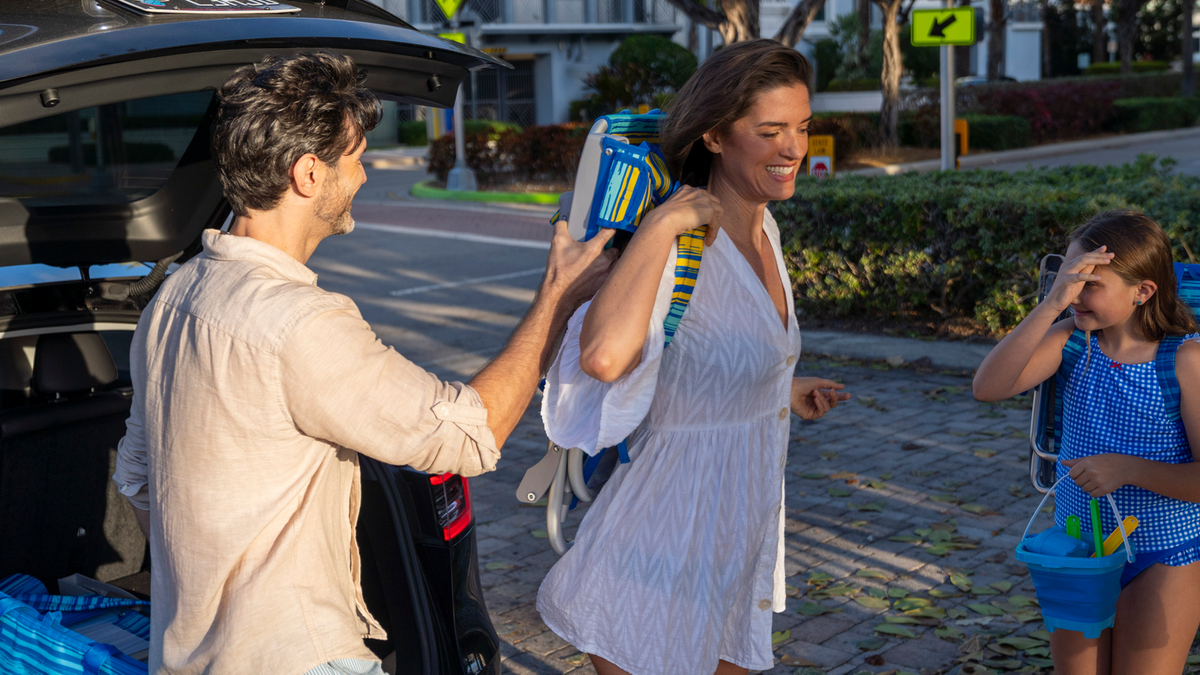
The sun is already high when the family arrives at the beach. The kids are sprinting toward the water before the bags are even off the cart. Mom is scanning the shoreline for a good spot while dad is already regretting not bringing a second pair of hands. Then comes the moment every beach parent knows too well: unpacking the shade structure and realizing, too late, that what they grabbed from the garage was never going to cut it for a full day in the sun with three kids and a grandmother who burns before noon.
The wrong shade solution is more than an inconvenience. It's the reason beach days get cut short, kids get sunburned, and the whole outing ends with someone cranky in the back seat on the way home. But choosing the right one is harder than it sounds, because the market has blurred the language almost beyond recognition. Walk into any outdoor retailer or scroll through any beach gear site and you'll see the terms "beach cabana," "beach canopy," "pop-up tent," and "shade shelter" used interchangeably, as if they're all the same thing.
They are not. And for families specifically, the differences matter more than any other buyer group. This guide breaks down what actually separates a beach cabana for families from a best beach canopy for families option, why those structural and functional distinctions affect your day in real, practical ways, and how to match the right solution to your family's actual setup rather than just grabbing whatever has the highest star rating.
What Is a Beach Cabana, Really?
A beach cabana is a three-sided or partially open shade structure designed to create a defined, sheltered space at the beach. It's not a tent (you're not sleeping in it), and it's not an umbrella (it provides far more coverage). The defining characteristic of a cabana is that it combines overhead shade with side wind and sun protection, creating what amounts to a small outdoor room that faces the water.
The word "cabana" has Brazilian and Mediterranean roots, historically referring to small beachside huts or changing rooms found at resort pools and oceanside clubs. Modern beach cabanas carry that same spirit: they're designed to give families a dedicated, protected home base on the sand where everyone can retreat, reapply sunscreen, eat lunch, nurse a baby, or just rest out of the direct sun without packing up and leaving the beach entirely.
Structurally, a beach cabana typically features:
- A full overhead canopy panel
- One or two solid or mesh side panels for wind and lateral sun protection
- An open front facing the water for airflow and visibility
- A defined footprint that creates genuine usable interior space
- Anchoring points designed for sandy, unstable ground
The Copa Beach Cabana is the clearest illustration of what a well-designed family cabana actually delivers. Built specifically for families who need more than a sliver of shade, it offers full overhead coverage combined with side protection to block both direct sunlight and the low-angle sun that hits hardest in the late morning and late afternoon. The Copa Cabana features UPF 50+ fabric throughout, which means it blocks the vast majority of both UVA and UVB radiation reaching the skin beneath it. That's not a marketing claim; UPF ratings are a measurable fabric standard, with UPF 50+ blocking at least 98% of UV radiation according to the American Academy of Dermatology.
What separates a family-grade cabana from a budget pop-up is anchoring. Copa's Anchor Max technology is a patented anchoring system built into the cabana's design. Rather than relying on simple stakes that pull free in soft sand, the Anchor Max system uses a screw-in anchor mechanism that buries deep into the sand and holds the structure stable even when wind picks up during the afternoon. Any parent who has watched a shade structure go airborne and tumble down the beach understands exactly why this matters. A cabana that catches wind and becomes a projectile is worse than no shade at all.
The Copa Beach Cabana also folds into a carry bag that fits alongside the rest of your beach gear, which solves one of the core complaints about cabana-style structures: that they're bulky and painful to transport. The compact packed size means it doesn't require a separate vehicle trip or a dedicated cart just for the shade structure.
For beach shade solutions that need to accommodate grandparents, toddlers, and infants simultaneously, the cabana format delivers something an umbrella or basic canopy simply cannot: a real space where multiple people can be fully protected at the same time, without fighting for the one shaded spot.
What Is a Beach Canopy, and How Does It Differ?
A beach canopy is a broader term that describes any overhead shade structure stretched across a frame or poles at the beach. It prioritizes horizontal coverage, typically offering a wide footprint of shade from above, but with limited or no side protection. Think of it as a roof without walls: great for keeping direct overhead sun off a group, but less effective when the sun is at an angle or when wind is blowing sand and UV-heavy light in from the sides.
The canopy category includes everything from basic pop-up gazebo frames adapted for beach use to dedicated beach shade tents with zippered doors. The price range is enormous, running from under $30 for a basic nylon canopy to several hundred dollars for a UPF-rated, wind-resistant canopy system. This wide range is part of what makes the category confusing: a $29 canopy and a $200 canopy are both called "beach canopies," but they perform completely differently.
Key structural features of most beach canopies:
- Four-corner or multi-pole frame supporting a flat or slightly peaked overhead panel
- Open sides (sometimes with optional drop panels or mesh screens sold separately)
- Wider shade footprint than most cabanas for the same packed size
- Generally easier and faster to set up, since there's no side panel alignment needed
- More floor space visible from outside, which makes it easier to supervise kids
The practical tradeoff is real. A canopy gives you shade directly above, which is excellent for a group sitting in chairs under the midday sun. But as the sun moves toward the horizon in early morning or late afternoon, the angle of the light means UV rays are coming in at the sides, not from above. A canopy without side panels provides minimal protection during those hours, which are often the busiest beach hours for families who arrive early or stay late.
There's also a wind consideration. An open canopy creates a large flat surface that acts like a sail. Without proper anchoring, a canopy in moderate beach wind becomes a liability. This is one of the reasons purpose-built beach shade structures from brands that specialize in beach gear outperform repurposed backyard or park canopies at the shore: they're engineered for sand anchoring and coastal wind conditions rather than calm park lawns.
From a family utility standpoint, a canopy works well when you have a large group and need shade for many chairs spread across a wider area. It's less ideal when you need a defined, contained space to change a toddler, nurse an infant, or create a shaded nap zone where a young child can actually lie down out of direct sun.
Beach Cabana vs. Beach Canopy: A Direct Feature Comparison
Rather than trading abstract descriptions, here's how these two shade types stack up across the dimensions that actually matter for families planning a full day at the beach.
| Feature | Beach Cabana | Beach Canopy |
|---|---|---|
| Overhead shade coverage | ✅ Full | ✅ Full (often wider footprint) |
| Side sun protection | ✅ Yes (1-2 sides covered) | ❌ Typically none (open sides) |
| Wind protection | ✅ Moderate to strong | ⚠️ Minimal (open frame) |
| UPF fabric protection | ✅ UPF 50+ (Copa Cabana) | ⚠️ Varies widely by brand |
| Sand anchoring | ✅ Purpose-built (Copa Anchor Max) | ⚠️ Varies; many use stakes only |
| Privacy and contained space | ✅ Yes | ❌ Open on all sides |
| Setup complexity | ⚠️ Moderate (worth it for coverage) | ✅ Generally faster |
| Ideal group size | 2–6 people | 4–10+ people |
| Best for infants/toddlers | ✅ Yes | ⚠️ Only with full overhead sun |
| Portability | ✅ Compact carry bag | ⚠️ Varies; larger frames can be bulky |
| Works as beach "home base" | ✅ Yes | ⚠️ Partial |
The table reveals something important: neither option is universally better. The cabana wins on enclosed coverage, UV protection, and family utility. The canopy wins on raw shade footprint and speed of setup. The question is which tradeoffs matter most for your specific beach day.
How UPF Ratings Actually Work (and Why They Matter More Than You Think)
A UPF beach shade tent or cabana with UPF 50+ fabric is not the same as a regular shade structure that just blocks visible light. This distinction is one of the most misunderstood aspects of beach shade shopping, and getting it wrong has real health consequences for families with young children.
UPF stands for Ultraviolet Protection Factor, and it's the textile equivalent of SPF in sunscreen. While SPF measures how long skin is protected from UVB rays specifically, UPF measures how much of the total UV spectrum (both UVA and UVB) passes through a fabric. A UPF 50 rating means the fabric allows only 1/50th of UV radiation to pass through, blocking 98% of the UV spectrum.
Why does this matter for shade structures? Because standard tent fabric, nylon tarps, and basic canopy materials have no certified UPF rating. Their UV-blocking capability depends on weave density, color, and material, and it degrades with washing and UV exposure over time. A white cotton canopy might have an effective UPF as low as 5 to 15, meaning it blocks only 80–93% of UV radiation. That sounds decent until you realize that 7–20% of UV getting through onto a toddler's skin for five or six hours adds up to meaningful exposure.
The Skin Cancer Foundation has long noted that the color, stretch, and condition of a fabric dramatically affect its actual UV protection level. Certified UPF fabrics are tested according to standardized protocols (ASTM D6544 and AS/NZS 4399 are the primary standards) and must maintain their rating under conditions including wet and stretched states.
For families with infants and toddlers, this is not a minor consideration. The American Academy of Pediatrics recommends keeping babies under six months out of direct sunlight entirely, and for older children, minimizing UV exposure during peak hours (10 AM to 4 PM) as much as possible. A UPF 50+ rated shade structure is a legitimate tool for achieving that protection, not just a marketing feature.
Copa's Beach Cabana carries UPF 50+ certification throughout its fabric panels, meaning both the overhead canopy and the side panels are rated. This full-surface UPF coverage matters specifically because it's the side panels where many families assume they're protected when they're not. Sitting in the shade of an overhead panel with the sides open still exposes skin to reflected UV from the sand (which reflects roughly 25% of UV according to the World Health Organization) and to direct UV from low-angle sun.
When comparing beach shade solutions, always look for explicit UPF certification on the product, not just "UV protection" language. That latter phrase is largely unregulated and can mean almost anything.
Beach Umbrella vs. Beach Cabana: Adding the Third Option to the Comparison
Any honest guide to beach shade solutions has to address the umbrella, because it's still the most common shade tool on US beaches and the one most families start with. The beach umbrella vs. beach cabana comparison reveals a gap in protection that's larger than most people expect.
A beach umbrella excels at one thing: providing a concentrated circle of shade for one to two people sitting directly beneath it. It's lightweight, fast to set up, easy to reposition, and deeply familiar. For a couple spending a few hours at the beach, it may be perfectly adequate.
For families, the umbrella's limitations become structural problems:
Coverage area is fixed and small. A standard 7-foot beach umbrella creates a shade circle of roughly 30–35 square feet when the sun is directly overhead. With four people in chairs, bags, a cooler, and a blanket for a toddler, that footprint fills fast. As the sun moves, the shade shifts, and the person on the edge is suddenly in full sun.
Angle protection is minimal. An umbrella tilted toward the sun provides better overhead coverage during morning and afternoon hours, but it still leaves the back, sides, and legs of anyone sitting near the edge exposed to reflected and angled UV. Toddlers playing on a mat at the base of an umbrella are almost entirely outside the actual UPF-protected zone.
Wind is a genuine safety hazard. The Consumer Product Safety Commission has documented injuries from beach umbrellas becoming airborne in wind. A standard umbrella stake in soft sand has very limited holding power. The National Weather Service and local beach safety organizations have issued guidance about beach umbrella safety specifically because of wind-related incidents on US beaches.
A beach cabana addresses every one of these limitations simultaneously. The Copa Beach Cabana's Anchor Max system eliminates the wind-projectile risk. The side panels extend UPF protection to the angles an umbrella leaves exposed. The contained interior space actually fits a family, including gear, a mat for a toddler, and chairs for adults, without everyone fighting for the one shaded spot.
The umbrella still has a place. It's ideal as a supplemental shade tool alongside a cabana, or for a solo beach-goer who just needs some relief from the midday sun. But as the primary shade solution for a family spending a full day at the beach, it's undersized for the job.
| Shade Type | Best For | Weakest At | Family Rating |
|---|---|---|---|
| Beach Umbrella | 1-2 people, quick setup, supplemental shade | Group coverage, wind stability, side protection | ⚠️ Limited |
| Beach Canopy | Large groups, overhead shade for many chairs | Side protection, infant safety, wind resistance | ⚠️ Good for larger groups |
| Beach Cabana | Families, full-day stays, infants and toddlers | Very large groups needing wide footprint coverage | ✅ Best overall for families |
What Makes a Beach Cabana Right for Families Specifically?
The beach cabana for families category deserves its own analysis because families aren't just scaled-up versions of individual beach-goers. The needs are categorically different, and a shade structure that works for a couple or a group of adults fails in very specific ways when kids are involved.
The "Home Base" Function
Families with young children need a defined home base at the beach. This is the place where snacks live, where sunscreen reapplication happens, where a toddler can nap on a blanket, where a nursing mother has a measure of privacy, and where everyone knows to return when they're done in the water. A beach umbrella cannot be a home base because it doesn't contain space. A fully open canopy is closer, but without walls, it doesn't create the visual and physical boundary that makes a home base feel like a home base.
A cabana with at least one solid side panel creates that enclosed-enough feeling. Kids know where "our spot" is. Parents can see the gear from the water. There's a clear in and out. This psychological and practical anchor to a defined space makes a full day at the beach dramatically easier to manage with children.
Nap and Rest Zone for Infants and Toddlers
Anyone who has tried to get a baby to nap at the beach understands the challenge. The sun is everywhere, the sand is blowing, and the noise and stimulation of the shoreline make it hard for young children to settle. A cabana creates the closest thing to a sheltered environment without leaving the beach entirely. The side panels block wind and blowing sand. The UPF-rated overhead and side fabric blocks harsh light. The contained space gives a toddler defined visual boundaries that are calming in an otherwise overwhelming sensory environment.
This function alone makes the cabana format the correct choice for families with children under five. The alternative is spending the entire beach day holding a fussy, overtired baby or cutting the day short because there's nowhere for a toddler to rest comfortably.
Multigenerational Coverage
Modern family beach outings increasingly include grandparents, and the shade needs of a 70-year-old are meaningfully different from those of a 35-year-old. Older skin is more sensitive to UV damage. Older adults are more susceptible to heat-related illness. They often want to sit and rest rather than rotate in and out of the water, which means they're in the shade structure for longer uninterrupted periods.
A cabana accommodates this naturally. Grandparents can sit comfortably in the protected interior while parents are in the water with kids, knowing they have full UPF coverage and are protected from both direct and angled sun. A canopy with open sides leaves them exposed to the same low-angle UV that's hitting everyone else. For more ideas on building a setup that works for every generation, the guide on the complete beach setup for families is worth reading alongside this comparison.
Gear Storage and Security
Families bring more stuff than any other beach demographic. A cabana's enclosed design means bags, coolers, towels, and valuables can be tucked inside the structure where they're shaded, somewhat protected from blowing sand, and clearly marked as belonging to a group. An open canopy leaves everything visible and exposed. An umbrella offers no storage benefit at all.
The Anchor Max Advantage: Why Stability Defines a Good Beach Day
No matter how well-designed a shade structure is, it's only as good as its ability to stay in the ground. This is where many families discover, at the worst possible moment, that their budget shade solution wasn't engineered for real beach conditions.
Beach sand is not a stable anchoring medium. Dry sand near the surface has almost no lateral resistance. Waves, foot traffic, and wind continuously loosen and shift the sand around any stake or pole inserted into it. Standard tent stakes, the kind used for camping or backyard use, pull out under relatively light wind loads in beach sand. This is not a worst-case scenario; it's the normal condition on most US coastal beaches during afternoon sea breeze hours.
Copa's Anchor Max system addresses this at the engineering level. The patented design uses a screw-in mechanism that burrows deep into the sand rather than simply being pushed in from the top. The physics are straightforward: a screw-in anchor engages sand at multiple depth levels simultaneously, distributing the pull-out force across a much larger volume of sand than a simple stake. This translates to dramatically better resistance against the upward and lateral forces that cause shade structures to fail in wind.
The practical implication for families is significant. A shade structure that stays put means parents can leave the beach area briefly to get food or take kids to the restroom without worrying that the structure will go airborne and injure someone or need to be completely re-setup. It means grandparents sitting in the cabana don't have to hold it down with their hands while the wind gusts. It means the afternoon sea breeze that typically builds along US coastal beaches between noon and 4 PM doesn't end the beach day early.
When evaluating any beach shade solution, the anchoring system is the single most important mechanical feature to evaluate. A beautifully designed canopy with inadequate anchoring is a liability on a real beach day. A simpler design with a superior anchor is a better investment for any family planning to spend full days at the shore.
Portability, Setup, and Real-World Logistics for Families
Comparing shade structures in a store or on a product page reveals nothing about what it's actually like to carry them across a parking lot, down a beach access path, and out to a suitable spot on a crowded beach while managing children, a cooler, and a bag of towels. Real-world portability is one of the most underrated factors in beach gear decisions, and it's where many technically impressive products fall apart in practice.
Packed Size and Carry Bag Quality
The packed dimensions of a beach shade structure determine whether it can go in the back of a standard SUV alongside a week's worth of beach gear, or whether it requires its own vehicle or a dedicated luggage rack. Most beach canopies, particularly the larger ones with four-corner frames, pack down to a long, narrow bag that's awkward to carry alongside other bags. Some require a separate carry bag for the frame and a second bag for the fabric, which doubles the pieces to track.
Copa's cabana is designed to pack into a single compact carry bag that fits alongside the rest of a family's beach kit. This sounds minor until you're actually loading up for a beach trip and every cubic foot of car space matters.
Setup Time With Kids Present
Any shade structure that requires a 15-minute assembly process while children are running toward the water is a problem. The setup process needs to be fast enough for one adult to handle while the other manages children, or simple enough that the whole process can be done without anyone getting frustrated. Copa's cabana setup is designed to be manageable by one adult, with the Anchor Max system doing the heavy lifting on the stability side so there's no need to hunt for rocks or additional stakes.
The Cart Question
Many families use a beach cart to transport gear from the parking area to their spot. The question of whether a shade structure needs its own cart space or can ride on top of or alongside existing gear is a real logistics consideration. Bulky frame canopies often require the largest cart space, leaving less room for chairs and a cooler. A compact cabana that fits in its carry bag frees up cart space for everything else the family needs.
For a complete view of how to integrate a shade structure into a family beach day kit, the ultimate family beach packing list covers the full gear matrix from towels to chairs to shade, helping families build a complete system rather than a collection of mismatched pieces.
Matching Your Shade Choice to Your Family's Actual Beach Profile
The best shade structure is the one that fits your specific family, beach, and habits rather than the one with the most features on paper. Here's a decision framework based on the real variables that drive satisfaction with beach shade purchases.
Decision Framework: Which Shade Solution Fits Your Family?
| Family Scenario | Best Shade Choice | Why |
|---|---|---|
| Family with infant or baby under 12 months | Beach Cabana (UPF 50+) | Full UV enclosure, nap space, nursing privacy |
| Family with toddlers (ages 1–4) | Beach Cabana | Contained play space, wind/sand protection, rest zone |
| Family with school-age kids (5–12), full day | Cabana + supplemental umbrella | Home base coverage plus extra shade for active kids' chairs |
| Multigenerational group (6–10 people) | Cabana + large canopy | Cabana for elderly/infants; canopy for wider adult seating |
| Couple with no children | Canopy or umbrella | Simpler needs; overhead shade usually sufficient |
| Sun-sensitive adults (fair skin, medical needs) | Beach Cabana (UPF 50+) | Maximum UV coverage including low-angle sun |
| Beach day during peak wind hours | Cabana with Anchor Max | Superior anchoring; side panels reduce wind sail effect |
| Traveling family (flying to beach destination) | Compact cabana | Pack size fits in luggage; full family coverage on arrival |
If You're Buying Only One Shade Structure
If budget or logistics limits you to one shade structure for a family beach day, the beach cabana wins. The coverage it provides during the early and late hours of the day (when sun angle means overhead-only shade is largely ineffective) adds hours of safe beach time that a canopy or umbrella simply cannot. The Anchor Max system means you're not fighting the wind or resetting stakes every time a gust hits. The UPF 50+ fabric means the shade you're getting is actual UV protection, not just visible light blocking.
If you regularly go to the beach with a larger group and need to cover more people simultaneously, pair a cabana for the home base function with a canopy or extra umbrellas for additional seating shade. The Copa bundle options make it straightforward to build a complete system without buying incompatible gear from multiple brands.
Copa's Approach: Why Purpose-Built Beats Multipurpose
There's a category of beach shade products that's designed to serve multiple purposes: as a beach canopy, a park shade, a camping shelter, and a backyard structure. The argument for multipurpose gear is that you get more use out of one purchase. The argument against it is that gear optimized for no specific environment is genuinely excellent in none of them.
Copa's shade products are designed specifically for beach use. The Anchor Max anchoring system only makes sense on sand. The UPF 50+ fabric selection reflects the specific UV intensity of coastal environments (where altitude, reflection off water, and lack of tree cover create higher UV exposure than most inland environments). The carry bag dimensions reflect the reality of a beach parking lot, not a campsite. The aesthetic references Brazilian beach culture, not a generic outdoor setting.
This specificity matters because beach conditions are genuinely more demanding than most outdoor environments. Sand anchoring is harder than soil anchoring. Salt air accelerates corrosion in inferior hardware. UV intensity at the shore is higher than in most other settings. Wind behavior at coastal beaches is more variable and powerful than at inland parks. A shade structure built to perform in those conditions will outlast and outperform a multipurpose alternative across every metric a family actually cares about.
Copa's founding story and Brazilian beach heritage, documented on the Behind the Brand blog, reflects a genuine understanding of what beach days are supposed to feel like and what gets in the way of that. The product decisions flow from that understanding rather than from generic outdoor gear conventions.
Frequently Asked Questions: Beach Cabana vs. Beach Canopy for Families
What is the main structural difference between a beach cabana and a beach canopy?
A beach cabana includes overhead coverage plus one or two solid or mesh side panels, creating a partially enclosed space. A beach canopy typically provides only overhead coverage on an open frame with no sides. The side panels on a cabana are what make it significantly better for sun protection during morning and afternoon hours when the sun is at a lower angle.
Is a beach cabana worth it for a family with young children?
Yes. For families with infants, toddlers, or sun-sensitive children, a beach cabana with UPF 50+ fabric delivers meaningfully better UV protection than an umbrella or open canopy. The enclosed space also functions as a nap zone, changing area, and home base, which are functions that matter significantly during a full day at the beach with young kids.
What does UPF 50+ mean on a beach shade structure?
UPF 50+ means the fabric blocks at least 98% of both UVA and UVB radiation. It's the textile equivalent of sunscreen SPF, and it applies to the fabric panels of the structure, not just the overhead canopy. A certified UPF 50+ beach cabana like the Copa Beach Cabana provides substantially more UV protection than an unrated nylon canopy, even if both appear to block visible sunlight equally well.
How does the Copa Anchor Max system work?
The Anchor Max is Copa's patented anchoring system that uses a screw-in mechanism to secure the shade structure deeply into beach sand. Rather than pushing a stake straight down (which provides limited pull-out resistance in soft sand), the Anchor Max screws into the sand, engaging multiple layers simultaneously. This creates a dramatically more stable anchor that resists both wind uplift and lateral movement, which is the primary failure mode for beach shade structures in coastal wind conditions.
Can a beach canopy replace a beach cabana for families?
For groups with older children (school-age and above) who primarily need shade for a large seating area during midday hours, a canopy can work. For families with infants, toddlers, or grandparents who need continuous UV protection across all sun angles throughout the day, a canopy's open sides leave too much exposure. In that scenario, a cabana is the more appropriate choice.
What's the difference between a beach tent and a beach cabana?
A beach tent is typically fully enclosed with a zippered door, designed to block all light and sometimes used for sleeping. A beach cabana is open-fronted, designed to provide shade and wind protection while maintaining ventilation and a view of the water. Cabanas are the better beach-day shade solution because they're cooler and more social than a fully enclosed tent.
How many people fit comfortably inside a beach cabana?
Most family-sized beach cabanas, including Copa's, comfortably accommodate two to four adults plus children and gear. If you have a group of six or more adults all wanting to sit in the shade simultaneously, you'll likely want to pair a cabana with an additional shade structure. For most family configurations (two adults, two to three kids), a cabana provides sufficient interior space.
Are beach cabanas allowed on all US beaches?
Most US public beaches permit personal shade structures including cabanas, but some popular beaches (particularly in Florida, New Jersey, and parts of California) have specific regulations about the size and placement of shade structures, especially during peak season. Always check the specific beach's local ordinances before your visit. Many national seashores operated by the National Park Service have their own rules about temporary structures.
Is the Copa Beach Cabana easy enough for one adult to set up?
Yes. The Copa Beach Cabana is designed to be set up by a single adult, which is a practical necessity for beach families where one parent may be managing children while the other sets up camp. The Anchor Max system simplifies the most physically demanding part of setup (securing the structure to sand) compared to traditional stake systems that require hammering or brute force.
How does reflected UV from sand affect shade structure effectiveness?
Sand reflects a meaningful portion of UV radiation, meaning that even when sitting in shade, some UV exposure comes from below and from the sides via reflected light. This is why a cabana with side panels offers better total UV protection than an overhead-only canopy: the side panels interrupt a portion of the reflected UV that would otherwise reach the skin. This reflected UV is why babies lying on a mat in the sand inside an open canopy still receive UV exposure even when not in direct sunlight.
What should I look for in a beach shade structure for a family with a baby?
Look for UPF 50+ certified fabric on both the overhead panel and any side panels. Prioritize structures with a stable anchoring system rated for beach sand. Choose a format that creates enough interior space for a baby to lie flat on a mat. Consider how well the side panels block both direct and low-angle sun. The Copa Beach Cabana meets all of these criteria and is one of the few structures purpose-built for beach (rather than park or camping) use.
Is it better to buy a beach shade bundle or purchase components separately?
Buying as a bundle is generally better for families because it ensures that all components are designed to work together, sized compatibly, and matched aesthetically. Copa's bundle options pair shade structures with chairs and accessories that are proportioned and engineered to function as a system, which eliminates the compatibility guesswork that comes from assembling gear from multiple brands.
Key Takeaways
- Beach cabanas provide overhead plus side UV protection. Open canopies only cover from above, leaving families exposed to low-angle sun during morning and afternoon hours.
- UPF 50+ fabric is a measurable standard, not a marketing phrase. Only buy shade structures with certified UPF ratings, not just "UV protection" language.
- Anchoring is the most critical mechanical feature for beach use. Copa's Anchor Max system provides superior holding power in soft sand compared to standard stake anchoring.
- The beach umbrella vs. beach cabana comparison clearly favors the cabana for families. Umbrellas are undersized for group use and unstable in wind.
- Families with infants and toddlers should prioritize the cabana format. The enclosed space functions as a nap zone, changing area, and home base that open canopies cannot replicate.
- Purpose-built beach gear outperforms multipurpose outdoor products. Copa's beach-specific design choices (Anchor Max, UPF 50+ fabric, compact carry bag) address conditions that generic canopies are not engineered for.
- For most family beach configurations, a cabana is the single best shade investment. Pair with supplemental umbrellas for larger groups needing additional chair-level coverage.
The Right Shade Makes the Whole Beach Day
A beach day that ends early because a toddler overheated, or one where a grandmother spent the afternoon in full sun because the umbrella kept tilting, or one where the shade structure blew away at noon, is a beach day that didn't live up to what it could have been. The shade structure is not the most glamorous piece of gear in the beach kit, but it's the one that determines whether a full day at the shore is actually possible for a family.
The distinction between a beach cabana and a beach canopy is not semantic. It's the difference between overhead-only coverage and three-dimensional UV protection. It's the difference between a structure that stays put in afternoon wind and one that becomes a problem. It's the difference between a home base where kids can rest and regroup and a shade spot that only works when the sun is directly overhead.
For families planning beach days this season, the Copa Beach Cabana represents the clearest path to a shade solution that actually solves the problem. The Anchor Max system, the UPF 50+ fabric, the compact carry bag, and the purpose-built beach design address the real conditions families face on US coastal beaches, not the idealized conditions a multipurpose outdoor canopy is tested in.
For a broader look at what goes into a seamless family beach day, from packing strategy to gear selection to choosing the right spot, the Copa Beach Tips blog covers the full picture. The right shade is the foundation. Everything else builds from there.
Shop Now
Learn more →
Share:
How to Build the Perfect Family Beach Setup: Chairs, Shade, and Gear Arranged for Maximum Comfort
Why Full-Day Beach Comfort Starts with the Right Chair: An Ergonomics Deep-Dive for Families