

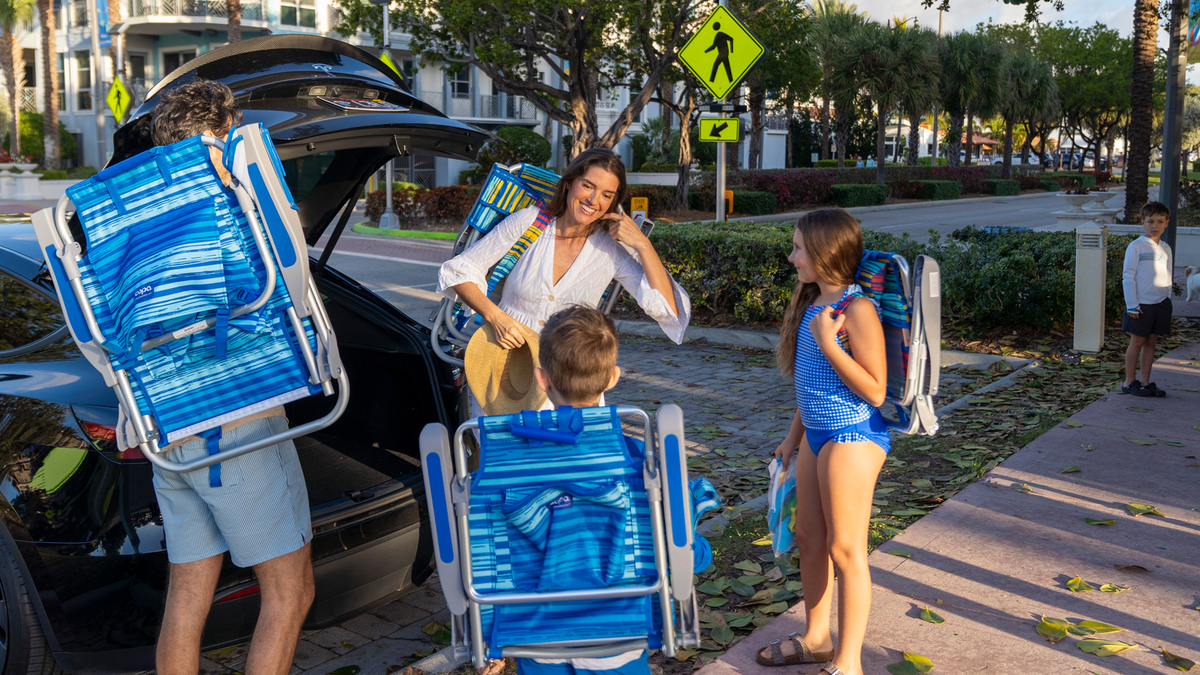
Most families arrive at the beach with everything they need and still spend the first forty minutes frustrated. The umbrella leans into the wind. The chairs face the wrong direction. The cooler ends up blocking the only clear path to the water. The toddler is already sunburned because the shade wasn't set up before everyone sat down. The gear is all there, but the arrangement is wrong, and the arrangement is everything.
Building the best beach setup for families is not just about owning the right equipment. It is about deploying that equipment in a specific sequence, at specific angles, with intentional spacing that actually serves how families move, eat, nap, and play throughout a full day at the shore. This guide walks through every step, from choosing your spot on the sand to packing up efficiently at the end of the day, so that your next family beach day runs like a well-designed system rather than a scramble.
Whether you are managing a crew of toddlers, coordinating a multigenerational group, or simply trying to stop feeling like the beach is working against you, these steps will change how you think about your setup permanently.
What You Will Need Before You Start: Tools, Gear, and Prerequisites
Before the first chair hits the sand, knowing exactly what gear you are working with determines how every subsequent step goes. Showing up with incomplete or mismatched equipment forces improvisation, and improvisation under a hot sun with restless kids is never the strategy you want. Spend five minutes the night before confirming this list.
The Core Gear Checklist
A complete family beach setup requires gear that covers shade, seating, storage, and safety. Trying to patch together individual items from different brands often means nothing coordinates well, dimensions clash, and you end up with a chaotic pile rather than a functional base camp. Copa's ultimate family beach packing list covers the full inventory in detail, but the structural gear you need for this setup guide includes the following:
- Beach umbrella or cabana with a secure anchoring system (Copa's Anchor Max® technology is specifically engineered for this)
- Beach chairs for every adult and older child in the group (at minimum two for parents, additional for older kids)
- A low sand chair or beach mat for toddlers and smaller children
- A cooler with a handle or wheels, sized for your group
- A waterproof tote or gear bag for sunscreen, towels, snacks, and small items
- Towels for each person, plus two extras
- Sunscreen, SPF lip balm, and a first-aid kit in an accessible pouch
- A portable sand anchor or stake system if your umbrella does not include one
- Trash bag attached somewhere reachable
If you are building your family beach gear bundle from scratch, Copa's bundled offerings are worth serious consideration. The Deluxe Bundle and Essentials Bundle pair chairs, shade, and accessories as coordinated systems rather than piecemeal purchases, which means everything works together from the moment you open the bags. Free shipping on bundles also removes a friction point that makes individual item purchases less attractive.
Estimated Time for Full Setup
A practiced family with the right gear can complete the full setup described in this guide in approximately 15 to 20 minutes. A first-time setup with new equipment may take 25 to 30 minutes. Factor this into your arrival time, especially if you have young children who will need sunscreen applied before they are in the sun.
Prerequisite Knowledge
You do not need to be an expert camper or outdoor enthusiast to follow this guide. You do need to know the approximate number of people in your group, whether you have any mobility considerations (older adults or anyone who needs a higher seat height), and whether your children are at an age where they will be in and out of the water frequently. These factors affect chair placement, shade angle, and how close you position your base camp to the waterline.
Step 1: Choose and Claim the Right Spot on the Sand
Estimated time: 5 minutes. The single most consequential decision of your beach day happens before a single item leaves the bag. A poor location locks you into compromises for the next six hours. A good location makes every subsequent step easier.
What to Look For in an Ideal Family Beach Spot
Walk the beach for two to three minutes before dropping your gear. Most families claim the first open space they find, which is often directly in a high-traffic corridor between the water and the parking area. Instead, look for a spot that satisfies all four of these criteria:
- Flat, compact sand with minimal slope. Sloped sand causes chairs to tilt and umbrella poles to drift. Flat ground also keeps your cooler and gear bags from sliding.
- At least 12 to 15 feet of clear space on all sides. Families need room to spread out without encroaching on neighbors. Your shade structure alone will require a 7-to-9-foot footprint.
- Outside the main foot traffic lane. The strip of beach directly between the water's edge and the first row of beach chairs is a constant movement zone. Set up one row back from this corridor.
- Oriented relative to the sun's path for the time of day you are arriving. If you arrive in the morning, the sun will be to the east. Position your shade to cover the area where your chairs will sit during the hottest midday hours, which means your umbrella should ultimately face slightly south and west. More on this in Step 3.
Distance from the Water: A Practical Rule of Thumb
Families with young children who are not yet strong swimmers should set up close enough to the water's edge to maintain clear sightlines, but far enough back to avoid being in the wave wash zone. A general rule: position your base camp so that the adults seated in chairs can see the water's edge without standing up. For most beaches this means 40 to 60 feet from the wet sand line.
Common Mistakes at This Step
- Setting up too close to the water and having the tide push you back mid-day
- Choosing a spot in a wind corridor between dunes or beach structures, which makes umbrella stability much harder
- Setting up directly behind a volleyball net or near a beach rental stand where foot traffic is constant
Step 2: Establish Your Shade Anchor Point First
Estimated time: 5 to 8 minutes. Your shade structure is the load-bearing center of the entire setup. Everything else positions around it. The most common setup mistake families make is placing chairs first and then trying to fit the umbrella around them. Reverse this sequence. The umbrella goes in first, every time.
How to Use the Copa Anchor Max® System for a Secure Install
Copa's Anchor Max® technology is the feature that separates a professionally engineered beach shade solution from a hardware-store umbrella that tips over in a moderate breeze. The Anchor Max® system uses a screw-in anchor mechanism that drives deep into the sand rather than simply pushing down the way a standard spike does. This creates a stable base that resists lateral wind pressure, which is the primary reason beach umbrellas become projectiles on windy days.
To install correctly using the Anchor Max®:
- Select your anchor point at the center-rear of where your setup will sit. "Center-rear" means the umbrella should be positioned toward the back of your space relative to the water, so that the shade it casts falls over your chairs and toward the water rather than behind you.
- Clear the surface sand by scooping away the top 2 to 3 inches of loose dry sand at your anchor point. You want the anchor to bite into the firmer, slightly damp sand underneath. This dramatically improves hold.
- Thread the Anchor Max® into the sand using a continuous clockwise rotation. Apply downward pressure as you turn. Do not push straight down. The threading action is what creates the grip.
- Drive it to the recommended depth, which is typically until the collar is at or just below the sand surface. Do not stop short. An under-driven anchor is the primary cause of umbrella drift and tip-over.
- Insert the umbrella pole into the anchor, open the umbrella, and angle the pole approximately 10 to 15 degrees toward the sun's current position. This tilt increases the shade coverage on the ground and reduces the surface area the wind can push against.
- Check stability by applying lateral pressure to the top of the pole. There should be minimal movement. If the pole rocks, the anchor is not deep enough. Remove, re-drive two to three inches deeper, and test again.
Wind Conditions: When to Adjust Your Approach
On days with sustained wind above 20 mph, even the best anchor system benefits from additional precautions. Angle the umbrella so the canopy faces slightly into the wind rather than broadside to it. A head-on tilt reduces lift. If wind is severe and gusty rather than steady, consider switching to a low-profile cabana tent instead of a traditional pole umbrella. Copa's cabana options are designed with ventilation panels that reduce the wind-sail effect that standard canopies create.
Pro Tip: Mark Your Territory Before Unloading
Drive your anchor and open the umbrella before you unload the rest of your gear. This does two things: it physically marks your space so nearby beachgoers know it is claimed, and it gives you a visual reference point for arranging everything else around it.
Step 3: Orient the Shade for Maximum Coverage Throughout the Day
Estimated time: 2 minutes, but it determines shade quality for the next 6 hours. Most families point their umbrella straight up or slightly toward the water without thinking about sun angle. This is a mistake that leaves chairs in direct sun during the hottest part of the day.
Understanding Sun Arc and Shade Projection
The sun moves from east to west across the southern sky (for US beach locations, the sun is always in the southern half of the sky). This means shade cast by your umbrella shifts from pointing west in the morning to pointing east in the afternoon. If you arrive at 9:00 AM and plan to stay until 3:00 PM, you need your umbrella positioned to provide maximum coverage during the 11:00 AM to 2:00 PM window, when UV intensity peaks.
Use this simple orientation framework:
| Time of Arrival | Umbrella Tilt Direction | Expected Peak Shade Coverage | Reposition Needed? |
|---|---|---|---|
| 7:00 AM – 9:00 AM | Tilt slightly west | 9:00 AM – 12:00 PM ✅ | ⚠️ Yes, reposition at noon |
| 9:00 AM – 11:00 AM | Tilt slightly south-west | 11:00 AM – 2:00 PM ✅ | ⚠️ Minor tilt at 2:00 PM |
| 11:00 AM – 1:00 PM | Tilt directly south | 12:00 PM – 3:00 PM ✅ | ✅ Minimal repositioning |
| 1:00 PM – 3:00 PM | Tilt slightly east | 2:00 PM – 5:00 PM ✅ | ✅ Minimal repositioning |
How Often Should You Reposition the Umbrella?
For a full-day stay, plan one repositioning at around midday. This does not mean removing and re-driving the anchor. Simply loosen the pole's tilt adjustment, shift the angle by 10 to 15 degrees, and retighten. With the Anchor Max® system, the anchor stays firmly in place and only the pole angle changes, making this a 90-second task rather than a full reinstall.
Using Multiple Shade Structures
Multigenerational groups or families with more than four people often benefit from two shade structures positioned in an L-shape or a side-by-side configuration with a 2-foot gap between them. Two umbrellas angled slightly toward each other create a larger combined shadow footprint and provide a wind buffer for the space between them. Position the second anchor point 8 to 10 feet from the first, oriented to complement rather than duplicate the first umbrella's shadow.
Step 4: Position the Chairs for Comfort, Sightlines, and Social Connection
Estimated time: 3 to 5 minutes. Chair placement is where family beach setups either succeed or fail at the human level. The physical comfort of the chairs matters, but so does how the arrangement enables conversation, child supervision, and access to the water.
The Family Arc Configuration
The most functional arrangement for family beach chairs is a shallow arc or gentle crescent facing the water, positioned within or just at the edge of the shade footprint. This configuration accomplishes several things simultaneously:
- Every adult has an unobstructed view of the water, which is essential for supervising children who are playing in the surf
- Adults can make eye contact with each other without craning their necks, which makes conversation natural rather than shouted
- The arc creates a soft boundary that defines your camp's perimeter, making it clear to passersby where your space ends
- Children playing in the sand in front of the arc are visible to all seated adults, not just the one facing a particular direction
Space chairs approximately 18 to 24 inches apart. Closer than 18 inches and armrests conflict; further than 24 inches and you lose the sense of a unified camp. For a complete breakdown of family beach setup without the chaos, Copa's dedicated guide goes deeper on configuration specifics for different group sizes.
Chair Placement Relative to the Umbrella
Position the chairs so that the umbrella pole is at the 6 o'clock position (directly behind the arc) rather than in the center of the arc. Placing the umbrella pole in the center creates a physical obstacle and puts the person sitting nearest the pole in an awkward position. With the pole behind the arc, the entire shade canopy projects forward over the seating area, giving everyone maximum coverage.
Special Considerations for Toddlers and Young Children
Young children should have their play zone designated in front of the adult arc, not behind it. This keeps them in visual range at all times. Place a beach mat or low sand chair within the shade footprint, just inside the arc's curve. This gives toddlers a shaded home base while keeping them spatially contained within the camp. Position a small cooler or gear bag at each end of the arc to create soft boundary markers that help younger children understand where the family space is.
Multigenerational Seating: Accounting for Mobility and Comfort
Older adults or anyone with limited mobility needs chairs with higher seat heights and firmer back support. Position these chairs closest to the cooler and gear bags so these individuals do not have to get up and walk across soft sand repeatedly. Copa's premium beach chairs are designed with comfort ranges that accommodate a wide spectrum of users, and the higher seat options are particularly valuable for grandparents who want to enjoy a full beach day without the physical strain of low seating.
Facing Direction and Glare Management
Position chairs so that seated adults are looking slightly north of due east in the morning and slightly north of due west in the afternoon. This keeps the sun out of direct eye line during both peak morning and afternoon sun angles. A common mistake is facing chairs directly at the water regardless of the sun's position, which results in squinting and eye fatigue within an hour.
Step 5: Arrange Your Gear Zones for Efficiency and Safety
Estimated time: 3 to 4 minutes. A beach setup without designated gear zones becomes chaos within the first hour. Items get buried in sand, sunscreen disappears under a towel, and the cooler ends up being the obstacle everyone trips over. Intentional gear zoning eliminates this friction.
The Three-Zone System
Divide your beach camp into three functional zones:
- The Comfort Zone: The arc of chairs and children's play mat. This is where people sit, rest, and spend passive time. Nothing stored here except items people are actively using (water bottles, a book, sunglasses).
- The Supply Zone: One end of the arc, typically the end closest to the path back to parking. This is where your gear bag, cooler, and backpack live. Keep the cooler lid accessible but positioned so it opens away from foot traffic. Your family beach gear bundle items that are not in active use stay here.
- The Transition Zone: The strip of sand just in front of the arc, between the chairs and the water. This is where wet gear lands when people come back from the water. Towels get draped over the front of chairs to dry here. Flip-flops, sand toys, and buckets live in this zone.
Sunscreen and Safety Essentials: The One Rule That Matters Most
Sunscreen and the first-aid kit should never go into the supply zone cooler bag or buried in the backpack. Keep them in a dedicated small pouch or mesh bag that hangs from one of the chair armrests or the umbrella pole. This means sunscreen reapplication takes 20 seconds rather than 3 minutes of digging through gear. For families with young children, the difference between sunscreen that is immediately accessible and sunscreen that requires a search is the difference between consistent reapplication and the sunburn you come home with.
Cooler Placement: Two Non-Negotiable Rules
- Never place the cooler directly in the sun. Even an insulated cooler left in direct sunlight degrades ice retention significantly over a full beach day. Position the cooler within the shade footprint or cover it with a light towel.
- Never place the cooler where it blocks the path between chairs and the water. This creates a trip hazard, particularly when children are running back and forth. Keep the cooler at the end of the arc, not in the center of the camp.
Trash Management
Attach a small trash bag to one of the chair armrests or the umbrella pole using a carabiner or simple clip. Families that do not designate a trash location end up with wrappers and cups scattered across the transition zone within two hours. Having a hanging bag that is visible and accessible eliminates the "I'll just put this here for now" behavior that creates mess.
Step 6: Apply Sunscreen Before Sitting Down, Not After
Estimated time: 10 to 15 minutes for a full family application. This step happens immediately after the shade is up and before anyone sits down. It is listed as a setup step deliberately, because most families treat sunscreen as something they do "in a minute" after getting settled, and that delay is where sunburn begins.
The Application Sequence for Families
The American Academy of Dermatology recommends applying sunscreen at least 15 minutes before sun exposure and reapplying every two hours, or immediately after swimming or sweating heavily. For families with multiple children, this means application needs to happen as a systematic process, not a rushed afterthought.
Recommended sequence:
- Start with the youngest children first. They have the least patience and the most sensitive skin.
- Apply to all exposed areas including ears, back of the neck, tops of feet, and the part line on the scalp.
- Apply sunscreen to adults last, after children are fully covered.
- Set a phone timer for 2 hours from application time. When it goes off, everyone reapplies before returning to the water.
Shade Is Not a Substitute for Sunscreen
Beach umbrellas and shade canopies significantly reduce direct UV exposure, but they do not eliminate it. UV rays reflect off water, wet sand, and even other people's light-colored towels. The Skin Cancer Foundation notes that shade structures should be used alongside sunscreen rather than as a replacement for it. Families with young children under shade still need full sunscreen application.
Step 7: Set Up the Children's Zone as Its Own Micro-Camp
Estimated time: 5 minutes. Families that create a dedicated children's space within the larger camp reduce conflict, increase child satisfaction, and give parents longer stretches of uninterrupted relaxation. This is one of the highest-return investments of setup time there is.
What a Children's Zone Needs
The children's zone sits in front of the adult arc, within shade coverage, and contains:
- A beach mat or waterproof blanket staked at the corners with tent stakes or heavy items to prevent it from blowing
- A low beach chair or collapsible sand chair sized for children
- A designated small bin or mesh bag for sand toys, kept in the transition zone
- A dedicated water bottle for each child, placed within their reach in the children's zone rather than at the adult cooler
- Dry snacks in a sealed container accessible to older children
Giving Children Ownership of Their Space
When children have a defined space with their own chair, their own water bottle, and their own snack access, they spend more time engaged in their space and less time pulling at adult gear or needing constant attention. This is a behavioral setup principle that experienced beach-going families discover through repetition, and it is worth building into your routine from the first outing.
Sand Toys: Organization Over Volume
Families that bring a large bag of sand toys and dump it out create a scattering problem that ends with lost pieces and sand contamination in every bag. Instead, bring a small mesh bag with five to eight specific items (bucket, shovel, mold, small rake) and designate a sand-toy zone at the edge of the transition area. Mesh bags allow sand to fall out naturally and make cleanup a 30-second task at the end of the day.
Step 8: Run a Wind and Stability Check Before Anyone Relaxes
Estimated time: 2 minutes. Before the family settles in and the day begins in earnest, do a complete stability walkthrough of the entire setup. Beach conditions change rapidly, and a setup that was stable when the umbrella went in may need a quick adjustment 20 minutes later as wind direction shifts.
The Four-Point Stability Check
- Umbrella pole test: Apply firm lateral pressure to the pole about 18 inches above the sand. There should be no rocking. If there is, the anchor needs to go deeper. With the Anchor Max® system, this is typically a 60-second fix: retract the pole, drive the anchor another inch or two deeper, reinsert and retest.
- Chair stability test: Sit in each chair briefly and confirm it is not sinking into soft sand. If chairs are sinking, move them 12 to 18 inches toward firmer sand or place the chair legs on the edge of the beach mat.
- Loose item check: Scan the camp for any items that could blow away: paper, light towels, plastic bags, small toys. Secure or contain all of them before sitting down.
- Children's zone boundary check: Confirm that the children's mat is secured at all corners and that the perimeter of the children's zone is clearly defined.
Warning: Never Leave an Unattended Open Umbrella
If the entire family goes to the water for a swim and no one stays at the camp, close the umbrella or collapse it before leaving. An unattended open umbrella in shifting wind is a genuine safety hazard, both to your own gear and to neighboring beachgoers. This is particularly important during peak afternoon wind hours on exposed beaches. The Anchor Max® system holds exceptionally well under normal beach wind conditions, but no anchoring system is a substitute for prudent management when the setup is unattended.
Step 9: Manage the Setup Throughout the Day With Minimal Effort
Ongoing effort: 2 to 5 minutes per hour. The best family beach setups require minimal maintenance because they are designed correctly from the start. The steps above create a system that largely runs itself, but a few ongoing habits keep the setup functioning smoothly from morning to afternoon.
The Hourly Micro-Routine
Every hour, spend two to three minutes on these tasks:
- Shake out towels and hang them back over chair fronts. Wet towels left on the sand collect sand and heat, and they take much longer to dry.
- Check the umbrella angle relative to the sun and adjust tilt if needed. This is a 30-second task and keeps everyone in shade rather than the shade drifting off the chairs.
- Do a quick gear scan of the supply zone. Items that have migrated out of their zone get returned. This prevents the end-of-day chaos of not knowing where anything is.
- Offer water and reapply sunscreen to young children. Young children rarely self-report thirst or sun discomfort until it has become a problem.
Adapting to Tide Changes
If you set up at a beach with significant tidal variation, check the tide schedule before you arrive. The NOAA Tides and Currents database provides precise tide predictions for thousands of US coastal locations. Knowing when high tide peaks means you can position your base camp far enough back that you will not need to pack up and relocate mid-day, which is one of the most disruptive events a family beach day can experience.
Cooling Strategies for Peak Heat Hours
Between 11:00 AM and 2:00 PM, even well-shaded setups feel hot at sea level on summer days. Keep these strategies in your routine during this window:
- Wet a small towel and drape it over the back of the neck while sitting in the shade
- Keep drinks in the cooler, not sitting out in open containers where they warm quickly
- Use a small battery-powered clip fan attached to the umbrella pole to create airflow within the shade
- Encourage young children to rest in the shade rather than play in the direct sun during this window
Step 10: Pack Down Efficiently So the Drive Home Isn't Miserable
Estimated time: 15 to 20 minutes. The way you pack down determines how your next beach day starts. Families that pack down chaotically arrive home with sandy, wet gear jammed into bags, broken items, and a setup that takes twice as long next time because nothing is organized. A systematic pack-down takes the same amount of time but leaves everything clean, dry, and ready for the next outing.
The Reverse Setup Sequence
Pack down in the reverse order of setup:
- Close the umbrella first. Shake it gently to remove sand and water before collapsing it. Do not collapse a wet umbrella into its carry bag without shaking it out, as this promotes mildew.
- Remove the Anchor Max® by rotating counter-clockwise while applying upward pressure. Do not yank straight up. The threading that creates its strength in the sand requires the reverse motion to release cleanly. Rinse with fresh water if available and dry before storing.
- Fold and stack chairs. Shake each chair to remove sand before folding. Store them in their carry bags.
- Collect children's zone items. Return sand toys to the mesh bag and shake out the beach mat thoroughly before rolling it.
- Do a final gear scan of all three zones. Check under chairs, behind the cooler, and in the transition zone for any items left behind.
- Dispose of trash in a beach receptacle before leaving. Remove the trash bag from its clip and tie it off.
Dealing with Wet and Sandy Gear
Towels and swimsuits should go into a separate waterproof bag or a large zip-lock bag during transport home, not mixed with dry gear. Rinse sandy gear with a portable spray bottle of fresh water before packing if available. Copa's gear bags are designed for beach conditions, but even the best bag benefits from not having wet, sandy items mixed with dry accessories.
For families heading to the beach regularly throughout the season, Copa's Beach Tips blog covers seasonal maintenance for chairs, umbrellas, and accessories so your gear lasts across multiple summers rather than needing replacement every season.
The Complete Family Beach Setup Decision Framework
Use this decision matrix to troubleshoot your setup before you commit to a configuration. Run through it on arrival before the umbrella goes in.
| Situation | Recommended Adjustment | Priority Level |
|---|---|---|
| Wind above 15 mph sustained | Angle umbrella into wind; consider cabana tent instead; drive anchor deeper | 🔴 High |
| Group larger than 6 people | Use two shade structures in L-shape or side-by-side; extend arc to 6-8 chairs | 🔴 High |
| Toddler or infant in group | Dedicated children's zone, beach mat secured, sunscreen applied before setup | 🔴 High |
| Arriving after 11:00 AM | Tilt umbrella south; sunscreen before sitting; prioritize shade zone over water proximity | 🔴 High |
| Older adults or mobility limitations in group | Higher seat chairs at ends of arc; position near supply zone; firm sand preferred | 🟡 Medium |
| Very crowded beach | Compact arc; single umbrella with tighter shade footprint; clear perimeter with cooler/bags | 🟡 Medium |
| Full-day stay (6+ hours) | Plan two umbrella repositions; bring extra sunscreen; use three-zone system fully | 🟡 Medium |
| Overcast day | Still use shade and sunscreen; UV penetrates cloud cover; maintain full setup | 🟢 Maintain standard |
Frequently Asked Questions About Family Beach Setup
How far from the water should we set up our beach chairs?
For families with young children, 40 to 60 feet from the wet sand line is the practical sweet spot. This keeps adults close enough to supervise swimmers without being in the wave wash zone. Families with strong swimmers who do not need constant visual monitoring can set up further back in a quieter area. Always check the tide schedule before setting up to avoid being forced to relocate as the tide comes in.
What is the best way to keep a beach umbrella from blowing away?
The most effective approach is a screw-in anchor system driven to the correct depth, combined with proper angle orientation relative to the wind. Copa's Anchor Max® uses a threaded mechanism that grips the sand far more securely than push-in spike anchors. Angle the umbrella into the wind rather than broadside to it, and close or collapse the umbrella any time the full group leaves the setup unattended.
How do we keep everyone in the shade all day as the sun moves?
Plan for one mid-day umbrella tilt adjustment. The shade footprint shifts as the sun moves, so tilt your umbrella south during the morning hours and shift it progressively toward east-facing in the afternoon. For all-day stays, a Copa cabana tent provides more consistent shade coverage than a round umbrella because its larger canopy footprint stays over a wider area regardless of sun angle.
What is the right number of beach chairs for a family of four?
For two adults and two children, two full-size adult chairs plus a children's beach mat or low chair creates the right mix. Older children (8 and up) typically want their own chair. Families of six or more benefit from Copa's bundled options, which allow coordinated chair and shade purchasing at a single order. Free shipping on bundles makes the coordinated approach cost-effective.
How do we stop sand from getting into all of our food and gear?
Keep the supply zone at the end of the arc rather than in the center of foot traffic. Store all food in sealed containers or zip-lock bags, never in open bowls or plates at the beach. Place gear bags on top of a beach mat or towel rather than directly on sand. Shake out towels away from the supply zone rather than over it.
Is a beach umbrella or a cabana tent better for families with young children?
Cabana tents provide more consistent, enclosed shade coverage and are generally better for families with infants and toddlers who need maximum UV protection. Traditional round beach umbrellas are easier to transport and set up, but their shade footprint is smaller and shifts more noticeably as the sun moves. Copa offers both options, and many families use a combination for full coverage across a larger group.
How do we manage a beach setup with toddlers who won't stay in the shade?
Create a compelling children's zone within the shade footprint. When the shaded area contains their toys, their water, their snacks, and their own chair, most toddlers spend the majority of their time there naturally. Wet sand activities (digging, molding, building) can be conducted in the transition zone just in front of the shade, keeping children active while remaining within arm's reach of the shaded base. Consistent sunscreen application is essential for any time they spend outside the shade.
Can we use the same setup approach for beach vacations as for day trips?
Yes, with minor adjustments for longer stays. On beach vacations, you are likely returning to the same beach multiple days, which means you can refine your spot selection and umbrella orientation each day based on the previous day's experience. Copa's bundled gear travels well in car trunks and checked luggage bags, and the Anchor Max® system is robust enough for daily use across a full vacation week without performance degradation.
How do we handle beach setup on a crowded Fourth of July weekend?
Holiday weekends require arriving earlier than usual to secure a good spot. Copa's guide on the best beaches for Fourth of July weekend addresses spot selection and timing strategies for peak holiday beach days. On crowded beaches, use a more compact arc configuration and rely on the cooler and gear bags as perimeter markers to define your space clearly without overextending into neighboring areas.
What is the best beach accessories for families to add beyond the basics?
Beyond chairs, shade, and a cooler, the accessories with the highest practical return for families include: a portable fresh-water spray bottle for rinsing hands before snacks, a waterproof phone pouch, a small clip fan for the umbrella pole during peak heat hours, a mesh bag for wet gear, and a lightweight wagon or cart for hauling gear from parking to the beach. Copa's family beach gear bundle options incorporate the core structural accessories so that the add-on list stays short.
How do we set up for a multigenerational beach day with grandparents?
Multigenerational groups need higher-seat chairs for older adults, positioned nearest to the supply zone for easy access without long walks over soft sand. Keep the path between seating and the water clear of gear obstacles. Set up the children's zone on the opposite end of the arc from older adults to reduce noise and activity conflict. Two shade structures in an L-configuration give the group two distinct relaxation zones, which multigenerational groups often appreciate.
How do beach chairs with shade differ from regular beach chairs?
Beach chairs with shade attachments or integrated canopies add a personal shade layer on top of the broader umbrella coverage. These are particularly useful for individual sun-sensitive family members who want extra protection. Standard beach chairs work well under a properly positioned Copa umbrella or cabana, and the combination of a well-anchored shade structure and quality chairs is more effective than chairs with small built-in canopies alone, because the umbrella or cabana creates shared shade for the entire group rather than isolated personal coverage.
Key Takeaways for Building the Best Beach Setup for Families
- Shade goes in first, always. The umbrella or cabana is the structural center of your setup. Everything else positions around it, never the other way around.
- The Anchor Max® system is the difference between a shade structure that works and one that becomes a wind hazard. Drive it to the correct depth, angle it into the wind, and test stability before relaxing.
- Sun orientation is a setup decision, not an afterthought. Tilt your umbrella based on what time of day you are arriving and when peak shade coverage is needed.
- The family arc configuration gives every adult a water sightline, enables conversation, and creates natural perimeter definition for your camp.
- Three-zone camp organization (Comfort Zone, Supply Zone, Transition Zone) eliminates the mid-day chaos that plagues disorganized beach setups.
- Sunscreen application is part of setup, not something that happens after. Apply before anyone sits down, every time.
- A dedicated children's zone within the shade footprint gives toddlers and young children ownership of their space and reduces the constant pull on adult attention.
- Pack down in reverse setup order and your next beach day starts with organized, ready-to-deploy gear rather than a rummage through sandy bags.
- Family beach gear bundles from Copa remove the guesswork of gear compatibility and ship free, making them the most practical starting point for families building a complete beach kit from scratch.
- Consult the ultimate family beach packing list to make sure your gear inventory is complete before executing any of the setup steps in this guide.
Shop Now
Learn more →
Share:
Beach Shade for Babies and Toddlers: A Parent's Complete Guide to Safe Sun Coverage
Beach Cabana vs. Beach Canopy: Understanding the Real Differences Before You Buy