

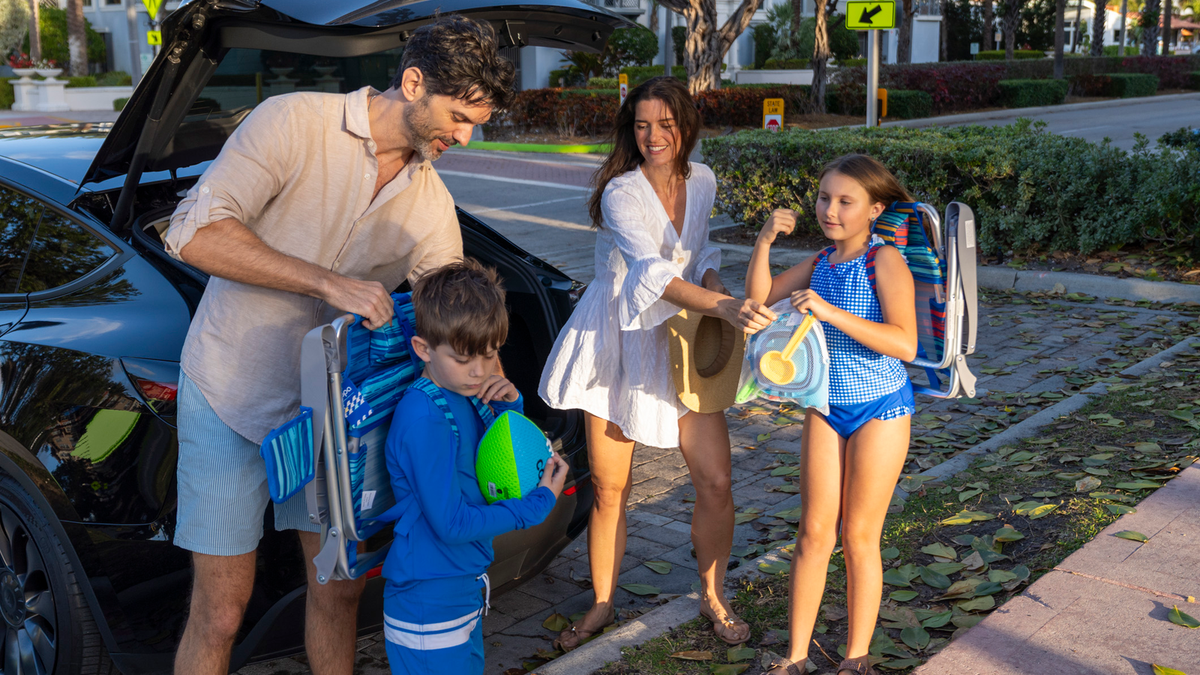
A baby's skin is not simply a smaller version of adult skin. It is structurally thinner, produces less melanin, and absorbs UV radiation at a higher rate relative to body surface area. That single biological reality changes everything about how you plan a beach day when your littlest ones are coming along. The sand, the water, the reflection off the surf, all of it amplifies UV exposure well beyond what a cloudless backyard afternoon would deliver. Getting beach shade right for babies and toddlers is not a matter of convenience. It is a matter of physiology.
This guide walks through what UV exposure actually means for children under five, how to evaluate shade structures for genuine sun protection (not just comfort), and which practical setups give you the most reliable coverage across a full beach day. Whether you are heading to the shore for a long weekend or you live close enough to go every week through the summer, the decisions you make about shade infrastructure will directly affect how safely your child experiences one of childhood's most formative pleasures.
Why Babies and Toddlers Face a Categorically Different UV Risk Than Older Kids
The short answer: their skin has not yet developed the full protective mechanisms that older children and adults rely on. Understanding why this matters helps you make smarter decisions about every layer of your sun protection strategy, starting with shade.
Infant skin contains a lower density of melanocytes (the cells responsible for producing melanin, the pigment that absorbs and deflects UV radiation) and those melanocytes are not yet functioning at full capacity. This is true regardless of a child's ethnic background or natural skin tone. The practical result is that UV-induced DNA damage in skin cells can occur much faster in infants than the same dose of sun would produce in an adult. Sunburn in infancy is not just painful in the moment, repeated UV exposure in the first years of life is linked to elevated lifetime skin cancer risk, according to guidance from the American Academy of Dermatology.
There is also a thermal regulation issue. Babies and toddlers have a higher ratio of body surface area to body mass than adults, which means they heat up faster and struggle to dissipate that heat efficiently. Direct sun exposure at the beach compounds this: sand reflects and radiates heat upward while the sun beats down from above. Shade structures are not just about UV rays, they create a meaningfully cooler microenvironment that protects against heat stress in addition to sunburn.
The UV Index Is Not Your Only Concern
Most parents check the UV index before heading to the beach, and that is a good habit. But at the beach, the effective UV exposure is always higher than the reported index would suggest for two reasons. First, sand reflects up to 25% of UV radiation, according to the World Health Organization's UV and Health guidance, meaning radiation reaches your child from below as well as above. Second, water reflects UV radiation as well, and the glare off open water adds directional UV that comes in at angles shade structures may not fully block.
For a baby sitting or lying under a shade tent, the reflected UV from surrounding sand can still reach them if the tent has an open base and no side panels. This is one of the reasons a fully enclosed, ground-level shade structure with solid side walls offers meaningfully better protection than a simple beach umbrella, which only blocks radiation from directly above.
The Six-Month Rule and What It Actually Means
The American Academy of Pediatrics recommends keeping infants under six months of age out of direct sunlight entirely and using shade as the primary protective measure. For children six months and older, shade remains the first line of defense, with broad-spectrum sunscreen applied to exposed skin as a secondary layer. This guidance matters because it frames shade not as a nice-to-have but as the primary protective infrastructure for the youngest beachgoers.
What this means practically: if you have a baby under six months, your shade setup needs to be comprehensive enough to function as the complete solution, not just a supplement to sunscreen. If you have a toddler between one and four years old, shade plus sunscreen plus UPF-rated clothing gives you the most robust layered approach.
What Makes a Shade Structure Actually Protective vs. Just Comfortable
Not all shade is created equal. A beach umbrella creates a circle of shade on the ground that shifts throughout the day as the sun moves. A tent or cabana creates an enclosure that maintains consistent coverage regardless of sun angle. Understanding the mechanical differences between shade types helps you choose a setup that actually protects your child rather than one that simply looks like it does.
UPF Rating: What It Means and Why It Matters for Tent Fabric
UPF (Ultraviolet Protection Factor) measures how much UV radiation a fabric blocks. A UPF 50+ fabric blocks more than 98% of UV rays from passing through it. When evaluating a UPF beach shade tent, the fabric rating is the most important technical specification to look for, because it determines how much UV radiation your child is exposed to even while sitting inside the structure.
Standard nylon and polyester without UV-blocking treatment can have UPF ratings as low as 5 to 15, which means meaningful UV radiation passes through the tent walls. A tent marketed as a "shade tent" without a stated UPF rating may be blocking visible light without blocking UV. The rating to look for is UPF 50+, which is the standard used by the Skin Cancer Foundation for their Seal of Recommendation program.
Fabric color also plays a role. Darker and more tightly woven fabrics generally offer higher UPF ratings. A pale, loosely woven tent may feel cool and airy but provide significantly less UV protection than a dense, darker alternative.
Coverage Geometry: Why Enclosed Structures Outperform Umbrellas for Babies
A standard beach umbrella creates a cone of overhead shade. It does not block reflected UV from sand, wind-driven lateral sun exposure when the umbrella tilts, or UV that enters from the sides as the sun's angle changes. For an older child who is active and moving around, an umbrella is a reasonable part of the shade toolkit. For a baby or young toddler who is stationary in a blanket, a bouncer, or a portable crib, the geometry of an umbrella is simply inadequate.
An enclosed beach cabana sun protection tent creates a five-sided or six-sided enclosure that blocks overhead, lateral, and partially reflected UV. It also reduces wind exposure (important for keeping infants comfortable), provides a darker interior that encourages sleep, and creates a contained space that prevents curious toddlers from wandering into direct sun. From a pure protection standpoint, a well-constructed cabana tent is the most effective single piece of shade infrastructure you can bring to the beach for young children.
Stability: The Non-Negotiable Practical Requirement
A shade tent that tips over, shifts in the wind, or collapses is not providing any protection. At the beach, wind is a constant variable, and the same soft sand that makes the beach comfortable to walk on makes it notoriously difficult to anchor structures securely. This is where the engineering of the anchoring system becomes as important as the fabric rating.
Copa's Anchor Max® technology addresses this problem directly. Rather than relying on standard stakes that pull out of dry sand, the Anchor Max® system is designed to create a secure hold in sandy conditions, keeping the cabana stable through typical beach wind conditions. For parents with babies and toddlers, this is not a minor feature, a structure that stays put through the afternoon is one that provides consistent, reliable protection. A tent that shifts or falls creates both a gap in UV coverage and a physical safety hazard for small children inside.
Building a Complete Beach Shade System for Young Children
The most effective beach shade approach for families with babies and toddlers is layered. No single product covers every angle of UV exposure across a full beach day. The goal is to combine a primary shade structure with clothing, timing, and positioning strategies that together create a protective environment your child can enjoy comfortably.
The Primary Structure: Choosing the Right Tent or Cabana
Your primary shade structure should be selected based on four criteria: UPF rating of the fabric, size (large enough for a blanket, portable crib, and at least one caregiver), anchoring stability, and ease of setup. That last point matters more than it might seem. If setup is complicated or time-consuming, you may end up spending critical midday minutes wrestling with poles while your child sits in direct sun. A structure that sets up in under five minutes with minimal parts is practically safer than a more protective structure that takes twenty minutes to assemble.
Copa's beach cabana is designed with family practicality as a core requirement. The integration of the Anchor Max® anchoring system means you are not hunting for rocks or improvising ways to weight the base, the tent is designed to secure itself in the conditions where you actually use it. For beach gear for toddlers and kids, this kind of purposeful design reduces the logistical friction that makes beach days harder than they need to be.
For a complete look at how to build a functional family beach setup around a central shade structure, the complete beach setup guide for families on the Copa blog covers the full configuration in practical detail.
Positioning Your Shade Structure for Maximum Coverage Throughout the Day
Even a well-designed tent loses effectiveness if it is positioned incorrectly relative to the sun's path. In the continental United States, the sun moves from east to west and arcs to the south, reaching its highest point (and peak UV intensity) between 10 AM and 4 PM. During these hours, UV radiation comes more directly from overhead, which is where enclosed tents are most effective. In the morning and late afternoon, the sun is lower on the horizon and lateral UV exposure increases.
Practical positioning strategies for families with babies and toddlers:
- Orient the tent opening away from the sun so that the open side faces away from the direction of incoming sunlight. This keeps the interior darker and reduces direct UV entry.
- Position the tent above the high tide line to avoid having to move mid-setup, but close enough to benefit from any sea breeze that helps regulate interior temperature.
- Check your shadow at setup time. If you arrive at 9 AM, the shadow your tent casts will be much longer than the shadow at noon. Set up with the midday sun position in mind, not the arrival-time position.
- Use side panels if your tent has them. Many quality beach cabanas include roll-down side panels for exactly this reason, they give you the ability to close off the side that gets afternoon sun exposure.
Complementary Shade Layers: What Goes Inside and Around the Tent
The tent is your primary structure, but the shade environment you create inside and around it determines the total protection your child receives.
Inside the tent, a lightweight muslin or UV-rated blanket on the ground reduces reflected UV from sand that may enter through the open base. If your baby is sleeping in a portable crib or play yard, position it centrally within the tent rather than against the walls, where seams or partial coverage may reduce protection.
For toddlers who want to move around outside the tent, UPF-rated clothing is the most reliable supplemental layer. A long-sleeved UPF 50+ rash guard, wide-brim hat (minimum 3-inch brim), and UV-blocking sunglasses rated to block 99-100% of UV rays form the protective ensemble that most pediatric dermatologists recommend. Sunscreen applied to any exposed skin areas, face, hands, neck, completes the layered approach.
How to Evaluate Beach Shade Solutions: A Decision Framework for Parents
Parents shopping for beach shade solutions encounter a wide range of products at very different price points, with marketing language that is not always precise about what the product actually delivers. This framework helps you cut through the noise and evaluate options against the criteria that actually matter for your child's safety.
| Evaluation Criterion | Minimum Standard | Ideal Standard | Red Flag |
|---|---|---|---|
| UPF Rating | UPF 30+ | UPF 50+ | No UPF rating listed ❌ |
| Coverage Geometry | Overhead + two sides minimum | Fully enclosed with closeable panels | Umbrella only for babies ❌ |
| Anchoring System | Stakes included, sand-rated | Engineered sand-anchor system | No anchoring system included ❌ |
| Interior Dimensions | Fits one adult + one infant/toddler | Fits two adults + two young children | Listed as "beach pop-up" with no dimensions ⚠️ |
| Setup Time | Under 10 minutes solo | Under 5 minutes solo | Requires two adults to assemble ⚠️ |
| Ventilation | Mesh panels or ventilation openings | Adjustable ventilation with UV blocking | Fully sealed with no airflow ❌ |
| Pack Size and Weight | Carries in one bag | Under 8 lbs, shoulder strap included | Requires separate wheeled cart ⚠️ |
Where Budget Beach Tents Fall Short
The price range for beach shade tents on the market spans from under $30 to well over $200. The budget end of the market tends to cut corners in predictable ways: thin, low-UPF fabric; anchoring systems that are inadequate for sand; pole structures that flex or collapse in moderate wind; and dimensions that are too small to be genuinely functional for a parent with a baby in tow.
For general recreational use by older children and adults, a budget tent may be acceptable. For a baby whose primary shade source is that tent, the compromises become safety concerns rather than minor inconveniences. A tent that tips over in the wind, or one whose fabric lets through significant UV radiation, is not doing the protective job you brought it to do.
The better investment calculus is to think about cost-per-use across a beach season. A family that visits the beach twelve times over summer and fall, with a tent they trust to stay up and provide genuine UPF 50+ protection, gets a different value equation than one that buys cheap and replaces it, or worse, uses it without realizing it is not providing the protection they assumed.
Sun Protection at the Beach for Kids: Building the Right Routine
The physical infrastructure of shade is only as effective as the routine built around it. Sun protection at the beach for kids requires a behavioral system that adapts to how young children actually behave, which is to say, unpredictably and with high mobility. The best shade tent in the world does not protect a toddler who has wandered twenty feet down the beach.
Timing Your Beach Day Around UV Intensity
UV intensity at the beach follows a predictable daily curve. The most intense UV exposure occurs between 10 AM and 4 PM, with peak intensity typically around noon to 1 PM. Families with infants and very young toddlers benefit significantly from structuring their beach time to front-load the morning (before 10 AM) or shift to late afternoon (after 4 PM) when UV intensity is substantially lower.
This is not about avoiding the beach during peak hours entirely, it is about understanding that a two-hour morning session starting at 8 AM delivers a dramatically lower UV dose than a two-hour session starting at noon, even with shade and sunscreen. For very young infants, this timing adjustment can meaningfully reduce cumulative UV exposure across a beach season.
A practical schedule for families with babies and toddlers:
- Arrive early (7:30 – 9:00 AM): Lower UV intensity, cooler temperatures, less crowded beach, easier to establish your setup before the child is restless.
- Peak shade use (10 AM – 2 PM): Keep babies inside the tent. Toddlers who need active play time should be in full UPF clothing, hats, and sunscreen.
- Water activity window (before 10 AM or after 3 PM): If your toddler wants to splash in the shallows, these lower-UV windows are the safest times for direct sun exposure at the water's edge.
- Pack up by 4 PM if you have an infant under six months, this captures most of the enjoyable beach day while avoiding the cumulative heat and UV load of a long midday stay.
Sunscreen Application: The Shade Structure Complement
Shade handles the overhead and lateral UV load. Sunscreen handles the exposed skin when your child is outside the tent or when reflected UV reaches them inside it. For this reason, even with a well-designed shade setup, sunscreen remains part of the complete beach shade for babies protection system.
Key sunscreen considerations for babies and toddlers at the beach:
- Mineral sunscreens (zinc oxide or titanium dioxide) are the preferred choice for babies and toddlers, as they sit on top of the skin and physically block UV rather than being absorbed. The FDA considers these the most well-understood active ingredients for sun protection.
- SPF 30 is the minimum for beach use. SPF 50 is preferable for toddlers given the higher reflective UV environment at the beach.
- Apply 15-20 minutes before sun exposure, not after arrival at the beach.
- Reapply every two hours and immediately after water exposure, even if the product is labeled water-resistant.
- Do not forget the ears, back of the neck, and tops of the feet, three areas that are consistently missed and consistently sunburned in young children at the beach.
Hydration and Heat Management Inside the Shade Structure
A shade tent creates a cooler microenvironment than direct sun, but on a hot, humid beach day, the interior can still become warm. Adequate ventilation is critical. Look for tents with mesh ventilation panels near the roof, hot air rises, and a vent at the apex of the tent allows heat to escape rather than build up inside.
For babies, overheating is a serious risk. Signs of heat stress in infants include flushed skin, reduced urine output, unusual fussiness, and lethargy. Keeping a cool, wet cloth available, offering frequent feeding (breast milk or formula provides hydration), and monitoring the tent's interior temperature are all practical heat management strategies.
For toddlers, regular water breaks every 20-30 minutes in hot conditions are appropriate. Toddlers are notoriously poor at recognizing and communicating thirst, so scheduled hydration rather than demand-based hydration is the more reliable approach during a beach day.
Beach Gear for Toddlers and Kids: What to Bring Beyond the Shade Tent
A shade tent is the centerpiece of your beach setup when you have young children, but the surrounding gear configuration determines how functional and comfortable the full day is. Beach gear for toddlers and kids needs to solve several problems simultaneously: keeping adults comfortable so they can focus attention on their children, organizing supplies for quick access, and creating a defined space that makes it easier to supervise young explorers.
Chairs That Work With Your Shade Setup
The adult chairs you choose should be positioned to allow you to maintain a clear sightline to where your toddler is playing while remaining within arm's reach of the shade tent where your baby is resting. Low-profile beach chairs positioned just outside the tent entrance, rather than angled away from it, are the configuration that keeps you physically connected to the shade structure.
Copa's beach chairs are designed with the family context in mind, offering the kind of durable, comfortable seating that makes it possible to spend a full beach day without the back discomfort that cheap beach chairs create after an hour. When you are managing a baby in a tent and a toddler on the sand, the last thing you need is a chair that makes you physically uncomfortable and less able to respond quickly.
For a comprehensive look at what to pack for a full family beach day beyond the shade structure and chairs, the ultimate family beach packing list from Copa covers every category in detail, from food and hydration to first aid and entertainment.
The Case for Bundled Beach Gear Systems
One of the practical challenges of outfitting a family beach setup is that gear from different brands does not always work well together. A shade tent from one manufacturer, chairs from another, and accessories from a third can create a mismatched configuration where nothing quite fits, stores together cleanly, or carries as a coordinated unit.
Copa's bundled approach, including configurations like the Deluxe Bundle that pairs shade and seating together, addresses this directly. When the shade structure and chairs are designed as a system, they are built to complement each other in terms of height, spacing, and overall setup footprint. This is not a trivial convenience when you are managing two young children and limited hands on the walk from the parking lot to the beach.
The Copa Anchor Max® system is integrated into the cabana products specifically to work in beach conditions, meaning the stability engineering is matched to the use environment rather than being a generic tent design adapted for sand. For parents who have experienced the frustration of a budget beach tent that collapses in a sea breeze, this kind of purpose-built design represents a meaningful quality difference.
What to Look for in Beach-Safe Toddler Entertainment
A shade tent that keeps your baby safe also functions as a home base for the broader beach setup. Toddlers will use it as a retreat from the heat, a snack station, and a place to deposit sandy toys. Gear that supports this home-base function, a small cooler positioned just inside the entrance, a waterproof mat, a sand-free beach blanket, extends the tent's utility beyond shade into the full logistics hub of the beach day.
Toddler entertainment choices that work well in and around a shade tent include:
- Soft sand toys that can be used right at the tent's edge (toddlers can dig while you keep them in the shade's periphery)
- Water toys that give them a reason to come back to the base area for refills
- A portable sun shade for the stroller or wagon if you are using one for transit, so the walk from parking to beach is also protected
- Waterproof books and activity sets that survive the inevitable sand and splash
Common Mistakes Parents Make With Beach Shade for Babies
Even well-intentioned parents make predictable errors in their beach shade setup that reduce the protection they think they are providing. Recognizing these patterns helps you avoid them.
Mistake #1: Assuming Any Shade Is Sufficient
The most common mistake is treating shade as a binary, either you have it or you don't. In reality, shade quality varies dramatically based on the factors covered earlier: UPF rating, coverage geometry, and stability. A thin mesh pop-up tent with no UPF rating provides shade in the visible light sense (your child is out of direct sun) but may transmit substantial UV radiation through its walls. Parents who have done everything else right, sunscreen, hat, timing, sometimes overlook the fact that their shade structure is not actually blocking UV.
Mistake #2: Setting Up the Tent and Leaving It
Sun moves. A tent positioned correctly at 9 AM will have a very different shadow pattern at 1 PM. Parents who set up their shade structure at arrival and do not adjust it throughout the day often find that by midday, the interior is partially exposed or that reflected sunlight is entering from a side that was previously protected. A quick repositioning check every two hours, which takes 60 seconds, is a better habit than assuming the setup is static.
Mistake #3: Underestimating Wind as a Stability Factor
Beach breezes feel pleasant, but they are genuinely challenging for shade structures that are not properly anchored. A tent that lifts or tips in the wind is dangerous for a baby or toddler inside it. Parents who choose shade structures based on aesthetics or price without checking the anchoring system often discover this problem on their first windy day. The Copa Anchor Max® system exists specifically to solve this problem, it is designed for the sandy, breezy conditions that make standard stakes inadequate.
Mistake #4: Neglecting the Ground-Level UV Reflection
As covered earlier, sand reflects significant UV radiation upward. A baby lying on a blanket inside an open-bottomed tent is still receiving reflected UV from the ground even when the overhead and lateral coverage is solid. Positioning your baby on a UPF-rated blanket or mat, rather than a standard fabric blanket, adds a meaningful layer of protection at the ground level.
Mistake #5: Skipping Reapplication Because the Child Is "In the Shade"
Shade does not eliminate UV exposure entirely, it reduces it significantly. Any skin exposed outside the tent (hands, face when looking out, feet near the entrance) continues to accumulate UV exposure. Sunscreen reapplication on a two-hour schedule should be maintained regardless of how much time the child spends inside the shade structure.
The Copa Approach to Family Beach Shade
Copa's beach shade products are designed with the specific challenges of family beach days built into the engineering. The Anchor Max® anchoring system represents the core technical differentiator: a stable shade structure in sandy, breezy conditions is the foundation everything else builds on. A tent that stays where you put it, through the full arc of a beach day, is the non-negotiable starting point for providing reliable protection to young children.
The cabana design pairs this anchoring stability with the coverage geometry that matters most for babies and toddlers: enclosed sides, solid UPF-rated fabric, and a footprint large enough to function as a genuine family base camp rather than just a sun shelter. The integration with Copa's chair and bundle systems means the full setup is designed to work together, reducing the logistical complexity that makes beach days with young children harder than they need to be.
For families planning their first major beach trip with a new baby or toddler, the Copa blog's beach tips section offers practical guidance across every dimension of preparation. The best beaches for Fourth of July weekend guide is a useful starting point for families thinking through destination selection alongside gear planning.
Copa's product line is available with free shipping on bundles, which makes it straightforward to outfit a complete family beach setup in one order. The Deluxe Bundle and Essentials Bundle pair shade and seating in coordinated configurations, ensuring you have everything you need without the friction of assembling gear from multiple sources.
Frequently Asked Questions About Beach Shade for Babies and Toddlers
At what age can babies go to the beach?
There is no universal age restriction on bringing babies to the beach, but the American Academy of Pediatrics recommends keeping infants under six months out of direct sunlight entirely. For these youngest babies, a beach visit is possible with a well-designed enclosed shade tent that provides comprehensive UV protection, as long as you are also monitoring for heat and adjusting timing to avoid peak UV hours.
What is the difference between a beach tent and a beach cabana for sun protection?
The terms are often used interchangeably, but cabanas typically refer to larger, more enclosed structures with full side panels and solid coverage geometry. A tent may refer to anything from a small two-person pop-up to a full family-sized enclosure. For beach shade for babies, the most important criteria are UPF rating and coverage geometry, an enclosed structure on all four sides plus overhead is the most protective configuration, whatever it is called.
How do I keep a beach tent from blowing away in the wind?
Standard tent stakes are often inadequate in dry, loose beach sand. Purpose-built anchoring systems designed for sandy conditions, like Copa's Anchor Max® technology, provide significantly better stability than generic stakes. Additional strategies include using sand bags or sandbag pockets built into the tent base, positioning the tent so it faces away from prevailing wind, and choosing a location with natural windbreaks if available.
Is UPF 50+ actually necessary for a beach shade tent, or is any shade sufficient?
For babies and toddlers, UPF 50+ is the recommended standard. The beach environment amplifies UV exposure through sand and water reflection, making it a higher UV environment than a typical outdoor setting. A tent with no UPF rating or a low UPF rating may block visible light without meaningfully blocking UV radiation, which is the form of radiation that causes skin damage. For adults, a lower-rated tent may be acceptable. For infants, UPF 50+ is the appropriate standard.
Can I use sunscreen on my baby under six months old?
The American Academy of Pediatrics recommends that sunscreen not be used as the primary protection for infants under six months old, as their skin is too sensitive and their body surface area to mass ratio means more absorption relative to body weight. Shade is the recommended primary protection for this age group. When sun exposure is unavoidable, a small amount of mineral sunscreen on exposed areas (face, hands) is considered preferable to no protection, but the primary strategy should be shade and protective clothing.
How hot does a beach tent get inside on a hot day?
Interior tent temperature depends heavily on fabric color, ventilation design, and ambient conditions. A tent with good ventilation (mesh panels near the top) in a sea breeze can remain significantly cooler than the surrounding environment. A poorly ventilated, dark-colored tent in still air can become uncomfortably hot. When evaluating tent options for use with babies, check specifically for ventilation openings and mesh panels, not just UV protection. Never leave a baby unattended inside a tent on a hot day.
How often should I reapply sunscreen at the beach?
The standard recommendation is every two hours, and immediately after any water exposure, even with water-resistant products. At the beach, where toddlers are frequently moving in and out of the water and wiping their skin on towels, reapplication every 90 minutes is a more conservative and appropriate schedule. Set a phone timer if needed, it is easy to lose track of time at the beach.
What size beach tent do I need for a baby plus two adults?
At minimum, you want a tent with a floor footprint of approximately 6 feet by 6 feet to comfortably fit one portable baby crib or play mat plus two seated adults. Larger footprints (8 by 8 feet or more) allow for better ventilation, more gear storage, and room for a toddler to move around inside during peak UV hours. Always check the interior dimensions in the product specifications, some tents advertise a larger footprint than their actual usable interior space.
Is it safe to let a toddler sleep in a beach tent?
A shaded, ventilated beach tent can be a good environment for a toddler nap on the beach, with caveats. The tent must be properly anchored (not at risk of tipping), well-ventilated (not overheating), and you must maintain supervision of the sleeping child. Never leave a child sleeping unattended in a beach tent. A portable travel crib or play yard inside the tent adds a layer of containment that keeps the sleeping toddler safely positioned within the shaded area.
What clothing should toddlers wear for sun protection at the beach?
UPF 50+ rash guards with long sleeves, UPF-rated swim shorts or leggings, a wide-brim hat with a minimum 3-inch brim, and UV-blocking sunglasses rated to block 99-100% of UV rays form the recommended protective ensemble for toddlers at the beach. Clothing rated UPF 50+ blocks more UV radiation than any sunscreen application, it is the most reliable individual protective layer available for active toddlers who will not stay in the shade tent.
Do beach umbrellas provide adequate protection for babies?
Beach umbrellas are not adequate as the sole shade source for babies. They create overhead shade but do not block reflected UV from sand, lateral UV as the sun angle changes throughout the day, or wind-driven sun exposure. For an older child or adult who is active and supplementing the umbrella with sunscreen and UPF clothing, an umbrella is a useful component of the shade toolkit. For babies, an enclosed cabana tent is the appropriate primary shade structure, with an umbrella potentially used as an additional layer for adjacent adult seating.
What is the Anchor Max® system and why does it matter for family beach use?
Copa's Anchor Max® is a purpose-built anchoring technology designed to secure beach shade structures in sandy conditions, where standard tent stakes are frequently inadequate. For families with babies and toddlers, a shade structure that stays securely in place throughout the day is a safety requirement, not a convenience feature. A tent that tips or shifts in the wind creates both a gap in UV protection and a physical hazard for young children inside the structure. The Anchor Max® system is engineered to maintain stability in the conditions families actually encounter at the beach.
Key Takeaways for Parents Choosing Beach Shade for Babies
- Shade is the primary protection for babies under six months, not sunscreen. Choose a shade structure that is comprehensive enough to function as the complete sun protection solution for the youngest infants.
- UPF 50+ fabric rating is non-negotiable for a beach shade tent used with babies and toddlers. A tent without a stated UPF rating may block visible light without blocking UV radiation.
- Enclosed cabana structures outperform beach umbrellas for young children because they block overhead, lateral, and partially reflected UV rather than just overhead sun.
- Anchoring stability is a safety requirement, not a convenience feature. At the beach, where wind is a constant variable and sand provides minimal grip for standard stakes, purpose-built anchoring systems like Copa's Anchor Max® are the appropriate solution.
- Shade works best as part of a layered system that includes UPF-rated clothing, mineral sunscreen on exposed skin, timing adjustments to avoid peak UV hours, and regular hydration.
- Sun angle changes throughout the day, check and adjust your tent's positioning every two hours to maintain the coverage geometry you set up at arrival.
- Reflected UV from sand is real, use a UPF-rated mat or blanket inside the tent to reduce ground-level UV exposure for babies lying or sitting inside the structure.
- Bundled gear systems simplify the logistics of a family beach day by ensuring that shade structures, chairs, and accessories are designed to work together as a coordinated setup.
- The best beach shade investment is one that you will use reliably every trip, a well-built, purpose-designed structure that sets up quickly, stays secure, and provides genuine UPF 50+ protection across a full beach season is worth meaningfully more than a budget alternative that compromises on any of these dimensions.
Shop Now
Learn more →
Share:
What to Bring to the Beach with Kids: The Ultimate Family Beach Day Checklist
How to Build the Perfect Family Beach Setup: Chairs, Shade, and Gear Arranged for Maximum Comfort