

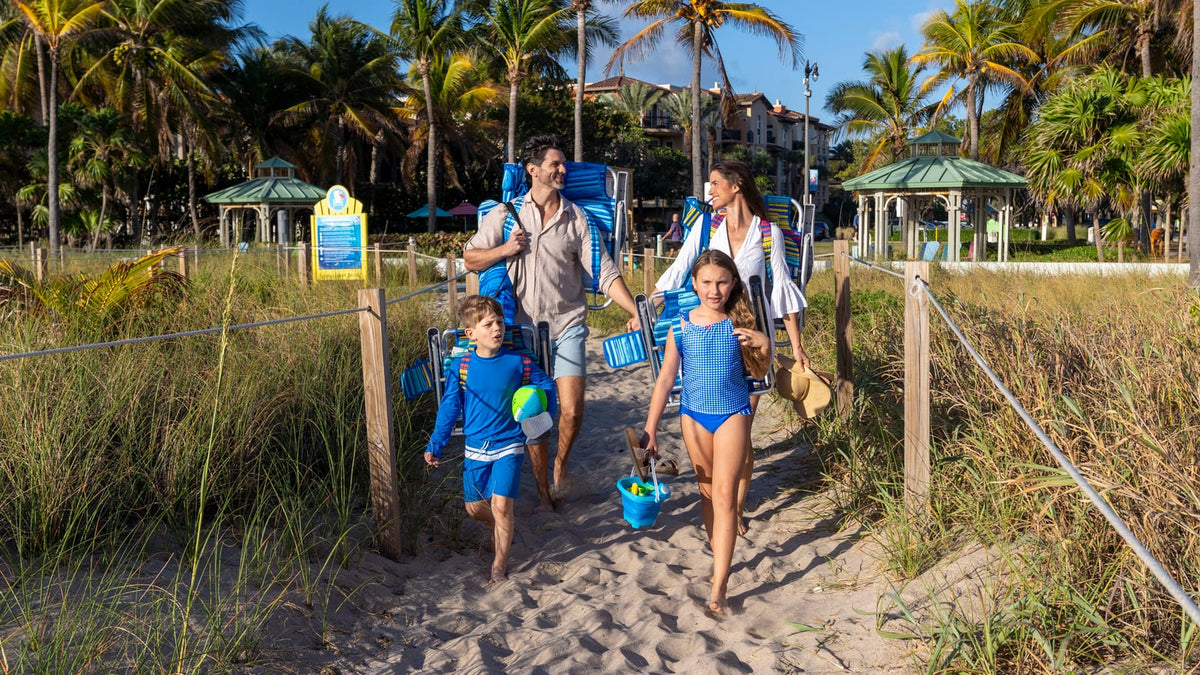
Most parents know sunscreen matters at the beach. But the bigger challenge is understanding why the beach is so uniquely harsh on young skin, and what actually works when the sun is at its peak, the sand is radiating heat, and a restless toddler won't sit still long enough for a second coat of SPF. Sun protection at the beach for kids is not simply a matter of applying sunscreen and hoping for the best. It requires understanding how UV radiation behaves near water and sand, how infant and toddler skin differs from adult skin, and how to build a shade strategy that accounts for wind, movement, and the unpredictability of a real family beach day.
This guide cuts through the noise. It explains the science in plain terms, addresses the most common mistakes parents make, and walks through the most effective shade solutions available today, including what to look for in a UPF beach shade tent, how a beach cabana sun protection setup outperforms a standard umbrella for families, and what Copa's Anchor Max technology actually does in practice. Whether you're planning your first beach trip with a baby or you're a seasoned coastal family looking to upgrade your setup, this guide gives you everything you need to make smart, confident decisions.
Why the Beach Is a Uniquely High-Risk UV Environment for Children
The beach is not just another outdoor setting. It is one of the most UV-intense environments a child can be exposed to, and the reasons go beyond simply being outside on a sunny day. Sand reflects up to 25% of incoming UV radiation according to the World Health Organization's UV radiation fact sheet, meaning your child is being hit from below as well as above. Water reflects a similar amount. On a bright beach day, a child sitting under a standard umbrella is still receiving significant UV exposure from reflected and scattered radiation.
Altitude and latitude play a role too, but the more underappreciated factor is time. UV radiation at the beach is cumulative. A child who spends three or four hours outdoors is accumulating UV dose continuously, even on cloudy days, because up to 80% of UV rays penetrate cloud cover. The American Academy of Dermatology has documented that five or more sunburns in a person's lifetime doubles their risk of melanoma, and childhood sunburns are particularly significant because skin damage accumulates over a lifetime.
Young children face compounding risks that older kids and adults do not. Infant skin is thinner, with less developed melanin production, meaning it absorbs UV radiation more readily and has less natural defense. Babies under six months have skin so sensitive that the American Academy of Pediatrics recommends keeping them out of direct sunlight entirely, with shade as the primary protective strategy. Toddlers are mobile and hard to contain, making consistent reapplication of sunscreen a genuine logistical challenge. And children are notoriously poor at self-reporting discomfort until a burn has already set in.
The practical implication for parents is this: the beach demands a layered sun-protection strategy, not a single solution. Sunscreen alone is not enough. Clothing helps but gets removed. A standard umbrella provides partial shade but leaves gaps. What families need is a primary shade structure that creates a protected zone, supplemented by sunscreen, protective clothing, and smart timing.
How UV Radiation Actually Reaches Your Child at the Beach
Understanding the mechanics of UV exposure helps parents make better decisions about where to position shade structures, when to limit outdoor time, and why certain products work better than others.
UV radiation arrives in two primary forms that matter for skin protection: UVA and UVB. UVB rays are primarily responsible for sunburn and are most intense between 10 a.m. and 4 p.m. UVA rays penetrate more deeply into the skin, contribute to long-term aging and DNA damage, and remain relatively constant throughout the day, including morning and late afternoon hours when many families consider the beach "safe." Both UVA and UVB rays reach children at the beach through three pathways:
- Direct radiation: Sunlight traveling in a straight line from the sky to your child's skin.
- Reflected radiation: UV rays bouncing off sand, water, and even light-colored towels and clothing before reaching the skin.
- Scattered radiation: UV rays diffused through the atmosphere, arriving from all directions, including from below the horizon of a shade structure.
This three-pathway model explains why a beach umbrella alone leaves significant gaps. A standard umbrella blocks direct radiation from directly overhead, but it does nothing about reflected UV coming off the sand, and it provides minimal protection against scattered radiation arriving from the sides. A child lying on a towel under a standard umbrella is still exposed to meaningful UV from the sand surface beneath them and from the open sides of the umbrella's coverage area.
The UV Index, published daily by the U.S. Environmental Protection Agency, gives a practical measure of UV intensity on any given day. A UV Index of 6 or above is classified as "high," and coastal beach environments routinely reach 8, 9, or 10 during summer peak hours. At these levels, unprotected skin can begin to burn in as little as 15 minutes in fair-skinned children.
What this means for your beach setup: the ideal shade structure for a family with young children is not just something that blocks the sun from above. It is something that creates a protected zone with walls or panels that interrupt scattered and reflected radiation from multiple directions. This is the core functional argument for a beach cabana or UPF-rated beach shade tent over a standard umbrella when young children are involved.
The Difference Between Beach Shade for Babies and Older Kids
Beach shade for babies and beach shade for toddlers or older children are not the same challenge. The requirements differ in meaningful ways, and the right setup shifts as your child grows.
Infants Under 12 Months
For babies, the primary goal is near-total UV exclusion. An infant cannot regulate their body temperature as efficiently as older children, making overheating a secondary concern alongside UV exposure. The ideal shade solution for a baby at the beach creates a protected enclosed environment with airflow, not a sealed hot space. A beach shade tent with mesh panels or open ventilation sides achieves this, blocking UV from above and most angles while allowing air to circulate. The baby should remain in this protected zone for virtually the entire beach visit, emerging only for brief supervised play in full shade.
Positioning matters enormously for infant shade. The tent or cabana should be oriented so the open side faces away from the sun's direction, angling the protected interior away from both direct and reflected radiation. Parents often overlook the fact that the reflective surface of the sand inside and immediately around the tent also contributes to UV exposure, so placing a UV-blocking blanket or mat on the sand beneath the baby adds another layer of protection.
Toddlers Ages 1 to 3
Toddlers are the most difficult age group to protect at the beach because they are mobile, unpredictable, and resistant to sitting still in a shaded area. The practical strategy shifts from containment to frequent return. Rather than expecting a toddler to stay under shade continuously, parents should treat the shade structure as a base camp: a place to return to every 20 to 30 minutes for a break from the sun, a sunscreen reapplication check, and hydration. The shade structure needs to be large enough to be genuinely comfortable and appealing, not a cramped pop-up that a toddler will immediately want to escape.
For toddlers, UPF-rated clothing worn during active play time adds a critical second layer. Rash guards with a UPF rating of 50+ block more than 98% of UV rays through the fabric and stay on through water play, unlike sunscreen which washes off. Pairing a UPF rash guard and hat with a proper shade base camp gives parents a realistic, practical system rather than a theoretical one.
Children Ages 4 and Up
Older children can begin to understand and cooperate with sun-safety habits, making education a viable tool. Teaching children to recognize when the sun feels intense, to seek shade voluntarily, and to request sunscreen reapplication builds habits that last a lifetime. The shade structure remains important as a base, but the focus shifts toward building routines and sun-awareness alongside physical protection.
For comprehensive family beach preparation across all these ages, the Complete Beach Setup for Families guide from Copa covers the full logistics of setting up a functional family beach day, which pairs directly with the shade strategies covered here.
What UPF Actually Means and Why It Matters for Beach Shade Products
UPF, or Ultraviolet Protection Factor, is the fabric equivalent of SPF for clothing and shade structures. It measures how much UV radiation a fabric allows to pass through to the skin. A UPF 50 rating means the fabric blocks 98% of UV radiation, allowing only 1/50th to pass through. A UPF 50+ rating is the highest classification and is what parents should look for in any shade tent, beach cabana, or UPF clothing intended for young children.
The distinction between a standard beach umbrella or canopy and a UPF-rated shade structure is significant. Many affordable beach umbrellas and pop-up tents use fabric that provides little to no UV protection beyond simple shade from direct sunlight. Without a UPF rating on the label, there is no guarantee of UV blocking performance. On a practical level, a shade tent made from non-UPF fabric may feel shady but allow substantial UV radiation to pass through, particularly as the fabric ages and weaves loosen.
When shopping for a UPF beach shade tent or beach cabana for sun protection, the UPF 50+ designation should be treated as a minimum standard, not a premium feature. It is the baseline performance level that genuinely protects against UV exposure rather than simply reducing direct sunlight. Parents should look for this rating explicitly on product specifications rather than assuming that any fabric shade structure provides meaningful UV protection.
Secondary fabric considerations include color and weave density. Darker, more tightly woven fabrics generally block more UV radiation than lighter, loosely woven ones. However, for enclosed shade structures used with babies and young children, color choice must be balanced against heat retention. Light-colored fabrics with a high UPF rating and ventilation panels are often the best practical combination for hot beach environments.
Beach Umbrella vs. Beach Cabana: Choosing the Right Shade Structure for Your Family
This is the question most parents face when building their beach shade strategy, and the answer depends on the age of your children, the typical conditions at your beach, and how long you plan to stay.
| Feature | Standard Beach Umbrella | Beach Cabana / Shade Tent |
|---|---|---|
| UV protection coverage | ⚠️ Overhead only, gaps on sides | ✅ Multi-directional, walls block scattered UV |
| Suitability for infants | ❌ Insufficient for babies under 12 months | ✅ Designed for enclosed, protected infant rest |
| Wind stability | ⚠️ Variable, depends on anchor method | ✅ Low profile, less wind resistance |
| Setup time | ✅ Fast, one-person setup | ⚠️ Slightly longer but still manageable |
| Covered area for family | ⚠️ Limited to umbrella diameter | ✅ Larger footprint, fits gear and children |
| Sand stability in wind | ❌ High risk of tipping or flying | ✅ Stakes and anchors hold structure low to ground |
| Portability | ✅ Compact and lightweight | ⚠️ Bulkier but manageable with carry bag |
| Best for | Adults, brief beach visits, supplemental shade | Families with babies and toddlers, full-day beach stays |
The honest assessment for families with young children is that a standard beach umbrella is a supplemental shade tool, not a primary sun-protection solution. An umbrella works well for adults who are mobile, can reposition themselves as the sun moves, and are not relying on it as their only protection. For a baby sleeping on a beach mat or a toddler playing in a contained area, an umbrella's limited coverage, side exposure gaps, and wind vulnerability make it inadequate as the sole shade strategy.
A beach cabana sun protection setup, by contrast, creates a defined protected zone. The walls interrupt scattered and reflected UV from multiple angles. The lower profile means less wind resistance and greater stability. And the larger covered footprint means parents can comfortably sit inside with their children, manage gear, and create a functional base camp rather than perching awkwardly at the edge of a small umbrella's shadow.
The practical recommendation: for families with children under age 4, a beach cabana or large shade tent should be the primary shade structure. A beach umbrella for families can supplement it, providing additional shade coverage for chairs positioned near but outside the cabana, but it should not be the only shade strategy.
The Anchor Max: Why Shade Structure Stability Is a Safety Issue, Not Just a Convenience
One of the most underappreciated aspects of beach shade for families is stability. A beach umbrella or shade structure that tips, flies, or collapses in the wind is not just an inconvenience. It is a genuine safety hazard, particularly for children. Unsecured beach umbrellas become projectiles in coastal winds, and even a falling shade tent can frighten or injure a child underneath it.
Copa's Anchor Max is the brand's patented anchoring system, and it addresses this problem directly. Rather than relying on standard stake-and-pole insertion into loose sand, the Anchor Max is engineered specifically for sandy beach conditions, where standard anchors routinely pull free under wind load or simply sink without providing meaningful hold. The system is designed to create a secure, stable anchor point even in soft, dry sand, giving the shade structure genuine resistance to the gusts that are common in coastal beach environments.
For parents of young children, this stability matters in two distinct ways. First, it protects the children themselves from the physical hazard of a falling structure. Second, and more subtly, it protects the integrity of the shade zone. A shade structure that shifts position in the wind no longer covers the intended area, leaving a sleeping baby suddenly exposed to direct sunlight. Parents who have experienced this know how quickly it can happen: a gust moves the umbrella, the shadow shifts, and by the time anyone notices, the baby has been in direct sun for several minutes.
The Anchor Max eliminates this creep problem by keeping the shade structure securely positioned where it was set up. For families planning long beach days with infants or toddlers who nap on the sand, this is not a marginal benefit. It is a core functional requirement. When evaluating any beach shade product, the anchoring system deserves as much attention as the fabric UPF rating or the size of the covered area.
Copa's shade solutions are built around this understanding. The brand's beach cabanas and umbrella systems are engineered as complete shade systems where the anchoring mechanism is integral to the product's safety performance, not an afterthought.
Building a Complete Sun-Protection System: Beyond the Shade Structure
A well-anchored, UPF-rated beach cabana is the cornerstone of your beach sun-protection strategy, but it functions best as part of a layered system. Sun protection at the beach for kids requires multiple simultaneous strategies working together, because no single product handles every exposure pathway.
Sunscreen: The Right Product and the Right Application
The American Academy of Pediatrics recommends mineral-based sunscreens (zinc oxide or titanium dioxide) for young children, as they sit on top of the skin rather than being absorbed, making them gentler for sensitive skin. For children under six months, sunscreen is not recommended at all. Shade is the only appropriate protection for this age group.
For children six months and older, SPF 30 to 50 is the practical target range. Higher SPF products offer marginally more protection but the difference between SPF 50 and SPF 100 is smaller than the marketing suggests. SPF 30 blocks approximately 97% of UVB rays. SPF 50 blocks approximately 98%. The more important variable is application quantity and reapplication frequency: most people apply far less sunscreen than the tested amount, dramatically reducing effective SPF in practice.
The standard guidance from the American Academy of Dermatology is one ounce (roughly a shot glass) of sunscreen for the body of an average adult. For children, the amount scales proportionally. Reapplication should happen every two hours and immediately after water exposure or towel drying. In practice, this means setting a timer and making reapplication a non-negotiable part of the beach day routine.
UPF Clothing and Rash Guards
UPF-rated clothing is the most reliable sun protection for children who are actively playing in and out of the water. Unlike sunscreen, clothing does not wash off, does not need reapplication, and provides consistent UV blocking as long as it is worn. A UPF 50+ rash guard and matching swim bottoms effectively protect the torso, arms, and upper legs without requiring any parental application effort beyond putting the clothes on the child.
Wide-brimmed hats deserve particular emphasis. The face, ears, and neck are among the highest-risk areas for sun damage in children and are frequently missed during sunscreen application. A hat with a 3-inch or wider brim provides meaningful shade coverage for these areas throughout the day, regardless of the child's position or activity. Many parents find that getting children accustomed to wearing a hat from infancy, making it a normal part of going outside, significantly reduces resistance as the child gets older.
Timing: The Simplest and Most Underused Protection Strategy
Adjusting beach arrival and departure times around peak UV hours is one of the most effective and zero-cost sun protection strategies available. UV intensity peaks between 10 a.m. and 4 p.m., with the most intense period typically between 11 a.m. and 2 p.m. Families who arrive at the beach by 8 or 9 a.m. and retreat indoors during the midday peak, returning in the late afternoon, dramatically reduce total UV dose without sacrificing the beach day itself.
This approach works especially well for families with young children who nap during midday, naturally aligning the most UV-intense hours with indoor rest time. Building the beach schedule around this biological reality rather than fighting it makes the day more pleasant for everyone and significantly reduces UV exposure for the youngest family members.
Hydration and Heat Management
Sun protection at the beach is not only about UV. Heat and dehydration are parallel risks, particularly for young children, who have a higher surface-area-to-body-weight ratio than adults and overheat more quickly. Signs of heat exhaustion in young children include unusual fussiness, flushed skin, rapid breathing, and lethargy. These symptoms can appear before a child is aware of or able to communicate discomfort.
A well-ventilated beach shade structure that creates a cooler microenvironment serves double duty, reducing both UV exposure and heat stress. Pairing this with frequent water breaks (not just when the child requests them) and keeping the shade tent stocked with cool water, frozen teething rings for infants, and damp cloths for cooling makes the shade zone a genuine recovery space.
For a comprehensive packing list that covers all of these elements, the Ultimate Family Beach Packing List from Copa is a practical starting reference for families building their beach day kit from scratch.
Common Sun-Protection Mistakes Parents Make at the Beach (and How to Fix Them)
Even well-intentioned parents consistently make the same sun-protection errors at the beach. Recognizing these patterns is the first step toward correcting them.
Mistake 1: Applying Sunscreen When You Arrive at the Beach
Sunscreen requires 15 to 30 minutes to bind to the skin and reach full effectiveness. Applying it in the parking lot or immediately before entering the water means your child has little to no protection during those first minutes of exposure, precisely when they are often most active and least shaded. The fix is simple: apply sunscreen at home or in the car before leaving, so it has time to activate before any sun exposure begins.
Mistake 2: Assuming Cloudy Days Are Safe Days
Overcast beach days create a false sense of security. UV rays penetrate cloud cover significantly, and the diffuse light conditions on a cloudy day mean UV is arriving from a wider range of angles. Many of the worst childhood sunburns happen on overcast days when parents skipped sunscreen because the sky looked gray. All beach days require the same sun protection protocol, regardless of cloud cover.
Mistake 3: Positioning the Shade Structure Once and Not Adjusting
The sun moves. A shade tent or umbrella that provides excellent coverage at 9 a.m. may be leaving half the protected area in direct sunlight by noon. Without a secure anchoring system like Copa's Anchor Max, even repositioning can be difficult because pulling a poorly anchored structure free of the sand and re-setting it is a two-person job that interrupts the flow of the day. The solution is to check shade coverage every 60 to 90 minutes and rotate the structure as needed, which is far easier when the anchoring system is designed to release and reset efficiently.
Mistake 4: Treating the Child's Tolerance as a Safety Indicator
Children often do not feel discomfort from UV exposure while it is happening. A sunburn is not immediately painful; the peak inflammation and pain typically arrive 12 to 24 hours after exposure. A child who is happily playing in the sun without complaint is not a child who is unharmed by that sun exposure. Protection decisions must be made based on time, UV Index, and coverage, not on whether the child is asking to go inside.
Mistake 5: Using a Single Shade Solution Instead of a Layered System
Relying entirely on sunscreen, or entirely on a shade tent, or entirely on UPF clothing creates single points of failure. Sunscreen washes off. The shade tent does not cover the child who runs out to play at the waterline. UPF clothing does not protect the face and hands. The layered approach, combining physical shade, UPF clothing, sunscreen, hat, and timing, is the only strategy that provides genuine protection across real-world beach conditions.
What to Look For When Buying a Beach Shade Tent or Cabana for Your Family
Shopping for a UPF beach shade tent or beach cabana sun protection setup involves evaluating several technical and practical factors that are easy to overlook when browsing product listings. Here is the framework that matters for families with young children.
UPF Rating: The Non-Negotiable Starting Point
Only consider shade structures with a verified UPF 50+ rating on the canopy fabric. This should be a stated product specification, not an implication. If the product listing does not explicitly state a UPF rating, assume the fabric offers minimal UV protection and look elsewhere.
Coverage Area and Interior Height
For a family with two adults and one or two young children, a shade tent with a minimum footprint of 8 by 8 feet provides functional space. Interior height matters for comfort during extended use. A tent where adults cannot sit upright without hunching will be abandoned quickly, undermining the shade strategy entirely. Cabana-style structures that allow adults to sit comfortably in beach chairs under the shade are significantly more practical for full-day beach visits than compact pop-up tents designed for single-person use.
Ventilation Design
A well-ventilated shade structure that allows air circulation while maintaining UV protection is essential in hot beach environments. Look for mesh panels, open side walls, or ventilated roof panels that allow heat to escape. A sealed tent in direct beach heat becomes uncomfortably hot inside, creating a different kind of risk for young children.
Anchoring System
As discussed, the anchoring system is a safety-critical component. Look for shade structures with dedicated sand anchoring solutions, not just generic stakes. Copa's Anchor Max is specifically engineered for beach sand conditions. When evaluating other products, look for anchor designs that use sand-specific mechanics (such as screw anchors or sand-weight pockets) rather than standard ground stakes designed for firmer soil.
Setup Complexity
A shade structure that requires two adults and ten minutes to set up is a structure that will not get used consistently, particularly on chaotic family beach days when a parent is managing children, gear, and logistics simultaneously. Realistic setup time for a family beach shade structure is two to four minutes for one adult. If a product requires more than this, it will create friction that reduces compliance with the shade strategy.
Portability and Pack Size
Beach families are already carrying significant gear: chairs, bags, food, towels, toys, and children themselves. The shade structure needs to pack down to a size that is manageable within the overall load. Carry bags with shoulder straps are meaningfully more practical than drag-style bags for crossing sand. Weight distribution matters: a bag that hangs evenly from both shoulders is far less fatiguing than an awkward single-shoulder load over a long beach walk.
Copa's Shade Solutions: What the Brand Offers for Sun-Safety-Conscious Families
Copa's product line is built around the specific needs of beach families, and the brand's shade products reflect a genuine understanding of how families actually use beach gear. Copa offers beach cabanas and shade structures engineered specifically for the beach environment, with UPF-rated fabrics, the Anchor Max anchoring system, and design choices optimized for family use rather than individual recreation.
The Copa cabana lineup features the multi-directional shade coverage that addresses the scattered and reflected UV problem discussed earlier in this guide. The walls of the cabana structure interrupt UV from multiple angles, creating a genuinely protected zone rather than simply blocking overhead sun. For families with infants or toddlers who need reliable shade throughout the day, this design approach makes a measurable practical difference.
Copa's bundled offerings, including the Deluxe Bundle and Essentials Bundle, allow families to build a complete beach setup in a single purchase. These bundles pair shade structures with Copa's premium beach chairs, ensuring that the shade and seating components are designed to work together as a coordinated system. The free shipping on bundles removes one of the logistical friction points from buying beach gear, making it easier to get fully equipped for a family beach season without multiple separate orders.
The brand's Brazilian beach culture heritage informs the design aesthetic, giving Copa products a vibrant, distinctive look that stands out from the utilitarian appearance of most family beach gear. For parents who care about the experience as well as the function of their beach day, this matters. Beach gear that looks appealing is beach gear that gets used, and used consistently.
For families considering a Copa setup for the first time or planning a major beach event like a Fourth of July beach day, the Best Beaches for Fourth of July Weekend guide from Copa pairs well with the shade and sun-protection planning covered in this article.
Building Sun-Safety Habits That Last Beyond the Beach Day
The most durable form of sun protection is habit. Children who grow up in households where sun protection is a normal, automatic part of outdoor activity carry those habits into adulthood. Conversely, children who experience significant sunburns in early childhood begin their lifetime UV exposure accumulation at a disadvantage.
Building sun-safety habits in young children works through repetition and normalization rather than fear-based messaging. When applying sunscreen is as routine as putting on shoes before going outside, children accept it without resistance. When the shade tent is a fun, familiar space (the "home base" of the beach day rather than a restriction), children return to it willingly. When hats are introduced in infancy as a normal accessory, they become expected rather than resisted.
Parents who model sun-safety behavior consistently, wearing hats, seeking shade, and applying sunscreen themselves without complaint, raise children who internalize these behaviors as normal rather than punitive. The beach is an ideal training ground because UV risks are high enough to make protection visibly necessary, but the setting is enjoyable enough that children associate sun-safety habits with positive experiences rather than punishment.
Incorporating sun-safety into the pre-beach ritual is particularly effective. A consistent sequence of sunscreen application, hat placement, and rash guard dressing before leaving the house establishes a physical and psychological routine. Children who go through the same sequence every time they go to the beach begin to anticipate and accept it as part of what beach days are, not an imposition on them.
Frequently Asked Questions About Sun Protection at the Beach for Kids
At what age can babies go to the beach?
Babies can go to the beach at any age, but the approach to sun protection changes significantly based on age. For infants under six months, the American Academy of Pediatrics recommends keeping them entirely out of direct sunlight, relying exclusively on shade, protective clothing, and hats. Sunscreen is not recommended for this age group. From six months onward, mineral sunscreen can be added to the protective strategy alongside shade and UPF clothing.
Is a beach umbrella enough to protect a baby from the sun?
A standard beach umbrella is generally not sufficient as the sole sun protection for a baby. Umbrellas block direct overhead sunlight but leave significant gaps for reflected UV from sand and scattered UV arriving from the sides. A UPF-rated beach shade tent or cabana with wall panels provides substantially better protection for infants who need near-total UV exclusion.
What UPF rating should I look for in a beach shade tent?
UPF 50+ is the appropriate minimum standard for any shade structure used as primary sun protection for young children. This rating indicates the fabric blocks more than 98% of UV radiation. Products without a stated UPF rating should not be assumed to provide meaningful UV protection, regardless of how shaded they appear in normal light conditions.
How often should I reapply sunscreen at the beach?
Sunscreen should be reapplied every two hours, or immediately after water exposure or towel drying, whichever comes first. Setting a phone timer is the most reliable way to maintain this schedule during a busy beach day. Initial application should happen 15 to 30 minutes before any sun exposure begins, ideally at home before leaving for the beach.
What is the safest time of day to be at the beach with young children?
The safest times for beach activity with young children are before 10 a.m. and after 4 p.m., when UV intensity is significantly lower than during peak hours. Midday hours, roughly 11 a.m. to 2 p.m., carry the highest UV intensity and are best spent in indoor shade, particularly for infants and toddlers. Families who structure their beach day around this schedule get meaningful sun time while dramatically reducing peak UV exposure.
How does the Copa Anchor Max work in sand?
Copa's Anchor Max is a patented anchoring system specifically engineered for sandy beach conditions. It is designed to create a secure hold in soft, dry sand where standard stakes and generic anchors routinely fail or pull free under wind load. The system keeps the shade structure positioned where it was set up, preventing the coverage drift that can leave a sleeping child suddenly exposed to direct sunlight. Specific installation details are available on the Copa product pages at love-copa.com.
Can I use regular clothing instead of UPF-rated clothing for my child at the beach?
Regular clothing provides some UV protection, but the amount varies widely based on fabric type, color, and weave density. A standard white cotton T-shirt may only provide UPF 5 to 10 protection, which is significantly below the UPF 50+ rating of purpose-made rash guards. For children at the beach, where UV intensity is elevated and clothing may get wet (which reduces UV protection in most non-UPF fabrics), purpose-rated UPF clothing provides meaningfully better protection.
What should I look for in a beach hat for a toddler?
A toddler's beach hat should have a brim of at least 3 inches all the way around to provide shade for the face, ears, and back of the neck. It should fit securely enough to stay on during active play, with a chin strap or adjustable band being helpful for younger toddlers. Fabric should be lightweight and breathable. UPF-rated hat fabric adds an additional layer of protection for the scalp where hair coverage may be limited in young children.
How do I keep my baby cool inside a beach shade tent?
Choose a shade tent with mesh ventilation panels or open sides that allow air to circulate while still blocking UV radiation. Orient the open side of the tent away from the sun. Place a UV-blocking mat on the sand surface inside the tent to reduce reflected heat. Keep the tent stocked with cool (not ice cold) water for hydration, and use a small battery-powered fan to improve air circulation in very hot conditions. Dress the baby in light, breathable clothing rather than heavy fabric.
Does a beach cabana provide better sun protection than a beach umbrella?
Yes, for families with young children, a beach cabana typically provides substantially better sun protection than a standard beach umbrella. The cabana's wall panels block scattered and reflected UV from multiple directions, where an umbrella only blocks overhead direct radiation. The cabana's larger footprint and greater stability also make it a more functional base camp for a full family beach day. An umbrella works well as a supplemental shade tool alongside a cabana but is inadequate as the primary protection structure for infants and toddlers.
What is the difference between SPF and UPF?
SPF (Sun Protection Factor) measures how well a sunscreen product protects against UVB radiation. UPF (Ultraviolet Protection Factor) measures how well a fabric blocks both UVA and UVB radiation. SPF is a rating for topical products. UPF is a rating for fabrics and shade structures. Both scales measure protection against UV radiation, but they apply to different product categories. For beach sun protection, both metrics are relevant: SPF for sunscreen choices and UPF for clothing and shade structure choices.
How do I handle sunscreen application when my toddler won't cooperate?
Consistency and routine are the most effective tools. Children who experience sunscreen application as a normal, predictable part of every outdoor activity from infancy are significantly more cooperative than those for whom it is an occasional, unexpected interruption. Practical strategies include applying sunscreen during a predictable moment (after getting dressed, before leaving the house), using a spray sunscreen to reduce application time, making it a game, and having the child apply sunscreen to a doll or parent simultaneously. Mineral sunscreen sticks are often more tolerable for face application in reluctant toddlers than lotion or spray products.
Key Takeaways: Sun Protection at the Beach for Kids
- The beach is a high-UV environment. Sand and water reflect UV radiation, scattered light arrives from multiple angles, and standard beach umbrellas leave significant protection gaps. A layered strategy is essential, not optional.
- Babies under six months should not be in direct sunlight at all. A UPF-rated beach shade tent or cabana is the only appropriate primary protection for this age group. Sunscreen is not recommended.
- UPF 50+ is the minimum standard for any fabric shade structure used as primary sun protection. Products without a stated UPF rating should not be assumed to block meaningful UV radiation.
- A beach cabana with wall panels provides substantially better UV protection than a standard beach umbrella for families with young children, because it blocks scattered and reflected UV from multiple directions, not just overhead.
- Anchor stability is a safety issue. An unsecured shade structure can shift or collapse, leaving children exposed to direct sunlight and creating physical hazards. Copa's Anchor Max is designed specifically for beach sand conditions where standard anchors fail.
- Sun protection requires multiple simultaneous layers: shade structure, UPF clothing, mineral sunscreen (for children over six months), wide-brimmed hat, smart timing, and hydration.
- Sunscreen must be applied 15 to 30 minutes before sun exposure and reapplied every two hours or after water exposure. Most people apply significantly less than the tested amount, reducing effective protection.
- Peak UV hours are 10 a.m. to 4 p.m. Families who structure beach days to avoid the 11 a.m. to 2 p.m. window dramatically reduce total UV dose without giving up meaningful beach time.
- Sun-safety habits built in childhood last a lifetime. Normalizing sunscreen, hats, and shade-seeking from infancy creates protective behaviors that compound in health benefit over decades.
- Copa's beach bundles allow families to build a complete, coordinated shade and seating system in a single purchase, with free shipping on bundles and products engineered to work together as a system rather than mismatched individual purchases.
Shop Now
Learn more →
Share:
The Complete Family Beach Packing List: Everything You Need for a Stress-Free Day
How to Set Up a Beach Cabana in Under 10 Minutes: A Step-by-Step Guide